Blake Stitch vs Goodyear Welt vs Hand Welt — What’s the Difference?
Blake stitching, Goodyear welting and hand welting connect a shoe’s upper and sole in different ways. Learn how each construction affects profile, flexibility, repairability and the way a shoe is built.
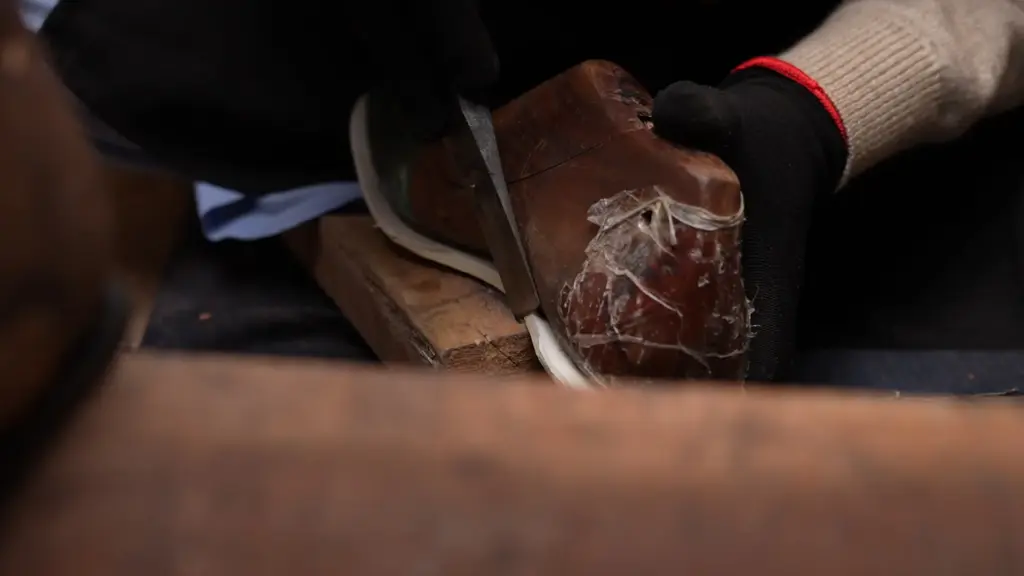
Three legitimate construction systems, three different structural paths.
A shoe can look beautifully made from the outside while using a completely different construction underneath.
That is why terms such as Blake stitched, Goodyear welted and hand welted matter.
They describe different ways of connecting the upper, insole and outsole into a finished shoe.
None of the three words tells you everything about quality.
A poorly fitted hand-welted shoe is still poorly fitted. Excellent leather cannot rescue careless construction. And a good Blake-stitched shoe should not be dismissed simply because it does not have an external welt.
If the parts of a shoe are unfamiliar, begin with Shoe Construction Explained. It covers the upper, lining, insole, welt, outsole and heel before comparing how those components are joined.
The difference starts underneath the shoe
All three systems are trying to solve the same fundamental problem:
How do you connect the upper around the foot to the sole underneath it?
They solve it differently.
Blake stitch
Blake construction creates a relatively direct connection between the insole, upper and outsole.
The sole stitch passes through the structure from inside the shoe to the outsole below rather than using an external welt around the perimeter.
This can allow a close-cut sole edge and relatively streamlined bottom.
Goodyear welt
Goodyear-welted construction introduces a separate welt around the shoe.
In a common modern Goodyear system, the upper and welt are attached around a rib associated with the insole using a welting machine.
The outsole is then stitched to the welt.
That means the outsole is not simply stitched directly through to the interior of the shoe.
Hand welt
Hand-welted construction also uses a welt, but the critical inseaming operation is performed by hand.
The shoemaker prepares the structural insole and stitches the upper and welt into that prepared insole rather than using the standard machine-welting operation.
How Blake stitching is built
Blake construction is conceptually the most direct of the three.
After the upper has been shaped around the last and the bottom prepared, the outsole is connected to the shoe with a stitch that passes through the outsole and the structure above it.
Because there is no conventional external welt sitting between the upper and outsole, the sole edge can be cut relatively close to the upper.
That can contribute to a visually lighter shoe.
Footwear education resource Shoemakers Academy diagrams Blake, Blake/Rapid, Goodyear and other construction systems and is useful for comparing the basic paths of the stitches.
Why designers use Blake construction
Blake is particularly useful when the desired shoe has:
- a slim sole profile
- a close-cut edge
- relatively little visual welt around the perimeter
- a lighter bottom architecture
- a dressier or more streamlined silhouette
This is one reason the method appears frequently on Italian-style dress footwear.
But construction should not be confused with style.
An Oxford is not automatically Blake stitched.
A loafer is not automatically Blake stitched.
Those words describe the upper design.
Blake describes the bottom construction.
How Goodyear welting changes the structure
Goodyear construction separates the outsole from the interior structure using a welt.
The welt is a strip running around much of the perimeter of the shoe.
First, the upper and welt are joined to the insole-side structure.
Then the outsole is stitched to the welt.
That gives the shoe two different relationships:
upper/insole structure → welt
and
welt → outsole
This architecture is one reason Goodyear-welted footwear is commonly associated with repairability.
A cobbler may be able to replace the worn outsole while preserving the welt and upper structure when those components remain in suitable condition.
But that does not mean unlimited resoles.
The welt, upper, insole and surrounding structure all have to remain serviceable.
What makes hand welting different
Hand-welted construction can look superficially similar to Goodyear welting once the finished shoe is on the shelf.
Both may have a visible welt.
Both may have an outsole stitched to that welt.
Both can produce repairable footwear.
The significant difference is deeper inside.
In traditional hand-welted work, the shoemaker prepares the leather insole so the inseam can be worked directly into its structure.
The upper is lasted into position, and the welt is stitched by hand around the shoe.
That inseam connects the welt, upper and prepared insole.
It is slow work because the maker is forming the connection manually around the shoe rather than passing it through a Goodyear welting machine.
The Victoria and Albert Museum’s bespoke shoemaking documentation provides useful context for the sequence of manual operations involved in traditional construction.
Blake: the outsole is stitched directly through the shoe’s lower assembly, creating a relatively direct sole attachment.
Goodyear welt: a welt is machine-stitched to the upper and an insole rib, then the outsole is stitched to that welt.
Hand welt: the welt is hand-stitched to the upper and a holdfast formed in the leather insole, then the outsole is stitched to the welt. These are construction differences, not automatic guarantees of comfort, durability or quality.
Hand welted and Goodyear welted are not the same thing
This distinction often gets blurred because both methods use a welt.
But having a welt does not automatically mean hand welted.
Goodyear construction was developed specifically to mechanize a major part of the welting process.
That does not make Goodyear footwear fake, poor quality or somehow dishonest.
A well-executed Goodyear-welted shoe can be excellent.
The problem begins only when a machine-welted shoe is described in a way that makes the customer believe the welt itself was stitched by hand.
That is why the construction name should be stated accurately.
For Handsole products, the individual Materials & Construction information should be the authority for the construction used on that specific design rather than assuming every shoe uses the same method.
Which construction is more flexible?
You will often hear simplified rules:
Blake is flexible.
Goodyear is stiff.
Hand welt is superior.
Real shoes are not that simple.
Construction influences flexibility, but so do:
- outsole material
- outsole thickness
- insole
- filling
- upper leather
- lining
- heel
- pattern
- last
- overall bottom thickness
Blake
Its relatively direct architecture can allow a light and flexible shoe, particularly when combined with a thin outsole and suitable upper.
Goodyear
A substantial Goodyear-welted boot can feel very different from a lightweight Goodyear-welted dress shoe.
The word Goodyear does not tell you sole thickness or how heavy the rest of the build is.
Hand welt
Hand welting itself does not force the shoe to be heavy or stiff.
The maker still determines the insole, sole, welt, filling and overall bottom specification.
So construction should help explain the shoe—not substitute for examining it.
Which has the slimmer profile?
Blake generally has an architectural advantage when the goal is an extremely close sole edge.
Without a conventional external welt around the shoe, the bottom can sit visually closer to the upper.
That can suit sleek dress shoes.
Welted construction naturally introduces another visible component around at least part of the perimeter.
But the amount of visible welt varies enormously.
A carefully trimmed dress welt may look refined and compact.
A storm welt or broader boot welt can intentionally look much more substantial.
Again:
construction creates possibilities; execution determines the final shoe.
Which is easiest to resole?
Goodyear and hand-welted constructions are well known for serviceability because the outsole can be attached through the welt rather than directly through the primary upper/insole connection.
When the welt remains healthy, outsole replacement can often preserve more of the shoe’s original structure.
Blake construction can also be resoled.
It is incorrect to say that Blake-stitched shoes are disposable.
The practical difference is that Blake resoling may require equipment or expertise that not every local repair shop has available, and the repair works through a different structural connection.
The condition of the shoe matters in all three cases.
For the actual inspection signs, read When Should Leather Shoes Be Resoled?.
Which handles water better?
None of these three terms means waterproof.
This is another place where construction claims become exaggerated.
A welt can create a different path between the outside environment and interior of the shoe than a direct-stitched construction.
But water resistance also depends on:
- upper leather
- seams
- tongue design
- welt design
- sole material
- edge treatment
- finishing
- maintenance
A leather-soled dress shoe does not become a waterproof outdoor boot because it happens to be welted.
Likewise, a rubber outsole does not automatically make the upper waterproof.
Which construction is more comfortable?
There is no universal winner.
Comfort begins with fit.
The construction underneath an unsuitable last does not fix the geometry around your foot.
A US 10 can still feel wrong if the toe shape, forefoot volume, instep or heel relationship does not match the wearer.
That is why understanding what a shoe last does is at least as important as understanding the welt.
Handsole separates US size, width and last because those variables describe different parts of fit.
Construction then determines how the shoe is built around that foundation.
Does hand welt automatically mean higher quality?
Hand welting requires skilled manual work.
That work has real value.
But it still should not become a shortcut for judging the entire shoe.
A hand-welted shoe can still have:
- poorly selected leather
- weak upper stitching
- careless lasting
- an unsuitable last
- poor finishing
- an inappropriate sole specification
Likewise, a Blake or Goodyear shoe can be executed exceptionally well.
A useful quality evaluation asks several questions at once:
What leather is being used?
What is the lining?
What last is underneath it?
How is the upper lasted?
What construction joins the bottom?
What outsole is fitted?
How cleanly was the work executed?
Why hand welting costs more
The simplest reason is labor.
A Goodyear welting machine mechanizes an operation that the hand-welted shoemaker performs manually.
In hand-welted work, preparing the insole, making the inseam and stitching the welt require time and skill.
That additional labor has a cost.
But price differences between shoes cannot be explained by the welt alone.
Leather, lining, pattern complexity, finishing, country of manufacture, production scale, brand overhead and many other factors affect the final price.
So:
hand welt = more manual welting work
is reasonable.
hand welt = automatically worth any price
is not.
Blake Rapid is not ordinary Blake
You may also encounter Blake Rapid.
It is related to Blake construction but should not be treated as exactly the same system.
A Blake Rapid build commonly introduces an additional sole or midsole relationship and an external rapid stitch, producing a bottom that can visually resemble welted construction more closely.
So if a product simply says Blake, do not silently upgrade that claim to Blake Rapid.
And if it says Blake Rapid, do not reduce the description to ordinary Blake.
Construction names should describe the actual shoe.
How to decide which construction you need
Do not begin with:
Which one ranks highest?
Begin with:
What kind of shoe am I trying to buy?
Choose based on the design
If the shoe needs an extremely close, sleek bottom, Blake construction can make sense.
Choose based on serviceability
If long-term outsole replacement is a major priority, welted construction gives a cobbler a particularly useful architecture to work with when the rest of the shoe remains healthy.
Choose based on the craft you value
If the actual hand preparation and hand inseaming of the welt matter to you, hand-welted construction gives you that process.
Choose based on the whole shoe
Do not reject a suitable Blake shoe solely because it is not welted.
Do not buy an unsuitable Goodyear shoe solely because you recognize the construction name.
And do not buy a hand-welted shoe on prestige alone if the last does not suit your foot.
The right construction has to belong to the right shoe.
How Handsole describes construction
The Journal explains construction so you can understand what the terminology means.
The product page tells you what the particular pair actually uses.
That separation is intentional.
If a Handsole product is identified as Hand Welted, Goodyear Welted, Blake or another construction, that specific product information is the claim to rely on.
For the wider workshop sequence, use Our Craft.
Common questions
Is Blake stitching bad?
No. It is a legitimate shoe-construction method with different structural and visual characteristics from welted construction.
Is Goodyear welted the same as hand welted?
No. Both use a welt, but the critical welt/insole connection is created differently.
Is hand welted always better than Goodyear?
It involves more manual work in the welting operation, but the overall quality of either shoe still depends on fit, materials and execution.
Can Blake shoes be resoled?
Yes, many can be repaired or resoled, although the process differs from welted footwear and may require a repairer equipped for Blake work.
Can Goodyear-welted shoes be resoled?
Often, provided the welt and surrounding shoe structure remain in suitable condition.
Can hand-welted shoes be resoled?
Yes, repairability is one of the useful characteristics of the welted architecture, but the condition of the welt, upper and insole still matters.
Is a visible stitch around the outsole proof that a shoe is Goodyear welted?
No. Different constructions can produce visible outsole stitching. You need the actual construction specification.
Three constructions, three different solutions
Blake stitching creates a direct stitched relationship and can support a close, streamlined bottom.
Goodyear welting uses a separate welt and mechanizes the critical welting operation, creating a highly established repairable construction system.
Hand welting uses the welt architecture but forms the critical inseam manually through the prepared insole.
Those are real structural differences.
They are worth understanding.
But none deserves to become a substitute for evaluating the rest of the shoe.
Look at the leather.
Look at the last.
Look at the lining.
Look at the outsole.
Look at the construction.
And then look at how all of those decisions were executed together.
The best construction is not the one with the most prestigious name. It is the one that makes sense for the shoe you actually want to wear.