Construction & Craft
Leather Insole vs Removable Insert — What’s Actually Under Your Foot?
Understand structural leather insoles, sockliners and removable footbeds. Learn what an insert changes in dress-shoe fit and what to check before ordering.
Handsole Journal articles in this collection. The article layout stays consistent; only the editorial content changes.
Understand structural leather insoles, sockliners and removable footbeds. Learn what an insert changes in dress-shoe fit and what to check before ordering.
A heel counter helps the rear of a shoe keep its intended shape. Its stiffness and material vary by design, so more rigid is not automatically better.
Footwear terminology becomes confusing when sneaker language is applied to dress shoes. This guide separates the insole, optional midsole/filling and outsole.
A double leather sole is not simply a 'better' single sole. Extra thickness changes flexibility, profile and feel, which can suit some shoes better than others.
Compare loafers and moccasins by style, upper construction, soles, fit and use. Learn why apron stitching alone does not identify how a slip-on is built.
Leather and rubber soles behave differently in grip, wear, weather and appearance. Learn where each works best, what affects comfort and repairability, and how to choose the right outsole for the way you wear your shoes.
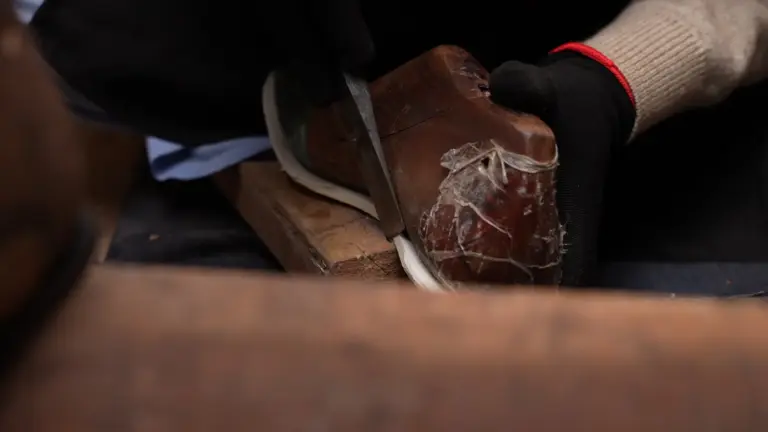
Blake stitching, Goodyear welting and hand welting connect a shoe’s upper and sole in different ways. Learn how each construction affects profile, flexibility, repairability and the way a shoe is built.
A shoe is a system of connected parts. This guide explains what the upper, lining, insole, welt, filling, shank, outsole and heel actually do — and why construction method matters for repairability.
Compare hand welting and Goodyear welting by inseaming, insole preparation, fit, repairability and price. Judge the complete shoe before paying for a label.