Made to Order
Hand-welted
Men's Black Oxford Shoes
$249.00Made to order
Size & width stay attached to your order
Browse the current designs below — standard pairs are made to order, with limited batches clearly marked where applicable.
Showing 18 designs 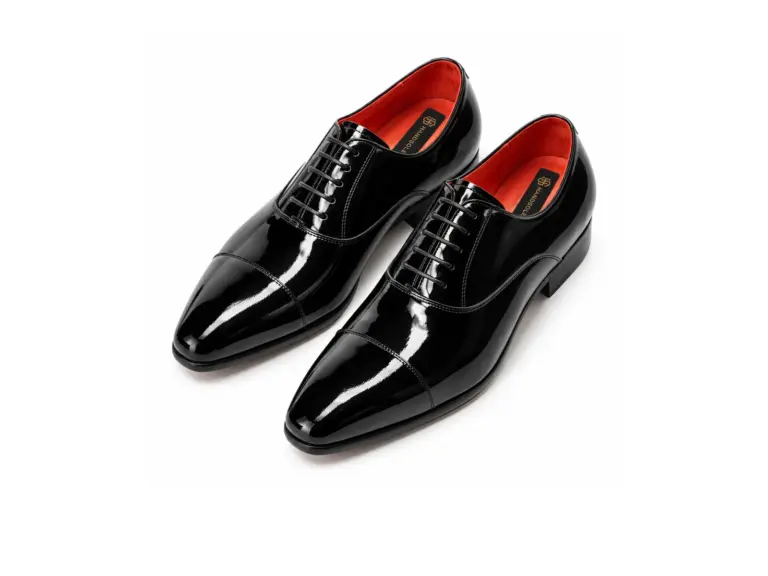
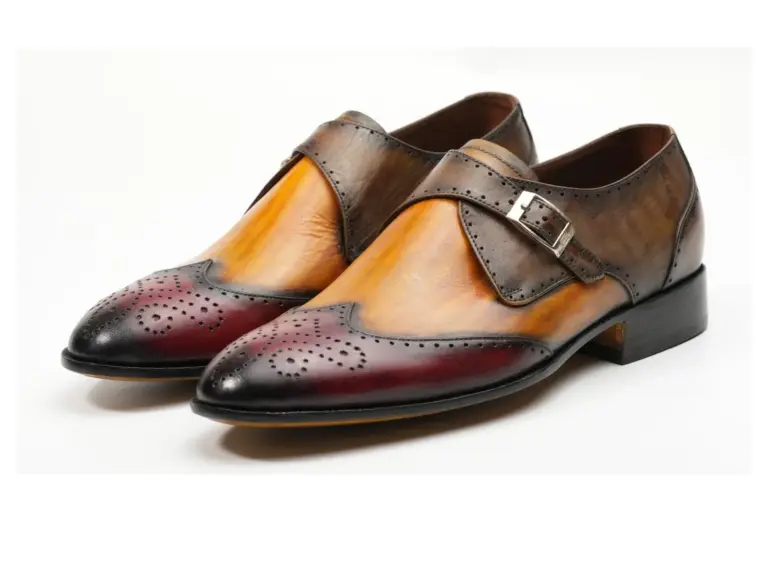
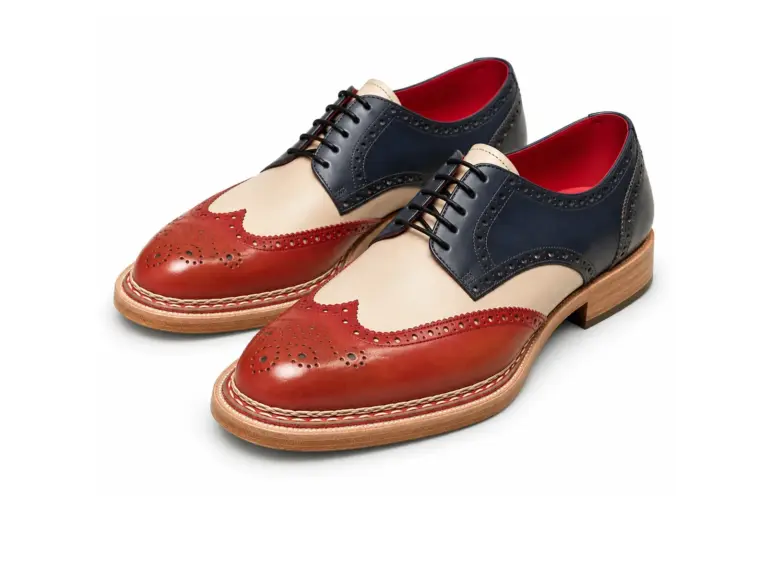
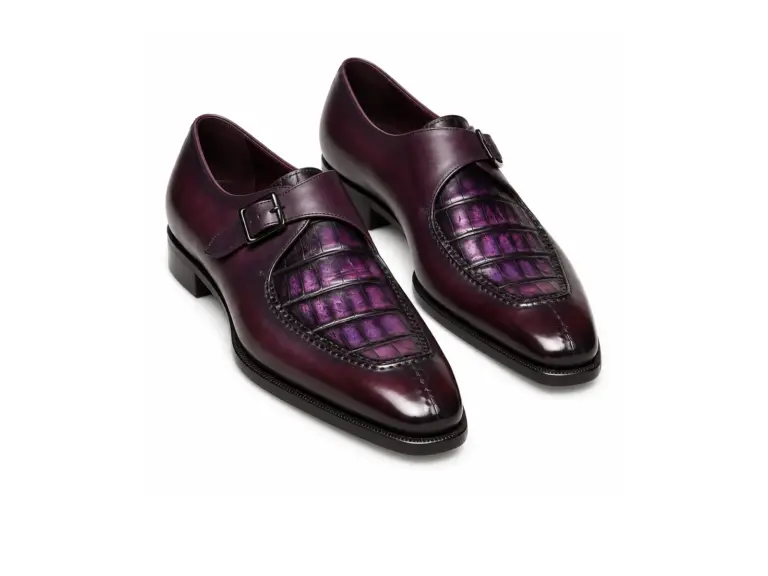
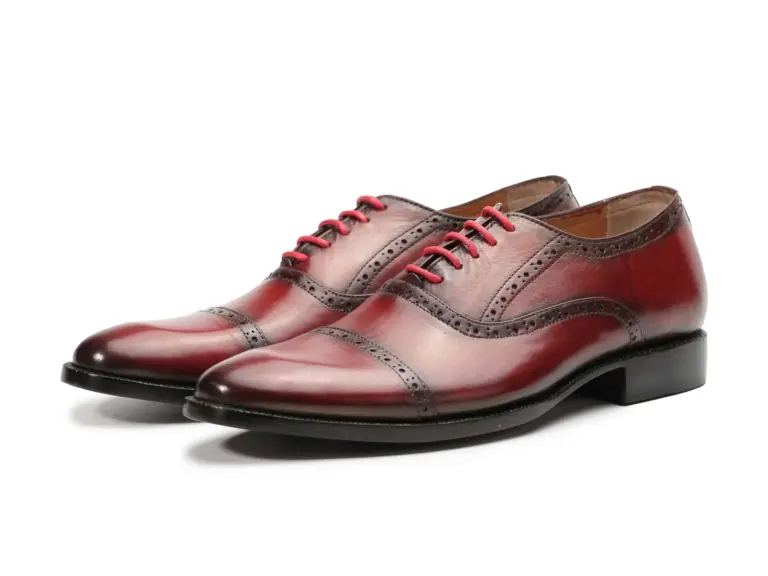
Still unsure about fit? Compare our five lasts → or use the Foot Shape & Last Guide
Men's wedding shoes start with the dress code: the more formal the wedding, the plainer and darker the shoe. Black tie and formal weddings call for closed-lacing Oxfords in black; as the dress code relaxes, brown leather, broguing and buckles come in.
For black tie, tuxedo shoes are black patent leather Oxfords with a plain or cap toe, like the black patent leather cap toe Oxford.
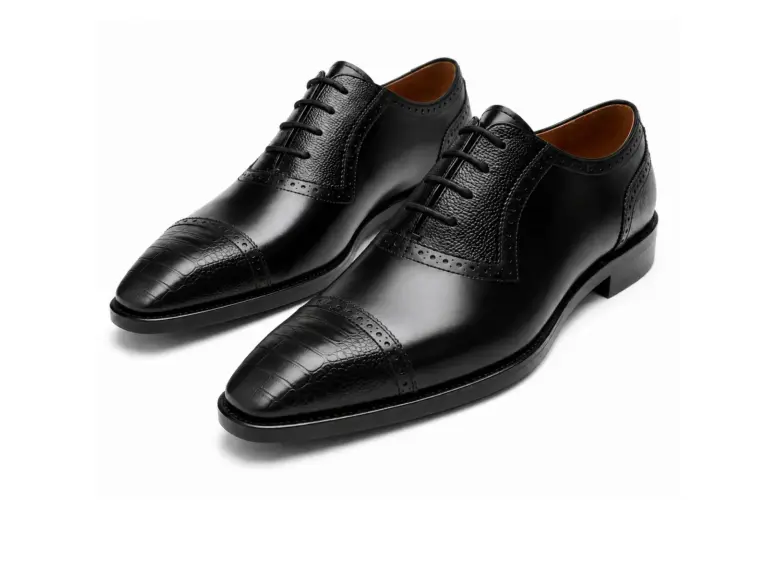
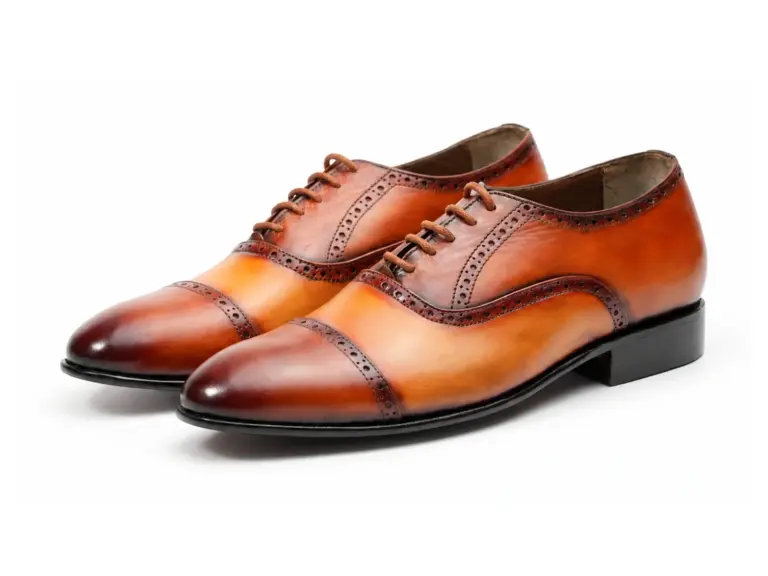
For a formal wedding in a dark suit, black wedding shoes keep the look clean: the black quarter-brogue cap toe Oxford suits the groom and groomsmen alike.
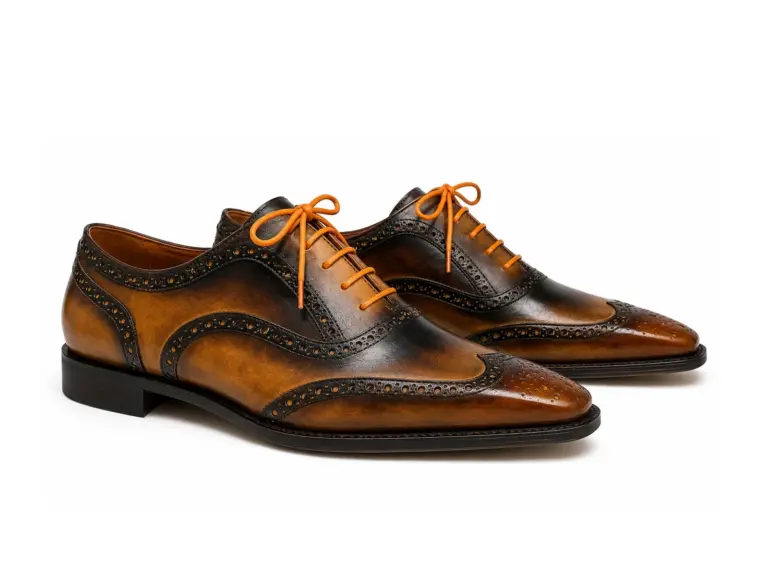
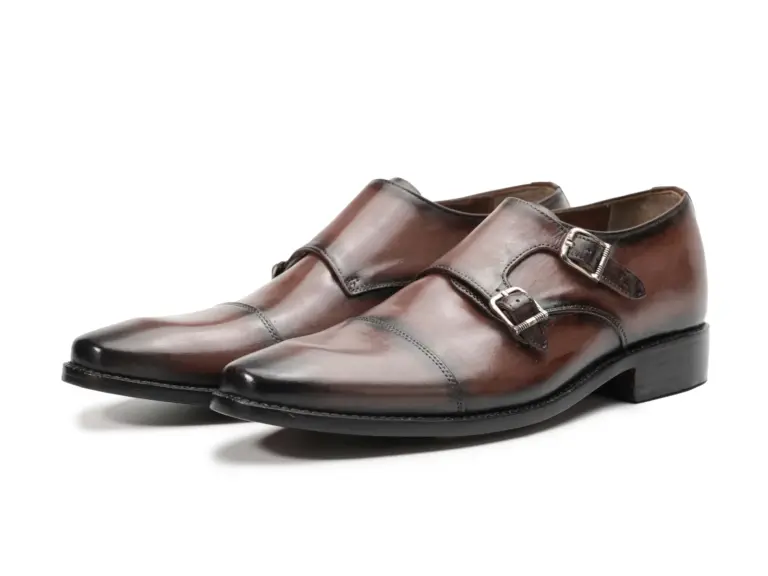
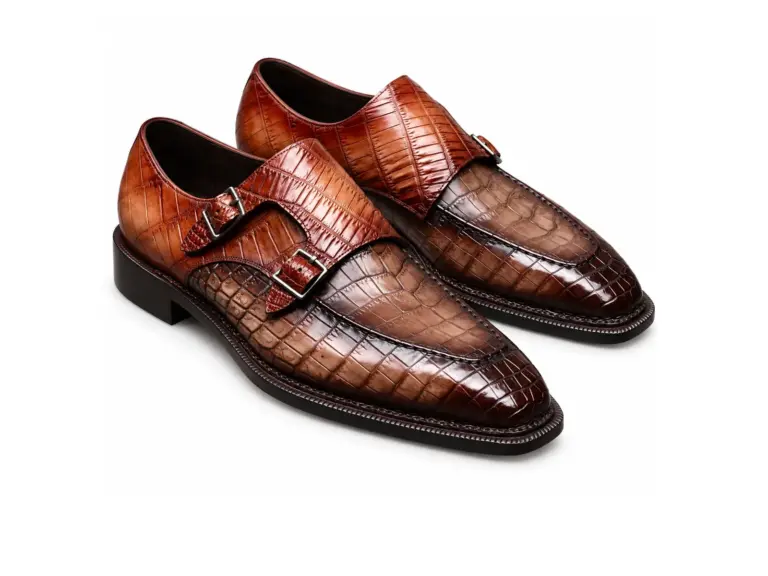
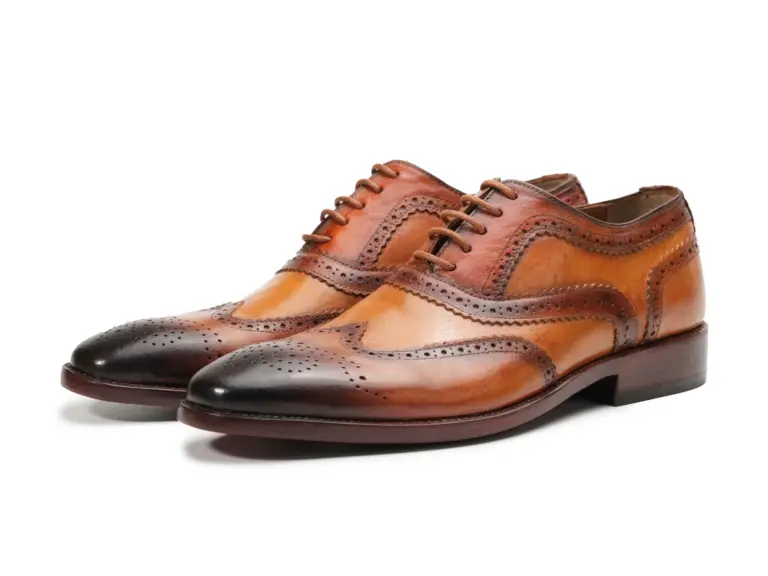
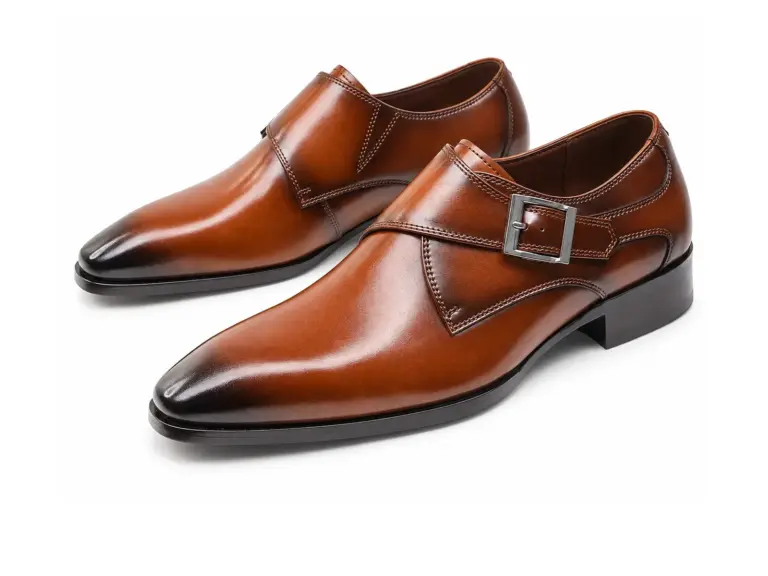
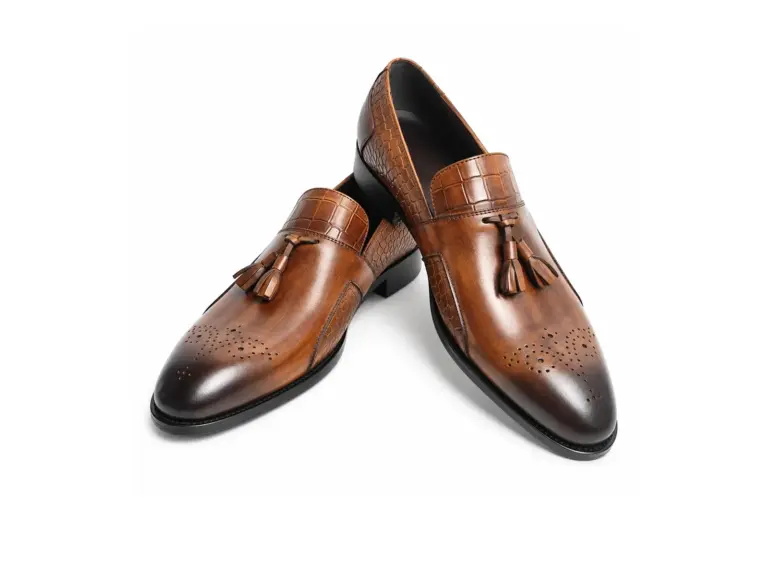
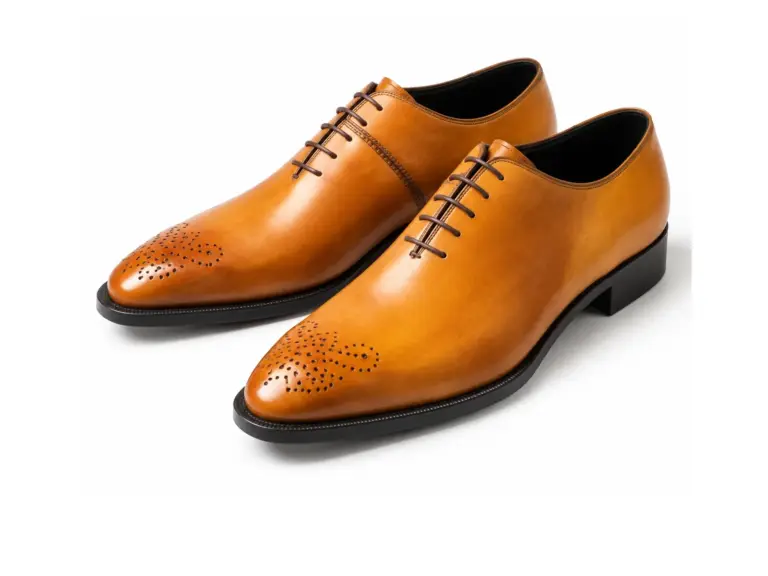
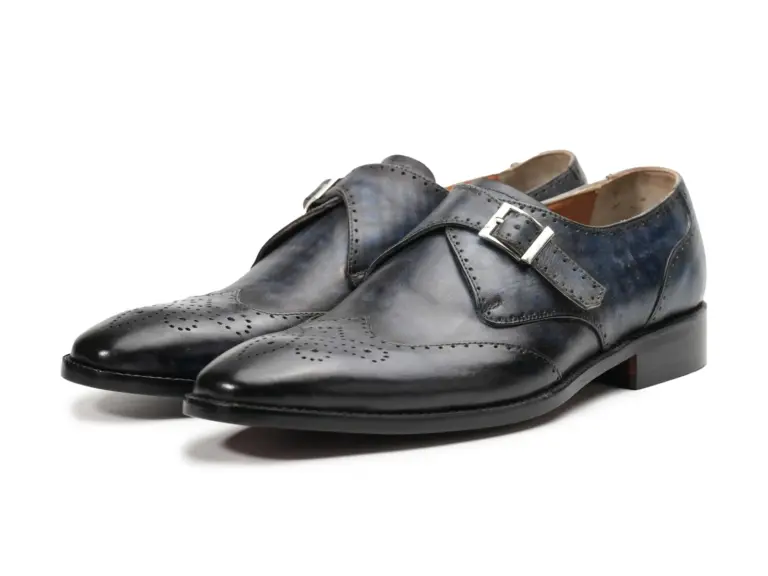
Brown wedding shoes suit navy, grey and tan suits and daytime or outdoor ceremonies. The cognac burnished cap toe Oxford is the cleanest choice; wingtips such as the cognac brown patina wingtip Oxford and monk straps such as the brown burnished double monk strap shoe are less formal and bring more detail. For a relaxed summer ceremony, a closed-back loafer such as the cognac croc-embossed tassel loafer is an alternative to laces.
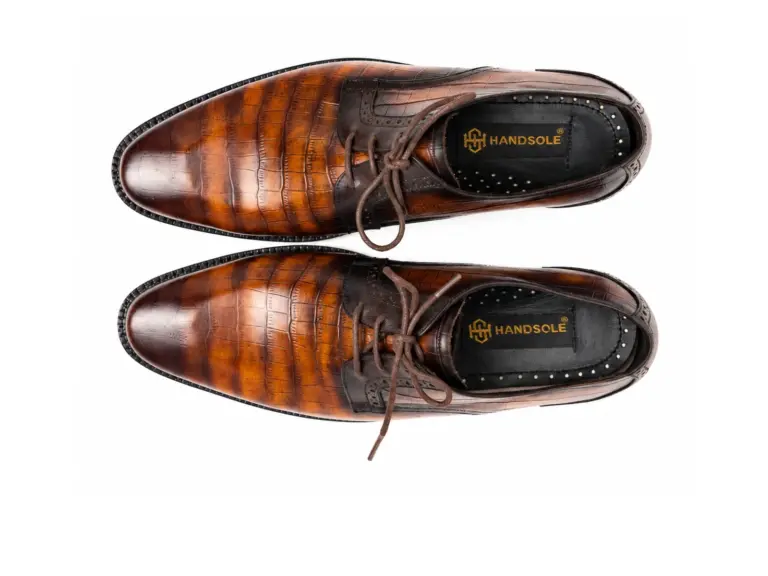
For a groom who wants colour or texture, the red patina cap toe Oxford and the tan patina croc-embossed Derby stand out in photographs. Ordering for groomsmen? Every pair is made to order, so each person chooses his own size and width, or sends his foot measurements at no extra cost; ask about Custom Made for another colour.
Black tie, formal, daytime and outdoor weddings.
Black tie means a dinner suit with polished or patent black Oxfords; brown shoes and loafers don’t suit it.
For a formal wedding in a navy or charcoal suit, black cap toe Oxfords are the safe choice, and dark brown works with navy.
With a navy, grey or tan suit, brown shoes look warmer in photographs: the cognac burnished single monk strap is the buckle alternative to laces.
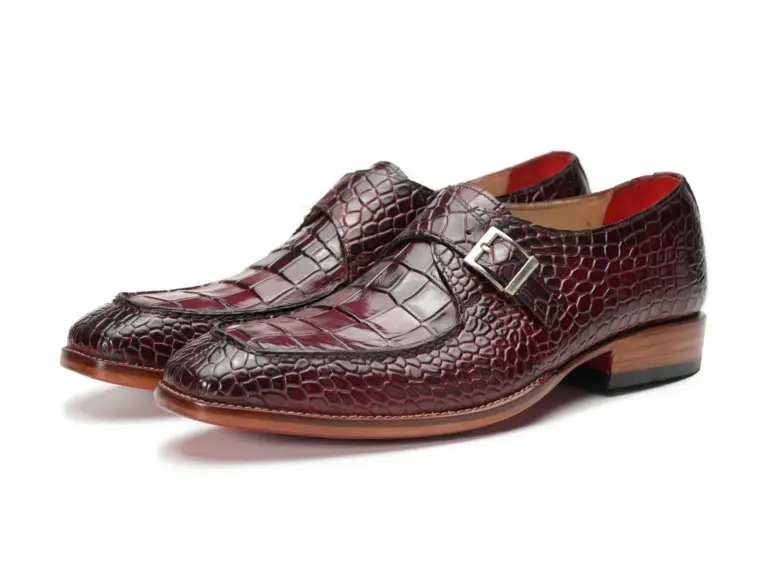
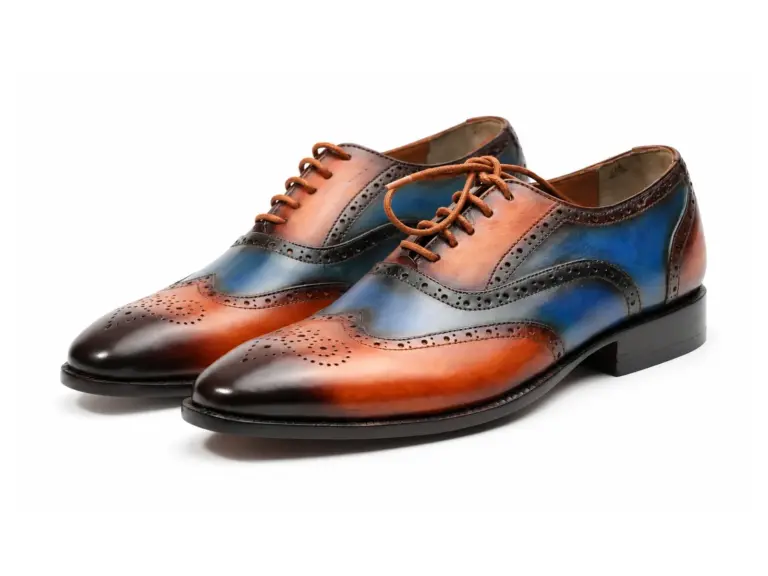
For a garden, barn or beach wedding, choose tan or cognac leather and a closed-back shoe you can stand in on grass or sand, like the brown and black patina wingtip Oxford. For an evening reception, croc-embossed leather such as the brown croc-embossed double monk catches the light.
You'll be standing, walking and dancing for hours.
Wedding shoes should hold your heel and leave your toes room to move, because you will be on your feet from the ceremony to the last dance. Try them on indoors, on a clean floor, with the socks you will wear on the day. If your instep is high, contact us with your measurements before ordering; extra width does not necessarily provide the instep room you need.
Choose from your measurements: measure your feet and read foot volume vs shoe width. Every design is offered in US 6 to 15, including half sizes, in D, E, EE or EEE.
Production, shipping and time to check the fit.
Each pair is made for your order in 7–10 working days before dispatch, and shipping time comes on top of that. Allow time after delivery to try the shoes on: if the fit is not right, we remake the pair free under our Fit Promise, and a remake needs further production time.
If the wedding is close, contact us with the date before you order and we will tell you whether it is realistic. See ordering shoes for a specific date.
For colour in the photographs, hand-finished patina varies from pair to pair, as on the cognac and blue patina wingtip Oxford, so order early enough to see your pair before the day.
Follow the invitation’s dress code: polished or patent black Oxfords for black tie, black cap toe Oxfords for a formal wedding, and brown Oxfords, wingtips or monk straps for daytime and outdoor weddings or with navy, grey and tan suits. See men’s shoes for a wedding.
Black is the reliable choice for evening, black tie and formal weddings in charcoal or black suits; brown suits daytime and outdoor weddings, and navy, grey or tan suits.
To a relaxed, daytime or summer wedding, yes: polished horsebit or tassel loafers with tailoring. For black tie and formal weddings, wear Oxfords instead.