
Construction & Craft
Leather Skiving in Shoemaking — Why the Edges of an Upper Are Thinned
Skiving is one of the quiet operations that affects how refined an upper looks. It reduces bulk where leather pieces need to fold, overlap or join.
Handsole Journal articles in this collection. The article layout stays consistent; only the editorial content changes.
Skiving is one of the quiet operations that affects how refined an upper looks. It reduces bulk where leather pieces need to fold, overlap or join.
Hand lasting turns a flat stitched upper into a three-dimensional form around the last. It is skilled shaping work, but the label alone does not guarantee fit or quality.
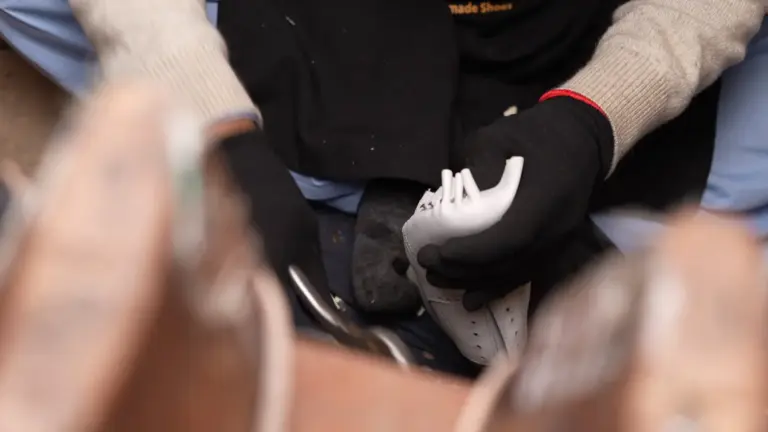
Made-to-order, custom and bespoke are often used as if they mean the same thing. They do not. Here is what changes in the shoe, how the fitting process differs and which route makes sense for your needs.

“Handmade” can describe very different shoes. Learn which stages may actually involve handwork, where machines belong, and why construction, leather, last and finishing matter more than the label alone.
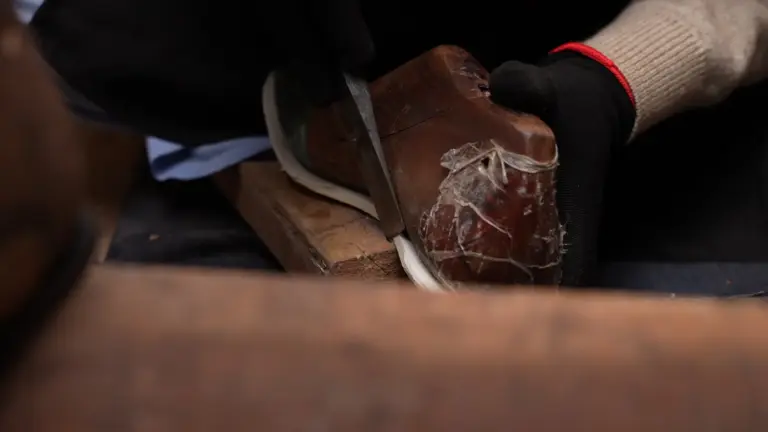
Blake stitching, Goodyear welting and hand welting connect a shoe’s upper and sole in different ways. Learn how each construction affects profile, flexibility, repairability and the way a shoe is built.
A shoe is a system of connected parts. This guide explains what the upper, lining, insole, welt, filling, shank, outsole and heel actually do — and why construction method matters for repairability.