The Complete Guide to Men’s Backless Loafers — Styles, Fit & How to Wear Them
Choose men's backless loafers with confidence: penny and horsebit styles, fit checks, embossed versus woven uppers, walking conditions, care and ordering.
Men’s backless loafers combine a loafer-inspired front with an open heel. They are also commonly called loafer mules. Choose them for an outfit and setting that suit the open-back design, then check the vamp, width and sole rather than assuming easy slip-on access guarantees secure walking.
A penny strap, horsebit or apron seam gives the front a familiar identity. Removing the back changes how the foot is retained, however, so a backless pair is not simply a closed loafer with identical fit expectations. The shoe needs to hold comfortably through the front without making you grip with your toes.
This is the buying and ownership guide: what the category means, which details to compare, how to assess fit and when to choose a closed-back alternative. For complete outfit examples, use six ways to style backless loafers.
1. What counts as a backless loafer?
Backless loafer, mule and slipper
A backless loafer has a loafer-derived vamp and an exposed heel. Mule is a broader fashion term for open-back footwear, so “loafer mule” identifies the front more precisely. Slipper can mean indoor footwear or a particular dress style; it does not settle the outdoor suitability of the pair.
Read the intended use and bottom specification. An indoor slipper, a leather-soled dress mule and an open-back casual shoe may share a silhouette while serving different purposes. A product title should not substitute for knowing where you plan to wear it.
Also distinguish an open heel from a collapsible heel. A shoe with a fold-down back includes material that a true backless pair does not have. Ask the maker which configuration is intended instead of flattening a conventional heel counter to imitate a mule.
Open back does not mean open toe
The toes are normally covered by the loafer-like front. Fit still requires sufficient length, width and space over the toes. The exposed heel is not permission to choose a shorter shoe or accept toes pressed against the upper.
Some designs have a small heel cup or raised edge; others are flatter at the back. Compare the actual footbed and side profile. Those details can affect how your foot sits, but a raised edge is not equivalent to a full closed-back heel counter.
Check that the foot rests within the intended sole area. Persistent overhang or a heel sitting on an edge needs reassessment. Ask for model-specific fit guidance rather than applying a standard “size down for mules” rule.
The category is useful; the specification is decisive
Browse Handsole’s backless loafers by design, then read each product’s materials, sole and fit notes. Do not assume every mule has the construction of another pair in the collection.
A visible sole stitch or polished edge does not prove hand welting. Likewise, a shiny upper does not necessarily mean patent. If a detail affects your purchase, ask for the actual specification instead of inferring it from the photograph.
Our closed-back loafer guide provides the broader family comparison. The open heel remains the main practical distinction even when both designs share a penny strap.
2. Compare the front: penny, horsebit, apron and texture
Penny mules: a familiar front without hardware
A penny mule keeps the saddle strap associated with penny loafers. It can be a useful choice when you want the open-back format with a relatively quiet front. Color, toe shape and sole proportions still change its character.
The Handsole black backless penny loafer provides a concrete example: a smooth-leather upper, penny strap and square-toe profile. The square silhouette differs from a rounded mule without establishing that either fits every foot better.
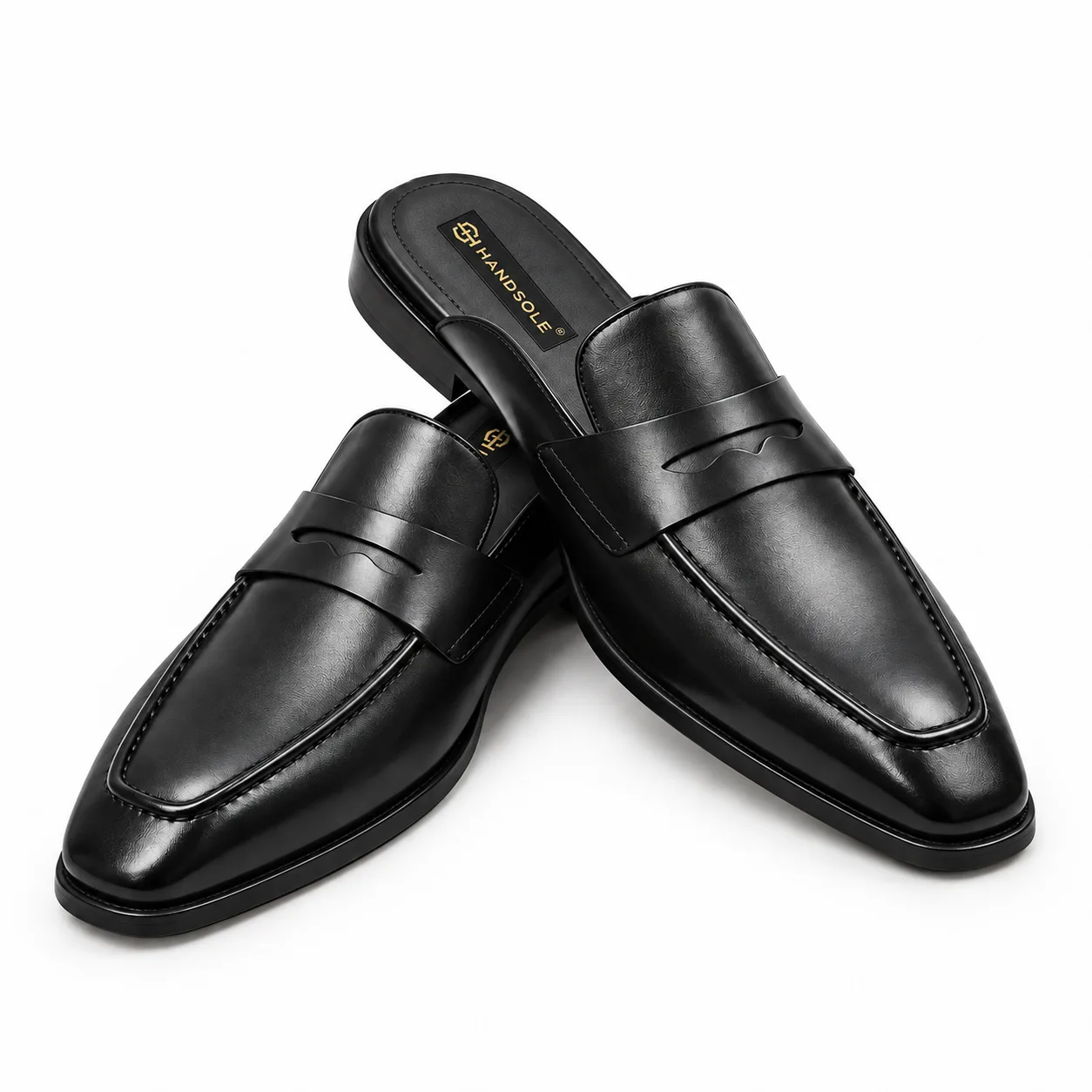
Pay attention to where the strap and vamp sit over your instep. A fixed strap is not a lace adjustment. If the pair presses there, a different width, volume or design may be needed rather than simply expecting the decoration to loosen.
Horsebit mules: hardware as a focal point
A horsebit mule adds metal hardware across the vamp. Consider its scale and finish with your clothes, especially if you also wear a prominent belt buckle or watch. The hardware changes the visual emphasis; it does not secure the heel.
The Handsole dark brown woven-embossed horsebit mule combines hardware, a rounded toe and a textured leather surface. Woven-embossed describes an embossed appearance, which should not be mistaken for separate strips woven with openings between them.
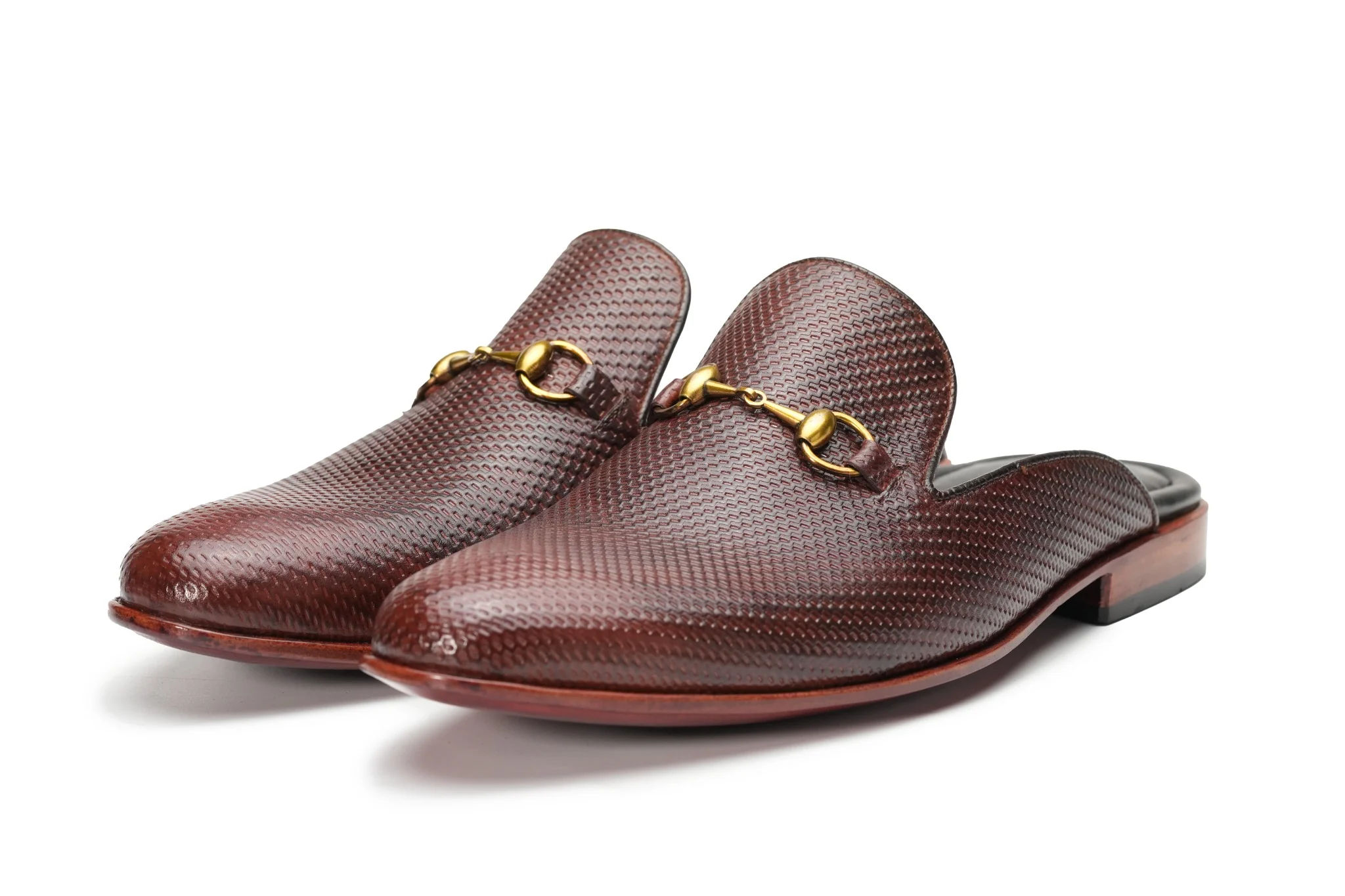
If ventilation matters to you, request construction details. A basket-like surface pattern does not prove air passes through the upper. Treat visual texture and actual openings as different features.
Apron seams, tassels and true woven uppers
An apron seam defines a forefoot section and can coexist with penny or horsebit details. It is an upper-pattern description, not a complete bottom-construction claim. Read loafers versus moccasins for why the seam alone is insufficient.
Tassels add movement and decoration, while a genuinely woven upper uses a different material arrangement from a solid embossed piece. For either, ask about care and fit of the particular model. Do not assume a textured upper is automatically softer or more accommodating.
Compare the plain silhouette before deciding on decoration. A rounded, square or elongated front can change an outfit more than a small metal detail. Use side and top views to see the proportions rather than buying solely from a tightly cropped hardware photograph.
| Feature | What to inspect | Do not assume |
|---|---|---|
| Penny strap | Vamp position and instep space | It adjusts like laces |
| Horsebit | Hardware scale and attachment | It prevents heel movement |
| Apron seam | Pattern and workmanship | It proves moccasin construction |
| Woven-looking texture | Whether it is embossed or genuinely woven | It provides ventilation |
| Open heel | Foot placement and walking retention | Loose fit is acceptable |
3. Assess fit through the vamp, forefoot and sole
Start with measurements and the actual model
Use your measured foot information and the maker’s size guidance as a starting point. Confirm the size system and offered width. A sneaker number, another brand’s loafer size or an assumption about open backs cannot establish the correct configuration.
Check both feet for length, forefoot width and instep needs. Tell the seller where previous slip-ons have felt tight or unstable. That describes the practical fit issue more clearly than requesting a universally comfortable last.
The Handsole fit guide helps organize this information. Read the product’s shape description too. An attractive toe silhouette is a style preference; its name alone is not a fit guarantee.
Walk without gripping or compensating
Try the pair indoors on a clean appropriate surface. Stand normally, then walk at your usual pace and turn. Notice whether you are curling your toes, shortening your stride deliberately or holding the shoe on through constant effort.
Some movement is inherent to an open back, but excessive effort to retain the pair deserves reassessment. A customer question about backless loafers slipping while walking captures this concern. Its replies cannot diagnose your foot or guarantee a remedy.
Do not solve rear movement by forcing the front into painful pressure. Check length, width and vamp volume together. A closed-back design may be a better choice when the open format remains insecure despite appropriate sizing.
Test the socks or insert you intend to use
Socks change the contact between the foot and upper, so include them in the fitting trial. A no-show sock may still be visible through the exposed heel. Decide whether that appearance works for you instead of expecting the shoe to conceal it.
An added footbed changes internal space and how the foot sits. Confirm that the model is intended to accommodate it before adding layers. For a prescribed device, discuss shoe suitability with its provider rather than assuming an open heel is compatible.
The insole versus removable-insert guide explains the layer distinction. Avoid removing fixed components or attaching pads permanently before you have established fit and return conditions.
4. Decide where the open-back format makes sense
Relaxed tailoring and dinners
Backless loafers can work with relaxed trousers, chinos or appropriate casual tailoring when the setting allows an exposed heel. Try the complete outfit and judge the hem from behind as well as the front. The open back should look intentional.
For a quieter first combination, keep the trousers and shirt restrained and let the mule supply the main detail. If the upper has bold hardware or texture, compare it with a simpler outfit before adding more accessories.
Use the dedicated styling guide for six outfit directions. A stylish photograph remains an outfit reference, not proof that the shoe suits every workplace or formal invitation.
Travel convenience versus long walking
Easy on and off can be useful during short transitions, but an airport day may also include lengthy corridors, stairs and standing. Plan the entire journey rather than selecting footwear solely for the security checkpoint.
For extensive city walking or uneven ground, compare a securely fitting closed-back pair. Take the mule as a separate evening option if that suits your luggage and plans. Convenience at one moment should not determine footwear for the whole day.
Check the actual sole for the surfaces involved. Leather, rubber and a heel insert are separate specifications. Our leather-sole grip guide explains why no categorical grip promise follows from a stylish upper.
Weather, workplaces and activity requirements
An exposed heel leaves part of the foot uncovered, so consider temperature, rain and the route. A dry indoor dinner in a cooler month is different from a wet commute. There is no need to describe backless loafers as either summer-only or suitable for every season.
Follow workplace requirements where closed footwear, heel coverage or certified traction is specified. A leather mule should not be treated as occupational protective equipment merely because the front resembles a dress shoe.
For driving or other activities, assess actual control and suitability rather than trusting the mule category as a specialized performance claim. If a task requires more secure footwear, choose a pair designed and appropriate for that task.
Where to go next: For outfit applications, continue to How to Style Backless Loafers. Compare the open-back format with conventional slip-ons in The Complete Guide to Men’s Loafers, and use How Should Loafers Fit? for the closed-heel fit principles that still help explain vamp and forefoot hold.
5. Care, ordering and common questions
Care for the leather and shape you actually own
Remove loose dirt gently and follow the maker’s routine for the particular finish. Smooth leather, suede, patent and decorative patina need different product choices. Woven or embossed details can also affect how you reach the surface with a brush or cloth.
Do not force a conventional shoe tree into an open-back design. Ask the maker what support is appropriate for its shape. The absence of a rear enclosure changes how a tree or stretcher can sit.
Let the pair dry naturally before storage and keep each shoe separated from abrasive objects in luggage. An occasional pair should be inspected before the event, including the sole and heel, rather than assumed ready because it has seen little wear.
Read reviews for the same model and use
A review is most useful when it describes the exact design, size selection and conditions of wear. Someone enjoying a mule at seated dinners has tested a different use from someone walking across a city. Look for observations about vamp pressure, foot placement, sole wear and retention rather than a general statement that the brand is comfortable.
If a review reports slipping, ask whether the writer describes the fit and socks used. If it praises softness, check whether it concerns the same upper material as your selected pair. Reviews help identify questions to ask, but neither a positive rating nor one dissatisfied customer establishes how the shoe will fit your feet.
What to confirm before ordering
Confirm upper material, lining, insole arrangement, sole and actual construction. Ask about the intended size and width selection for your measurements. If a listing omits a construction detail, obtain an answer rather than applying another product’s specification.
Check current production, delivery and return terms for the order. Do not depend on an old article’s price or timing when an event is approaching. Give the seller the event date and destination if those facts affect your decision.
Test the full setup promptly after receipt while observing the return conditions. Avoid outdoor wear, permanent pads or aggressive stretching as the first response to uncertain fit. Clear photographs and a precise description help resolve the issue.
Should the heel hang off the back?
Your foot should sit within the intended support area without persistent overhang or resting on a raised edge. Confirm the model’s guidance and reassess the combination if that cannot be achieved. A smaller size is not automatically a better-retained mule.
Are backless loafers the same as indoor slippers?
No. Some mules have outdoor soles and dress-oriented designs, while other slippers are intended indoors. Check the actual product. The word backless tells you about the heel; it does not establish the bottom’s intended use.
Which should I buy first?
Choose a design you can use with your existing clothes and in the conditions you expect. A quiet penny mule may be an easy starting point; a horsebit or textured pair may supply a stronger accent. Fit and practical use should settle the choice before decoration does.
If the open back remains unsuitable for your walking needs, browse closed-back loafers as well. The right backless loafer is a deliberate addition with a clear role, comfortable front retention and a sole suited to the setting.