Made to Order
Hand-welted
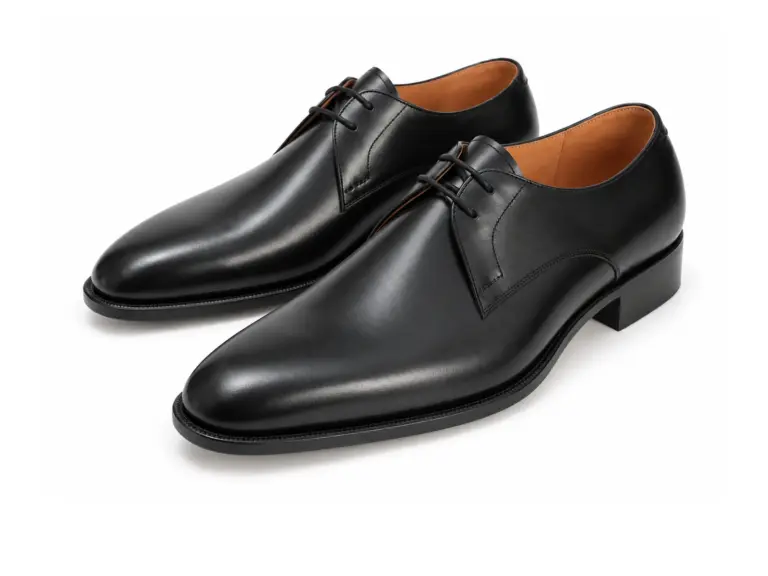
Black Two-Eyelet Plain Toe Derby in Full-Grain Leather
$249.00Made to order
Size & width stay attached to your order
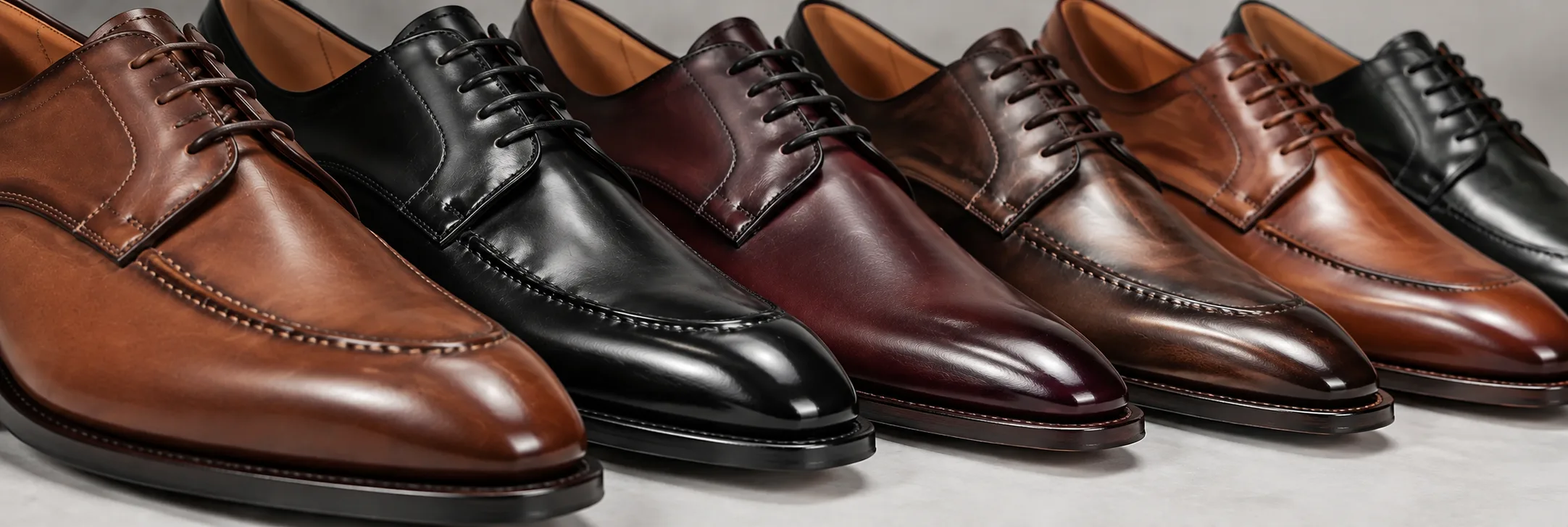
A Derby is a lace-up shoe with open lacing: the eyelet facings are stitched on top of the vamp, so it usually adjusts more over the instep and looks more relaxed than an Oxford. Derbies are often grouped with bluchers. Hand-welted and made to order in your US size (6–15) and width (D–EEE), or to your own foot measurements at no extra cost. From $249, made in 7–10 working days before dispatch, with a free remake if they don’t fit under our Fit Promise.
Choose a design, then select its offered color, US size and width on the product page.
Browse the current designs below — standard pairs are made to order, with limited batches clearly marked where applicable.
Showing 8 designs 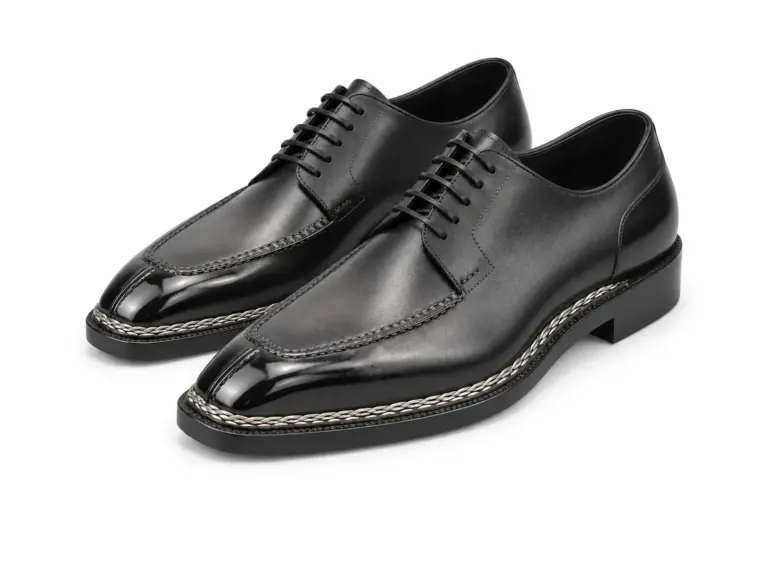
Still unsure about fit? Compare our five lasts → or use the Foot Shape & Last Guide
A Derby is a lace-up dress shoe with open lacing: the eyelet panels sit on top of the vamp, so it opens wider over the instep than an Oxford. That makes leather Derby shoes the more versatile dress shoes for men, smart enough for a suit and relaxed enough for chinos or dark jeans, and every pair here is hand-welted. In the US the name Blucher is sometimes used for the same shoe, although the two can be cut differently.
Plain toe Derbies keep a clean vamp with no seams or broguing. In polished black they are a restrained choice for suits, the office and interviews; they also come in dark brown or a hand-finished patina. For example, the black plain toe Derby in full-grain aniline leather.
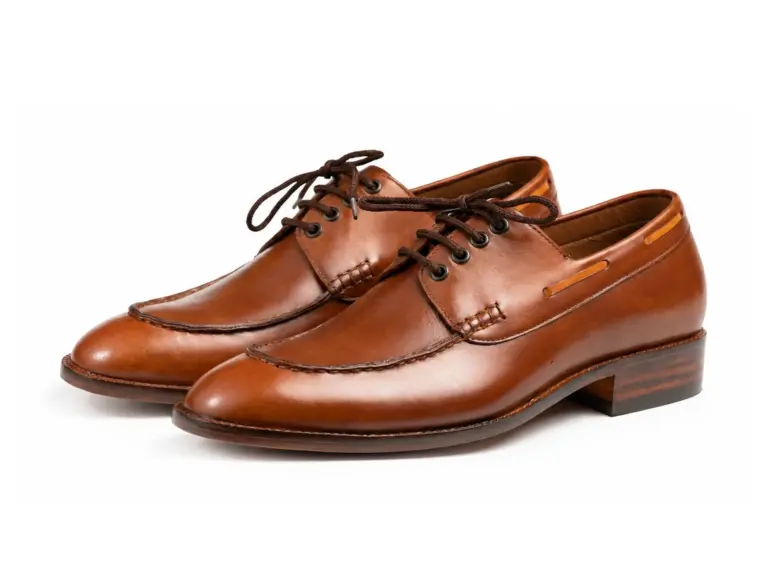
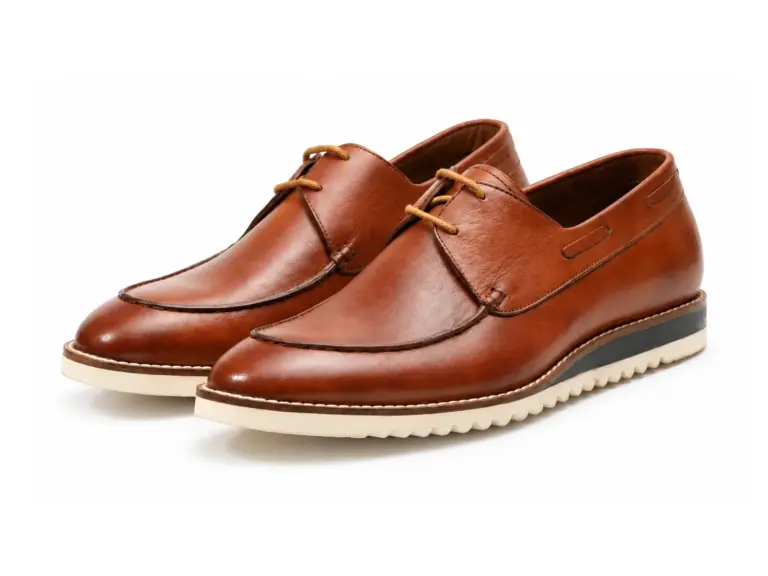
Apron toe, moc toe and split toe Derbies add raised seams around the toe, which give a more casual, rugged look for chinos, denim and weekends, such as the brown moc toe Derby in pull-up leather.
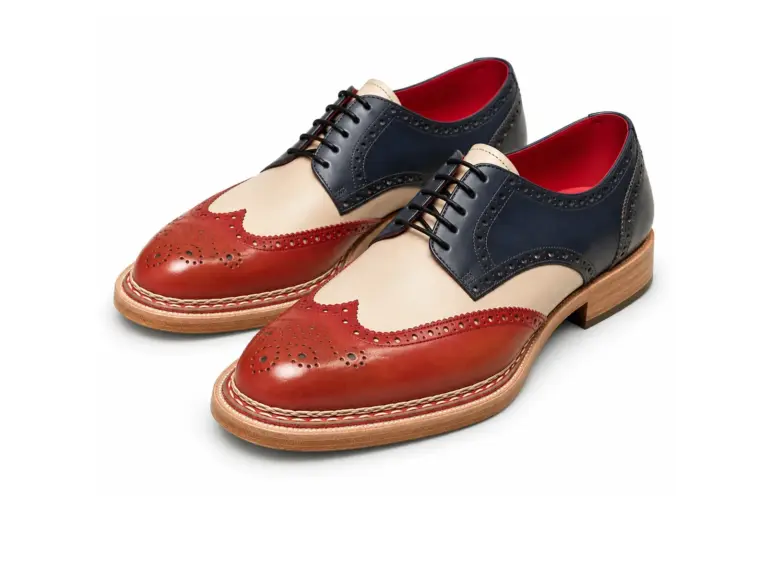
Cap toe, wingtip and brogue Derbies add a toe cap or perforated detailing across the toe and sides; the more broguing, the more casual and expressive the shoe, as on the navy, cream and red wingtip Derby.
Want a different colour, leather or toe? Every pair is made to order, so ask about Custom Made.
Match the Derby to the outfit: formal black Derby shoes for business dress, brown and pull-up leather for casual Derby shoes.
For suits and formal office wear, black Derby shoes are the most formal choice.
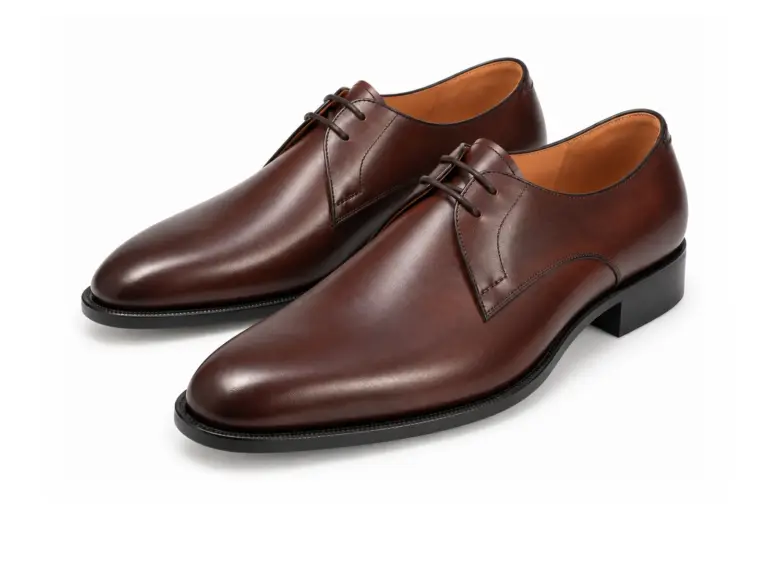
For business casual and smart trousers, brown Derby shoes are easier to wear than black: try the dark brown plain toe Derby.
For chinos, jeans and travel, the cognac apron toe Derby sits on a white Vibram rubber sole made for city walking.
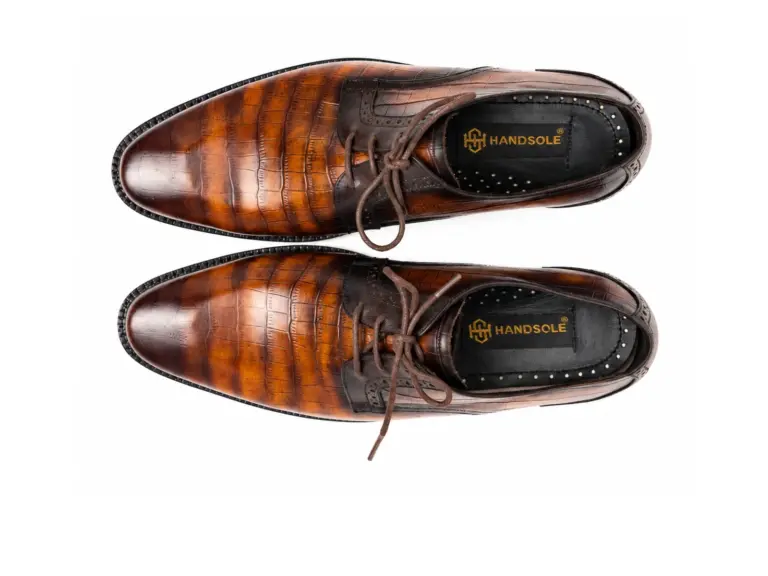
For weddings and evening events, the tan croc-embossed Derby adds texture to navy or charcoal tailoring. For black tie and the most formal dress codes, choose an Oxford.
Open lacing adjusts over the instep, not across the toe.
A Derby should hold your heel without slipping and leave room to move your toes. Open lacing lets you tighten or loosen over the instep, so it offers more adjustment over the instep than an Oxford; the last and your measurements still determine the fit, and lacing doesn't widen the forefoot.
Choose from your measurements: measure your feet for length and width, and read foot volume vs shoe width if your instep is high or low. If you're between widths, contact us with your measurements before you order. Every design is offered in US 6 to 15, including half sizes, in D, E, EE or EEE.
The leather decides how dressy a Derby looks and how it ages.
Aniline leather takes a high polish and looks sharpest with tailoring, as on the black plain toe Derby. Croc-embossed leather adds texture without exotic skin.
Pull-up leather shows lighter marks where it creases and varies more as it is worn, which suits casual Derbies such as the brown moc toe, and suede Derbies suit relaxed outfits.
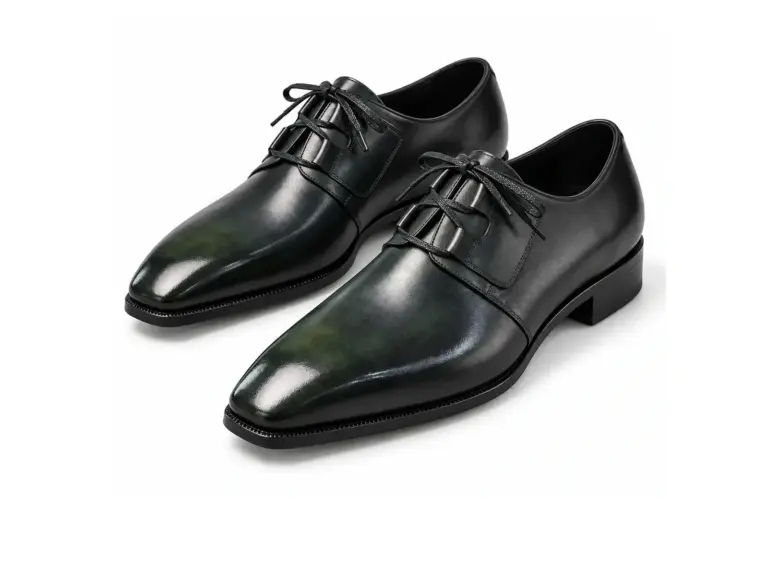
Hand-finished colour gives depth that varies slightly from pair to pair, like the deep green plain toe Derby, while hand-painted panels allow contrasting colours on one shoe. See how different leathers age and what a Norwegian welt is.
Yes. A black or dark brown plain toe Derby in polished leather works with a business suit. For black tie and the most formal dress codes, choose an Oxford.
In everyday US usage, yes: both have open lacing. Strictly, a blucher’s eyelet tabs are separate pieces stitched onto a one-piece vamp, but most shops use the names interchangeably.
A Derby has open lacing, with the eyelet panels on top of the vamp, so it usually opens wider over the instep and can suit a higher instep; an Oxford’s closed lacing makes it sleeker and more formal. See Oxford vs Derby shoes.