What Is a Norwegian Welt? Construction, Stitching & How It Differs From Goodyear
A Norwegian welt is not just a heavier welt. The upper is turned outward and stitched on top of the welt, which changes the edge, the look and how the shoe behaves.
Handsole Journal articles in this collection. The article layout stays consistent; only the editorial content changes.
A Norwegian welt is not just a heavier welt. The upper is turned outward and stitched on top of the welt, which changes the edge, the look and how the shoe behaves.

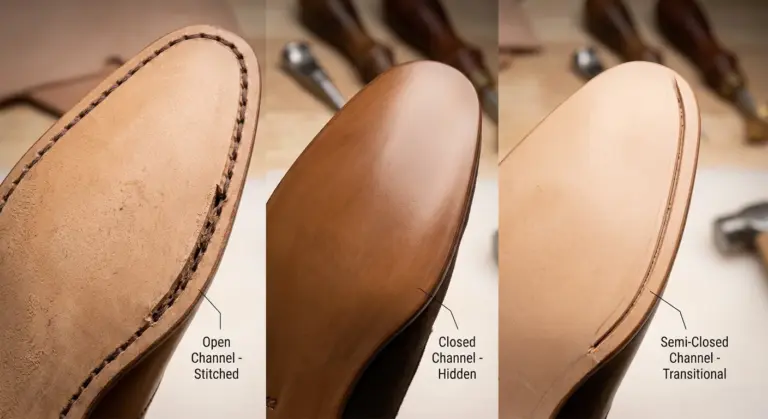
A visible stitch around a leather sole does not automatically mean Goodyear welted. This guide separates outsole stitching, Blake stitching, inseaming and decorative edge stitches.

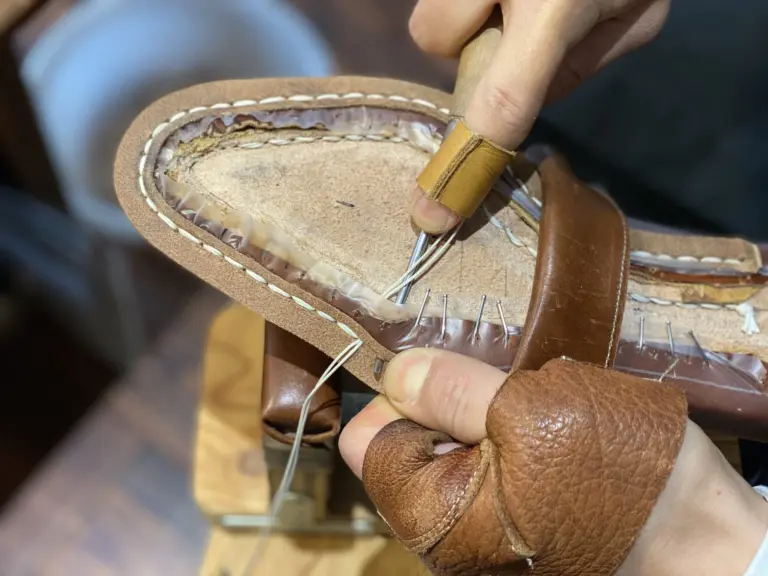
Inseaming is the structural stitch that joins upper, lining and welt to the insole-side anchoring system. It is hidden in the finished shoe but central to welted construction.
Gemming is one of the hidden details that separates Goodyear welting from traditional hand welting. It creates the rib through which the welt seam is formed.
The holdfast is one of the hidden details that makes hand welting mechanically different from Goodyear welting. It is prepared directly from the structural insole.
Cork is often described as if every welted shoe contains a thick moldable footbed. The reality is more specific: cork can be one filler material inside certain bottom constructions.
Three layers are often called the same thing in retail: sock liner, insole and removable insert. They are not interchangeable, and the distinction matters when reading dress-shoe specifications.
Changing a shoe from single leather to rubber, from close dark edge to broad natural welt, or from refined heel to rugged bottom does more than change one specification—it can create a different product.
Handmade does not mean machine-perfect, but it also does not mean every mistake becomes “character.” The useful standard is whether the variation affects structure, fit, pair consistency or intentional design.