Made to Order
Hand-welted
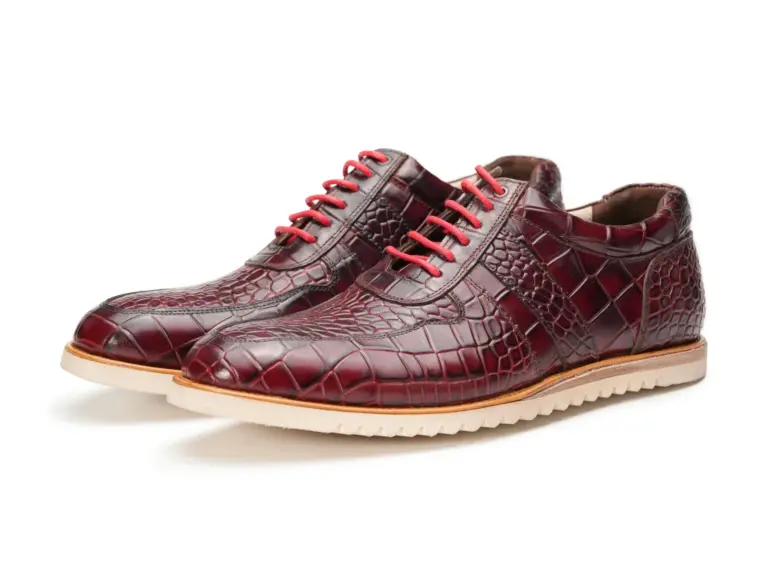
Men's Burgundy Croc-Embossed Leather Casual Lace-Up Shoes
$249.00Made to order
Size & width stay attached to your order
Browse the current designs below — standard pairs are made to order, with limited batches clearly marked where applicable.
Showing 5 designs 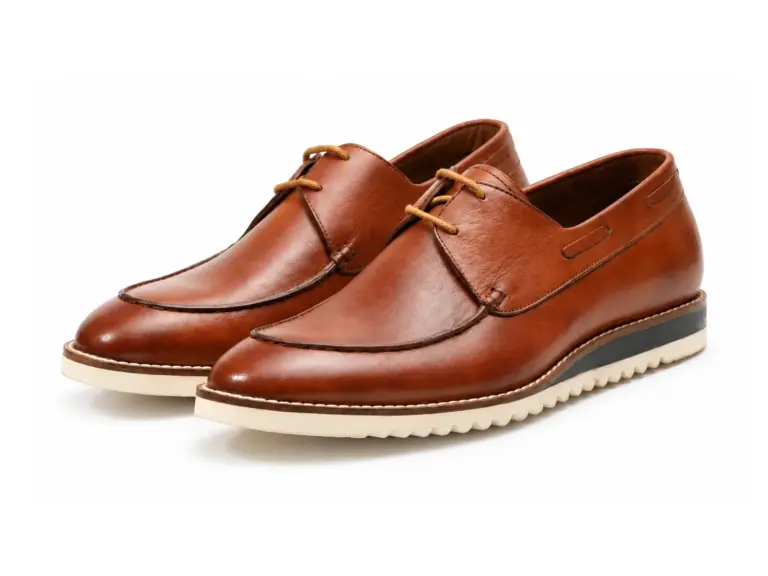
Still unsure about fit? Compare our five lasts → or use the Foot Shape & Last Guide
What makes these casual dress shoes is the sole and, on some pairs, a trainer-like shape. Each pair keeps a leather upper made like a dress shoe but sits on a rubber outsole instead of a leather one, which gives it a heavier, more relaxed look.
The cognac pull-up leather apron toe Derby pairs pull-up leather with a white Vibram ripple sole over a dark midsole. It also sits in our Derby collection: Derby names the style, Casual names the upper-and-sole combination.
The burgundy croc-embossed casual lace-up goes further: a trainer shape with a side saddle, croc-embossed panels and a thick cream rubber lug sole.
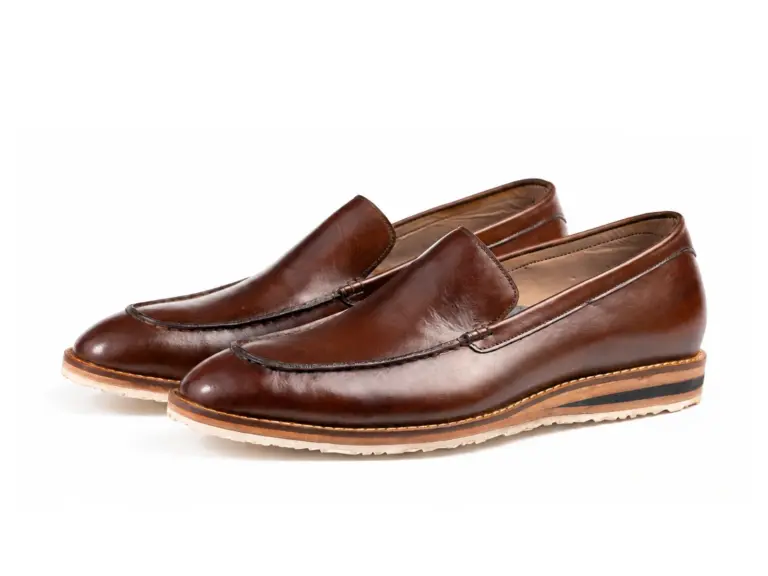
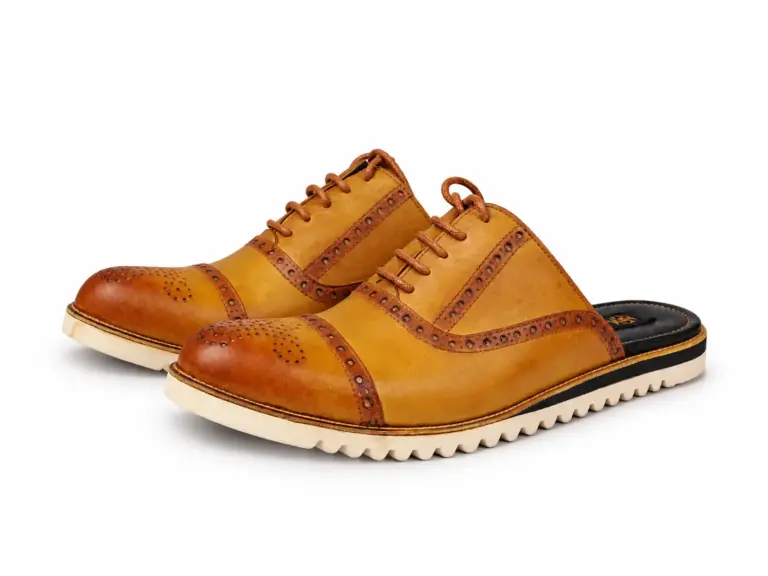
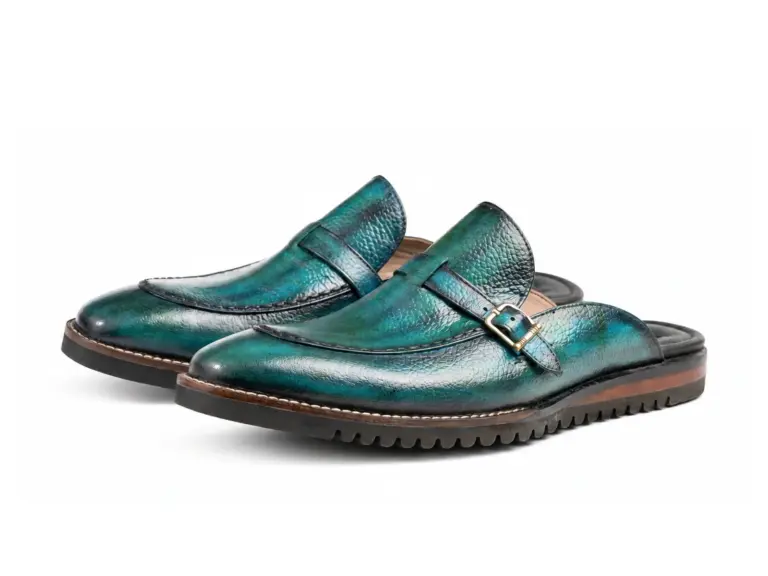
Without laces, the dark brown apron toe loafer sits on a cream Vibram sole with a chevron tread, and the teal patina buckle mule sets a hand-finished upper on a black ridged Vibram sole. Want another upper on a rubber sole? Ask about Custom Made.
Dark jeans, chinos and relaxed tailoring.
With dark jeans, these are shoes for jeans that still look finished: a white or cream sole lifts denim, and a black sole keeps the look darker. See dress shoes with jeans.
With chinos and an open-collar shirt or a knit, the apron toe Derby or loafer is the easiest choice; with relaxed tailoring, a darker upper keeps the look smart.
On a relaxed office day they sit between dress shoes and trainers. For formal dress, choose a leather-soled Oxford instead.
The last and your measurements decide the fit, not the sole.
The heel should sit firmly with little lift, the instep should feel held without pressure, and your toes need room to move. The last determines the shoe’s underlying shape, while sole stiffness and construction can affect how it feels and moves.
Choose from your measurements: measure your feet for length and width, and read foot volume vs shoe width. If you're between widths, contact us with your measurements before you order. Every design is offered in US 6 to 15, including half sizes, in D, E, EE or EEE.
The sole sets the look: tread, colour and thickness.
The soles here differ in look as much as in tread: a white ripple Vibram sole with a dark midsole on the Derby, a cream chevron-tread Vibram sole on the loafer, a black ridged Vibram sole on the mule and a thick cream lug sole on the lace-up.
A white or cream sole reads more casual and contrasts with the upper; a black sole is quieter. Grip, cushioning and flexibility depend on the particular sole and construction, so check each product page.
Leather shoes with a relaxed look, usually on a rubber sole. Here they are dress-style leather uppers on Vibram and rubber lug soles, so they look finished with jeans and chinos. Check each product’s sole and construction details for its intended use.
Yes. Casual Derbies, loafers and lace-ups on a rubber sole sit well with dark jeans; a white or cream sole looks more casual, a black sole quieter. See dress shoes with jeans.
Some rubber soles feel flexible immediately, while others need time to settle. Break-in depends on the sole, upper and construction; the shoes should fit comfortably without persistent pain from the start.