Made to Order
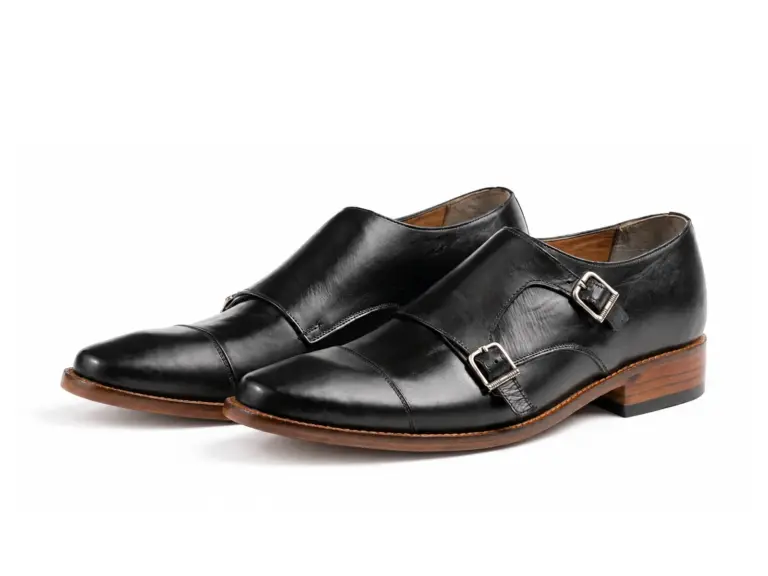
Hand-welted
Men's Black Double Monk Strap Shoes
$249.00Made to order
Size & width stay attached to your order
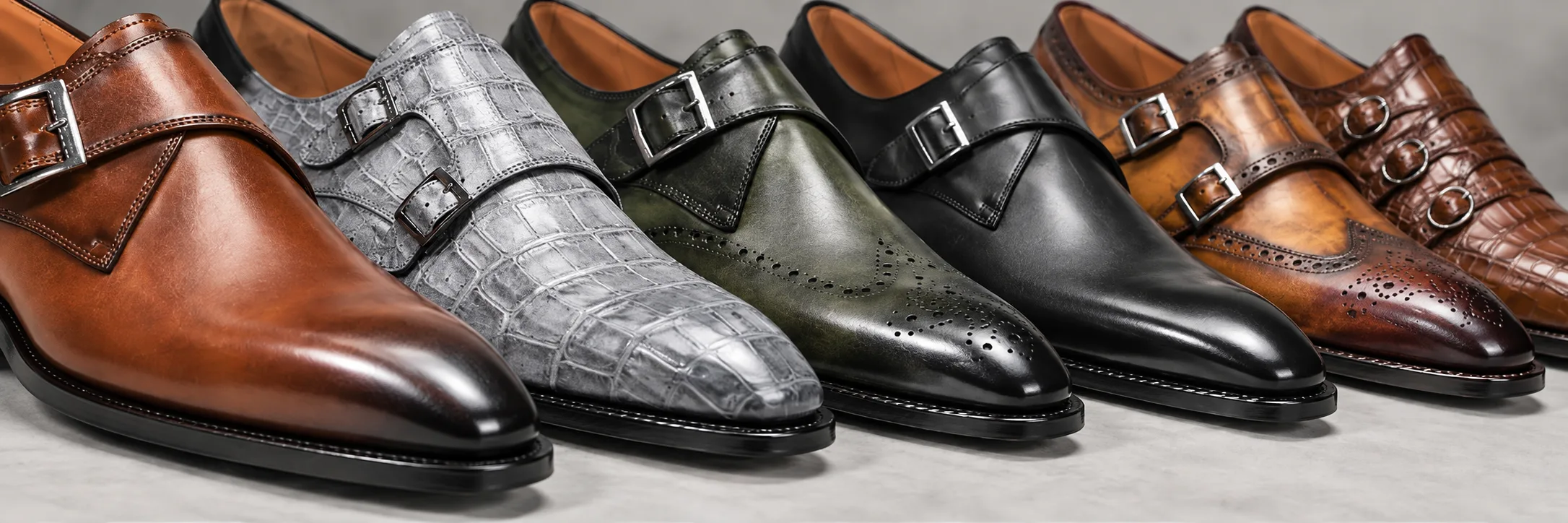
Monk strap shoes are dress shoes that fasten with a buckled strap instead of laces: one buckle on a single monk, two on a double monk. Hand-welted and made to order in your US size (6–15) and width (D–EEE), or to your own foot measurements at no extra cost. From $249, made in 7–10 working days before dispatch, with a free remake if they don’t fit under our Fit Promise.
Choose a design, then select its offered color, US size and width on the product page.
Browse the current designs below — standard pairs are made to order, with limited batches clearly marked where applicable.
Showing 12 designs 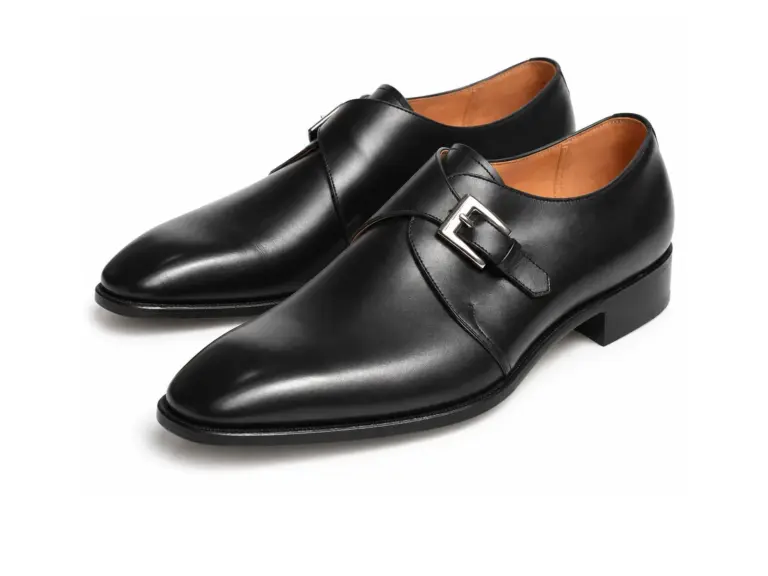
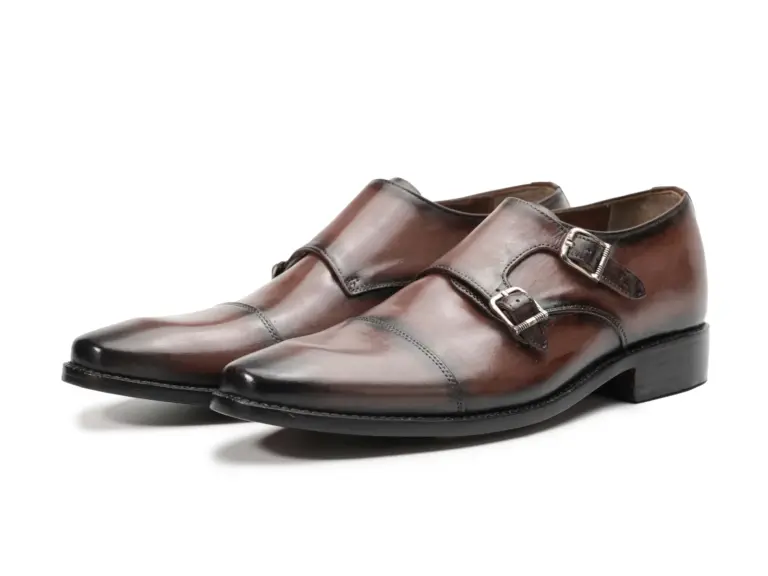
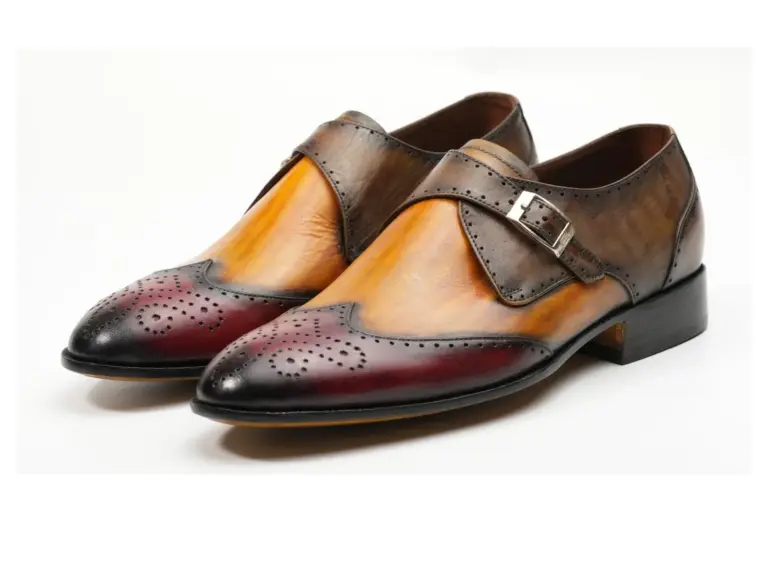
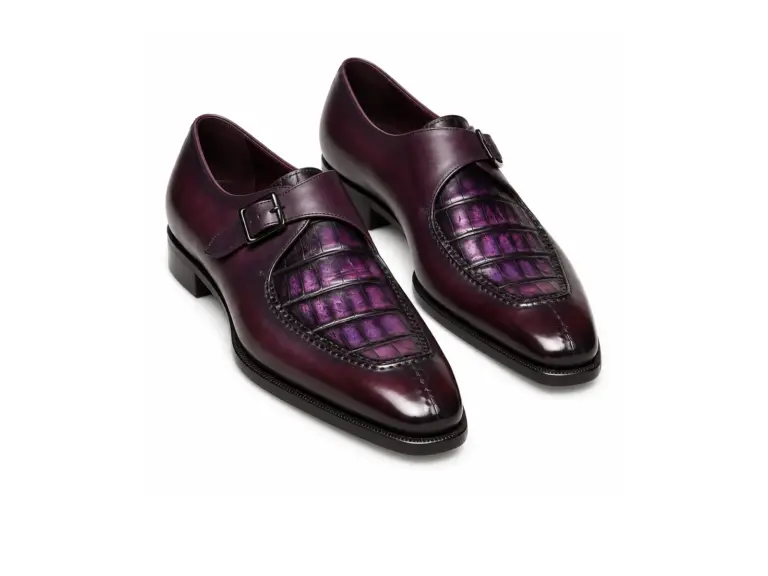
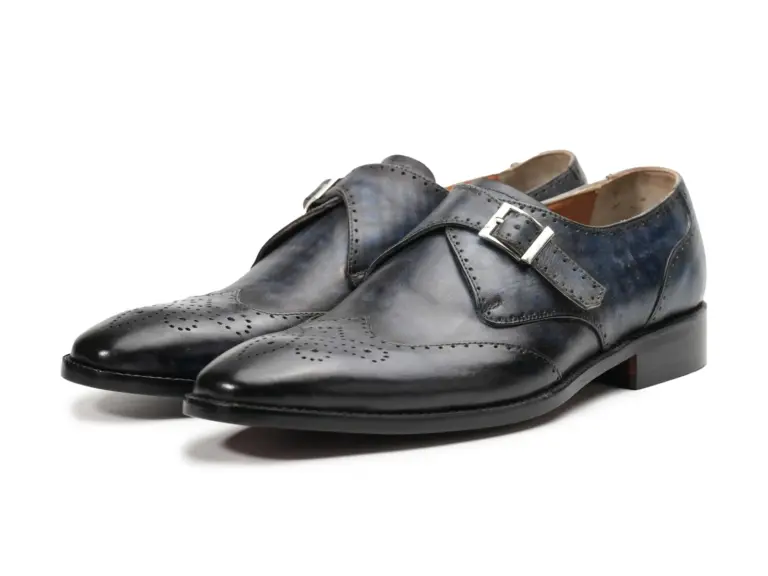
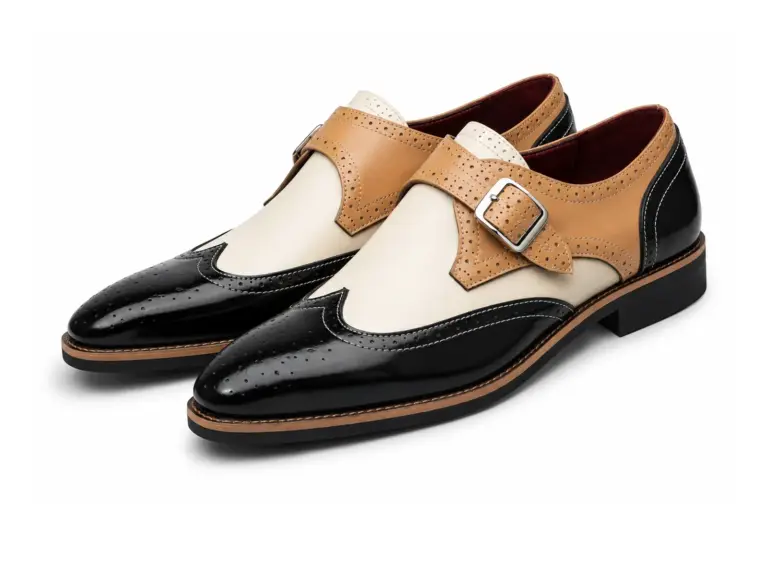
Still unsure about fit? Compare our five lasts → or use the Foot Shape & Last Guide
Monk strap shoes are buckle dress shoes: they close with a buckled strap instead of laces. Monk strap dress shoes are smart enough for a suit and quicker to put on than a lace-up; the leather, colour and any broguing decide how dressy each pair looks.
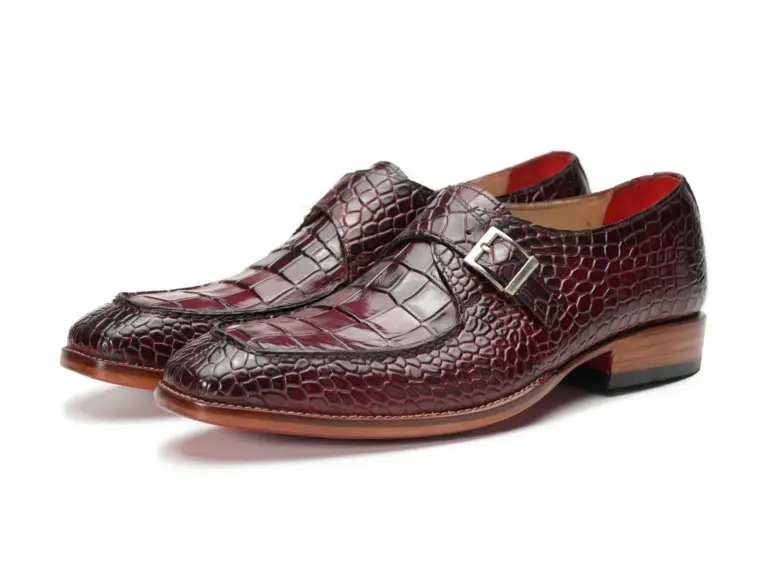
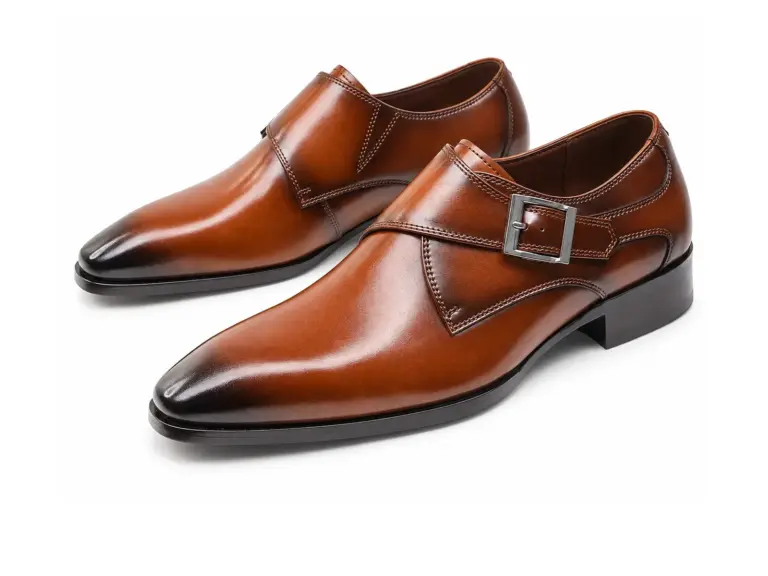
Single monk strap shoes have one buckle and a cleaner line that sits quietly with a suit, like the black single monk strap dress shoe in aniline leather.
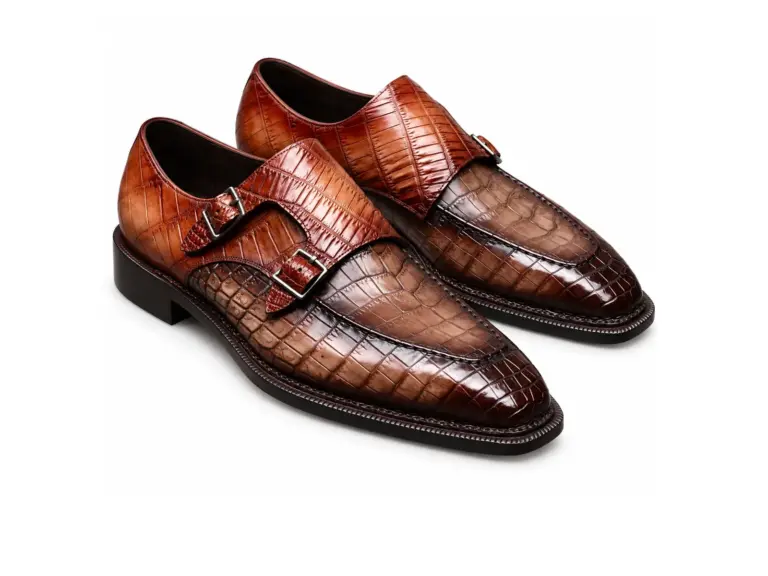
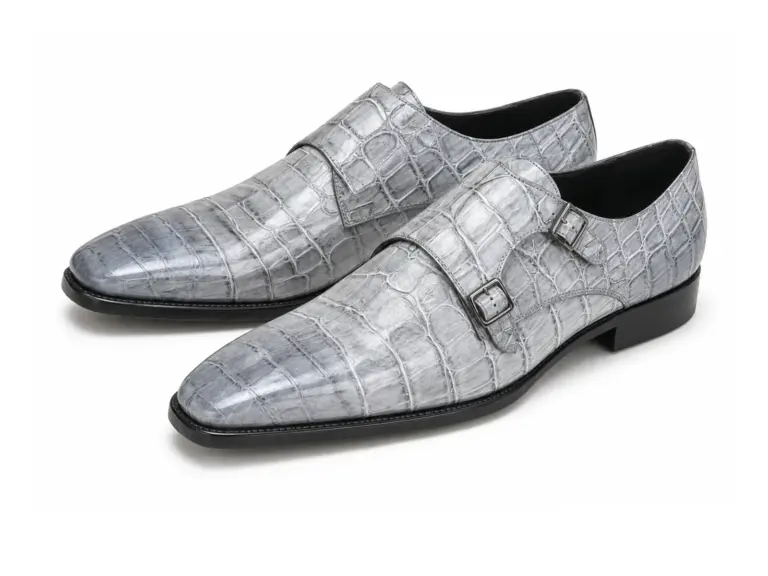
Double monk strap shoes carry two buckles and more presence, from the black cap-toe double monk strap shoe for business to brown and croc-embossed pairs for weddings and evenings.
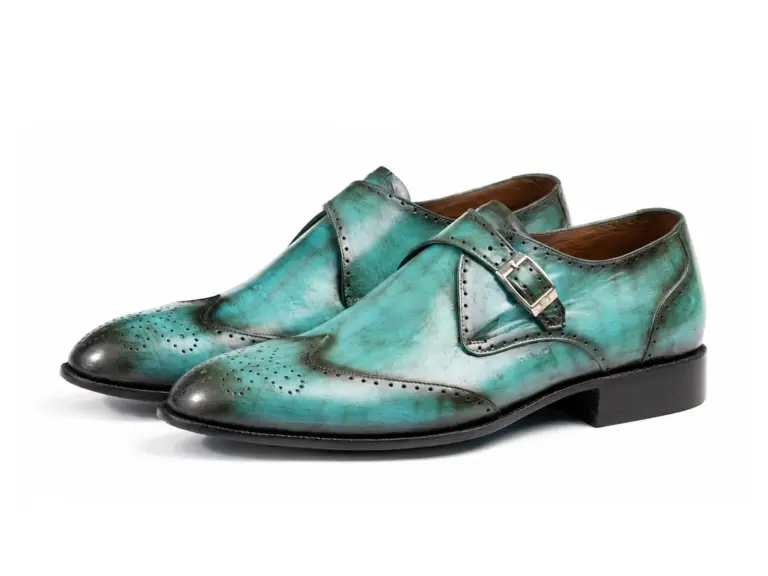
Wingtip and brogue monk straps add perforations, and hand-finished patina turns the shoe into a statement, as on the turquoise patina wingtip single monk strap. Want a different colour, leather or toe? Every pair is made to order, so ask about Custom Made.
From suits and the office to relaxed tailoring, denim and weddings.
With a navy or charcoal suit, black monk strap shoes are the quiet choice: the buckle replaces the laces, so nothing competes with the tailoring. With grey flannel or tweed, brown monk strap shoes such as the brown burnished double monk strap shoe add presence without going casual.
Monk straps look best with trousers that break lightly or not at all, so the buckle stays visible; cropped and cuffed hems suit a double monk especially.
For weddings and evening events, texture does the work: the croc-embossed brown double monk strap shoe reads dressy under low light. For a summer wedding or a creative office, the tri-colour spectator monk strap is the statement pair: spectator shoes set a darker toe and heel against a lighter middle. With dark jeans and a blazer, a black double monk is the easiest way to dress denim up.
The buckle adjusts the instep, not the toe room.
Fasten the strap so it holds the instep without pressing, with room to adjust either way as the leather relaxes. The heel should sit firmly with little lift, and your toes should have space to move: tightening the strap won't fix a forefoot that is too narrow.
Choose from your measurements: measure your feet for length and width, and read foot volume vs shoe width if your instep is high or low. If you're between widths, contact us with your measurements before you order. Every design is offered in US 6 to 15, including half sizes, in D, E, EE or EEE.
The leather decides how formal a monk strap looks and how it ages.
Aniline leather has a smooth, even surface that takes a high shine at the toe, the cleanest finish for business; kept polished, it makes the buckle look sharper.
Hand-finished patina is coloured by hand, so the shading on the slate grey-black patina single monk strap differs slightly from pair to pair. Burnished toes are darker at the tip than across the rest of the shoe, giving cognac and brown more depth.
Croc-embossed leather is pressed with a croc pattern, giving texture without exotic skin. See how different leathers age.
A single monk has one buckle and a cleaner line that sits quietly with a suit; a double monk has two buckles and more presence. Both fasten across the instep; fit still depends on the last and strap placement.
Smart, but a step below a plain black Oxford. A black monk strap in polished leather works with a business suit and at most weddings, while brogued, brown or patina monks suit business casual.
Yes. Brown, burnished or patina monk straps go well with dark, slim jeans and chinos with a short hem, so the buckle shows. See the monk strap shoes guide.