Made to Order
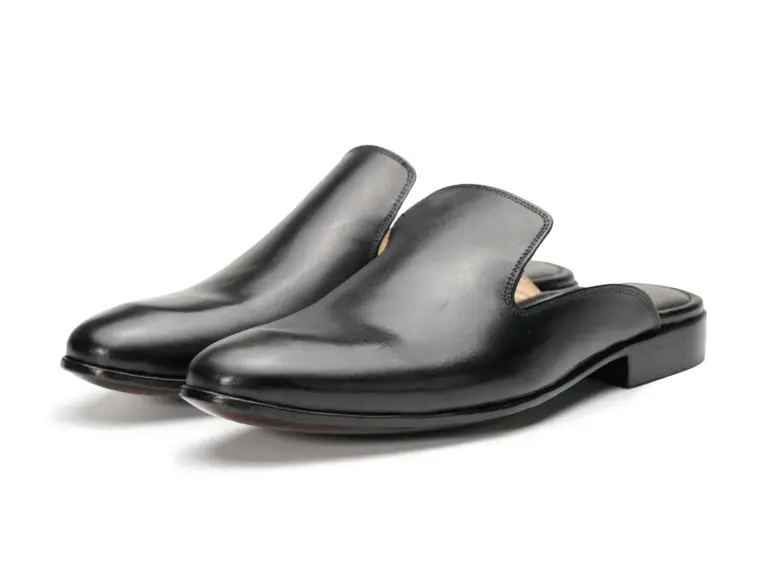
Blake stitched
Men's Black Leather Mules
$199.00Made to order
Size & width stay attached to your order
A mule is a shoe with an open back, so you step straight in; a backless loafer is a mule with a loafer front. Handmade in leather and made to order in your US size (6–15) and width (D–EEE), or to your own foot measurements at no extra cost. From $199, made in 7–10 working days before dispatch, with a free remake if they don’t fit under our Fit Promise.
Choose a design, then select its offered color, US size and width on the product page.
Browse the current designs below — standard pairs are made to order, with limited batches clearly marked where applicable.
Showing 32 designs 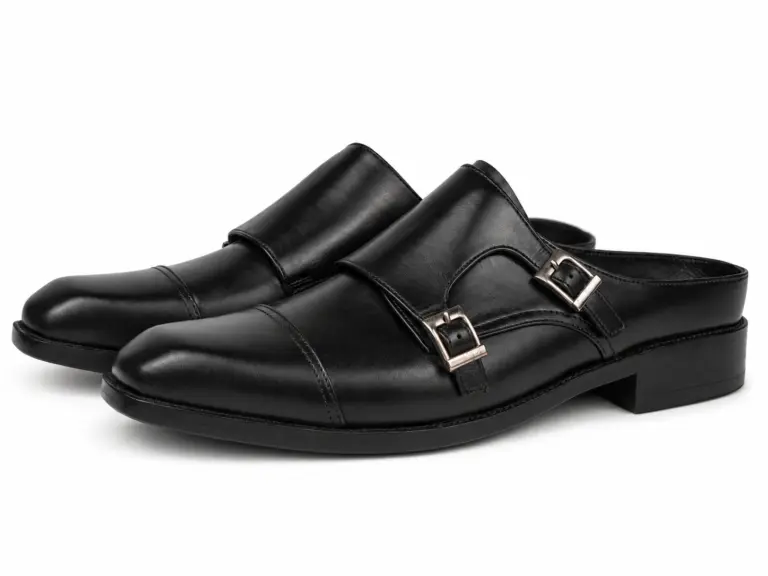
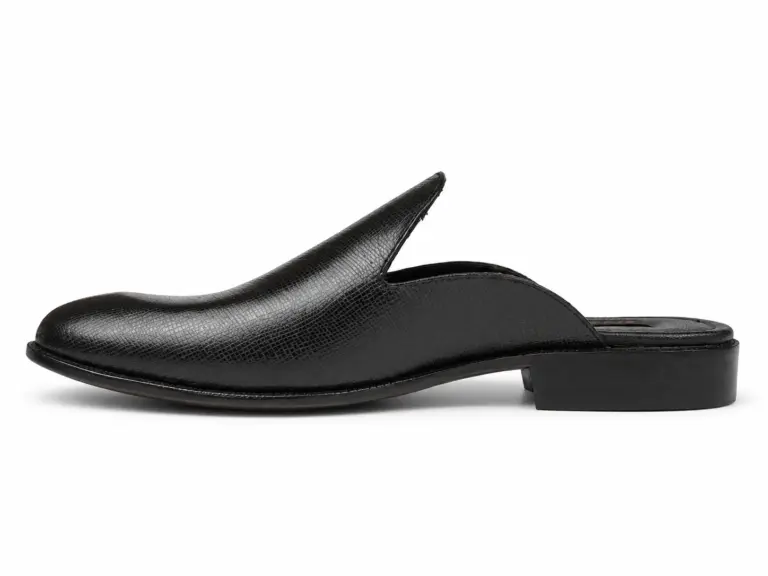
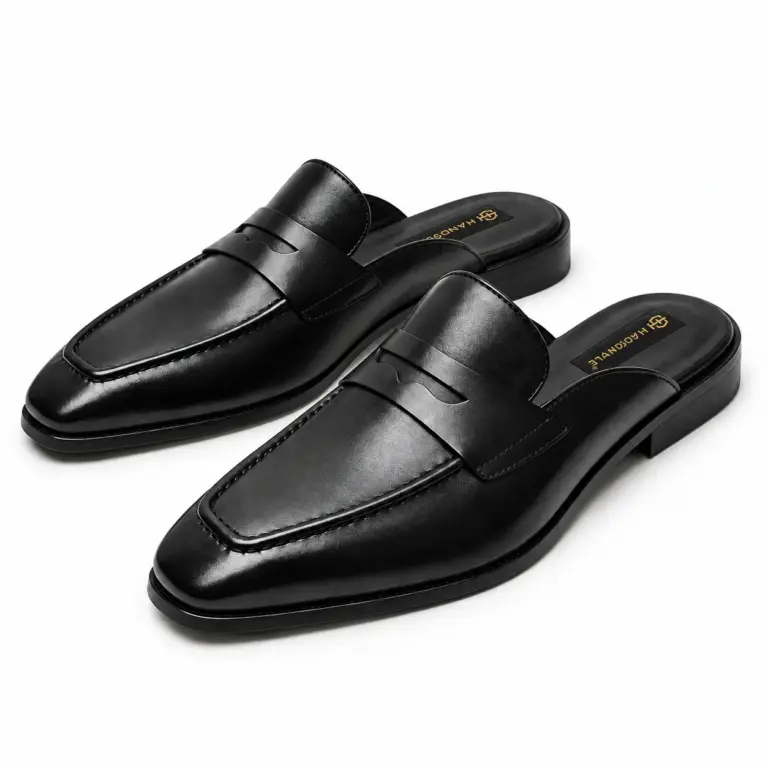
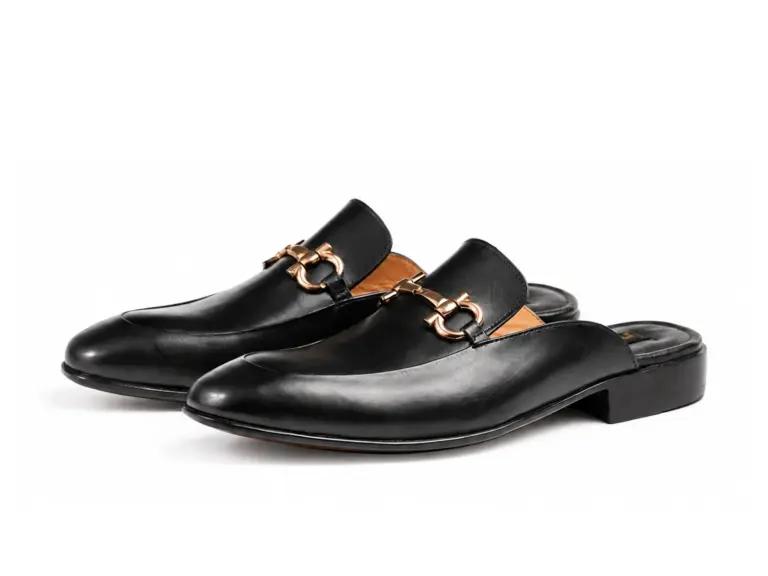
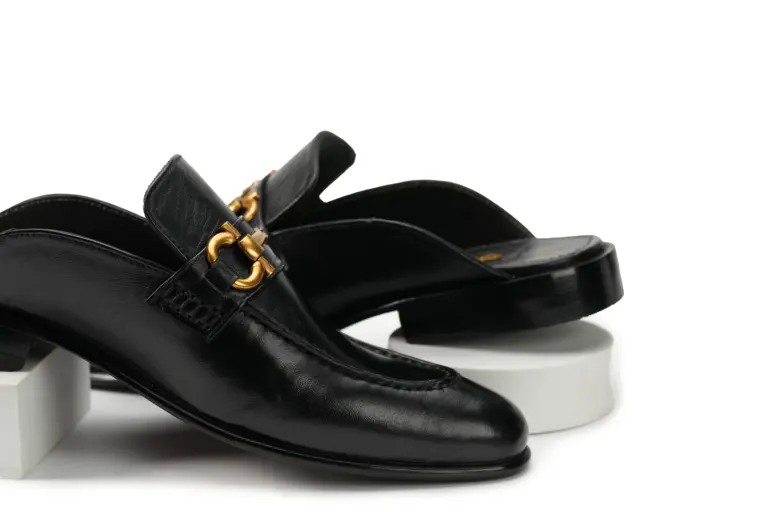
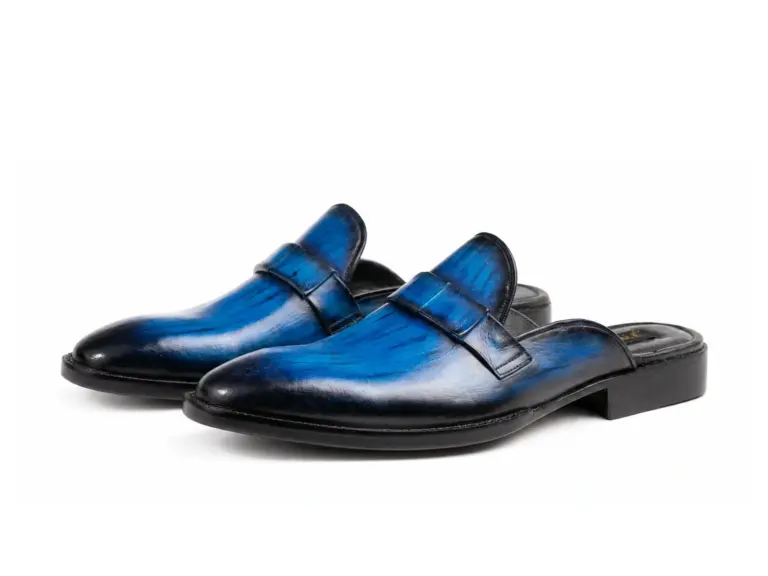
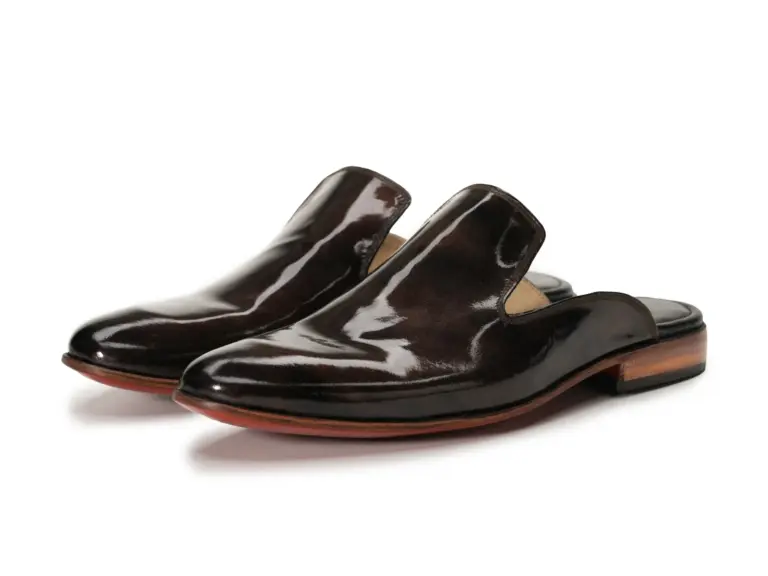
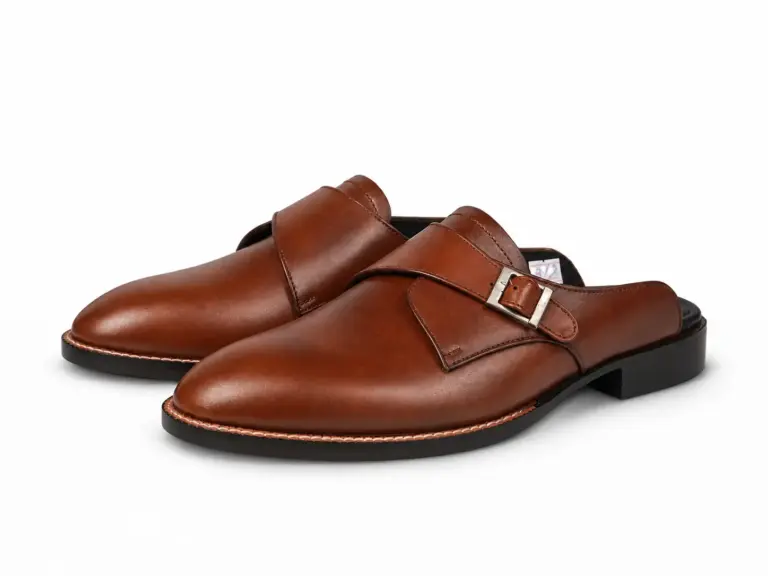
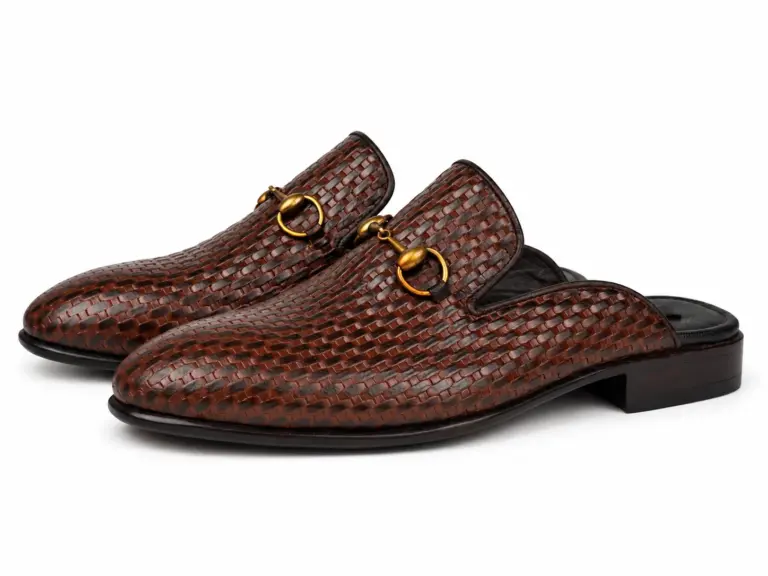
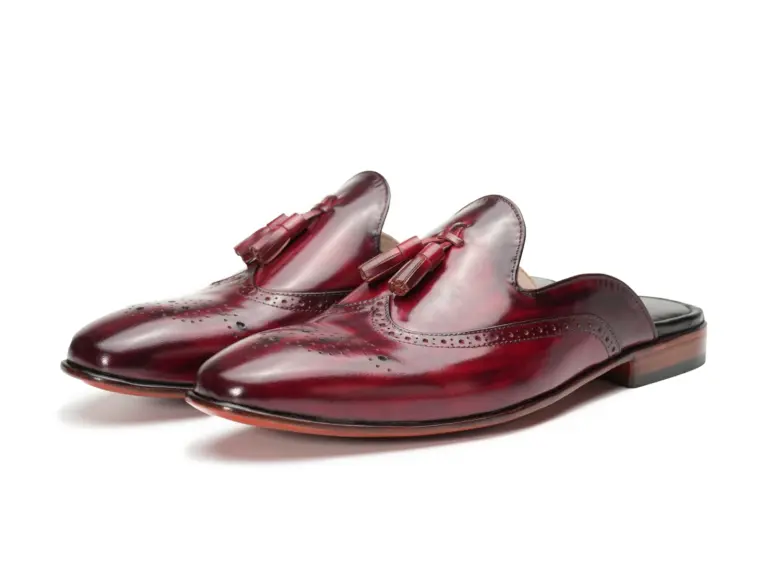
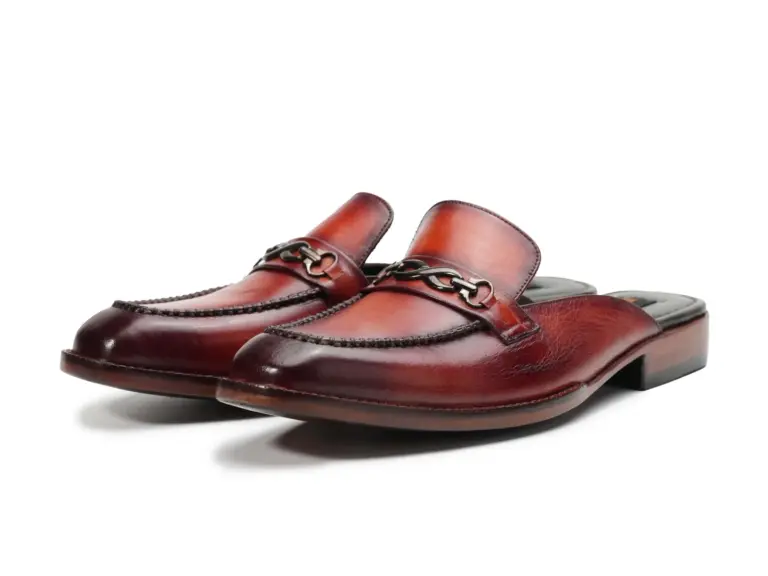
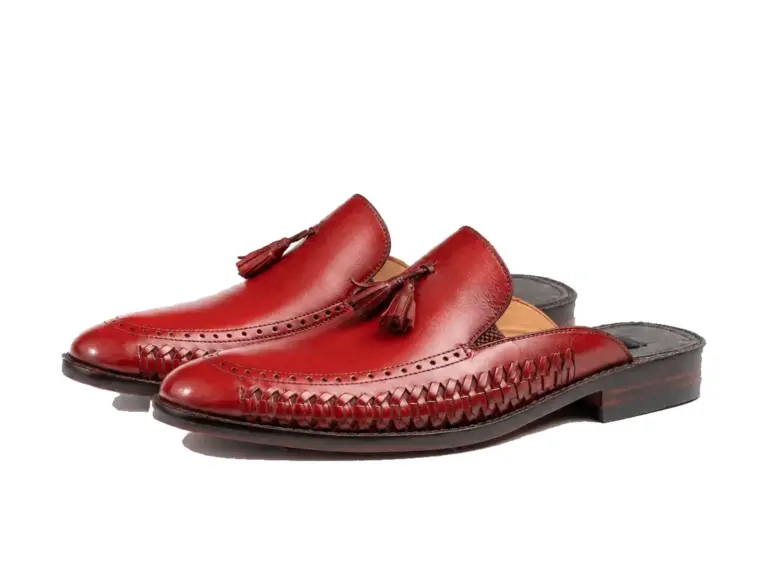
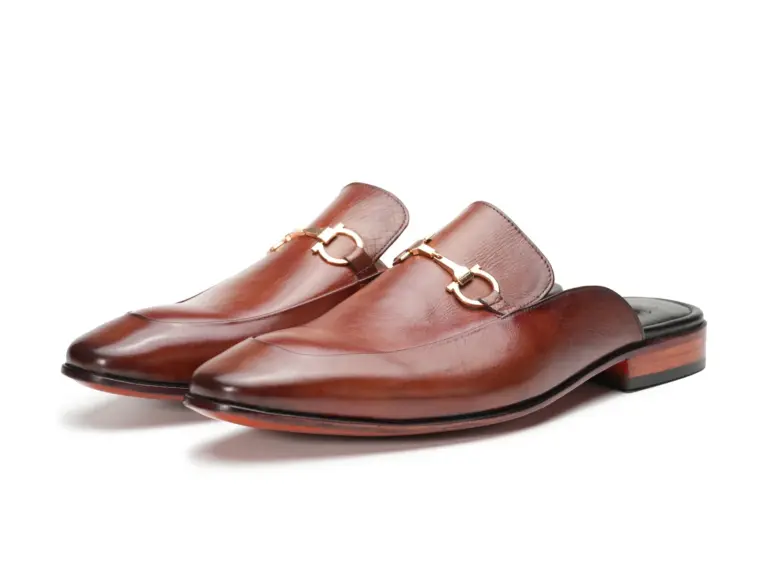
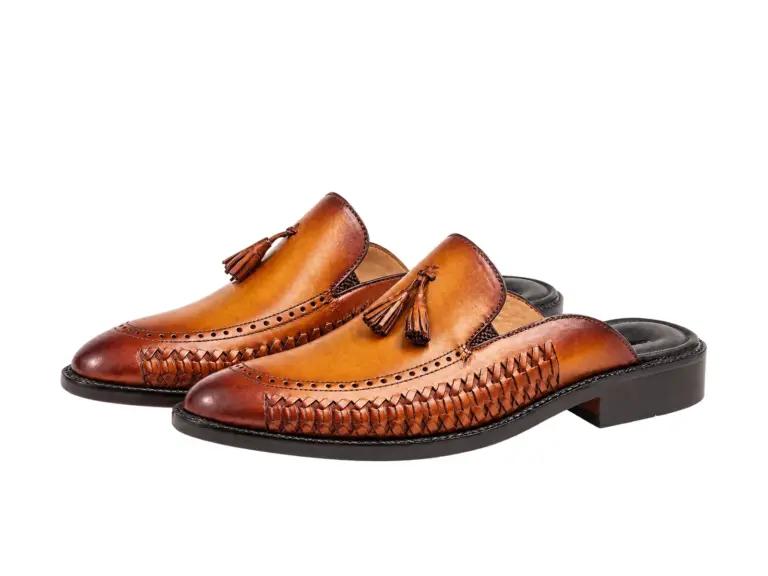
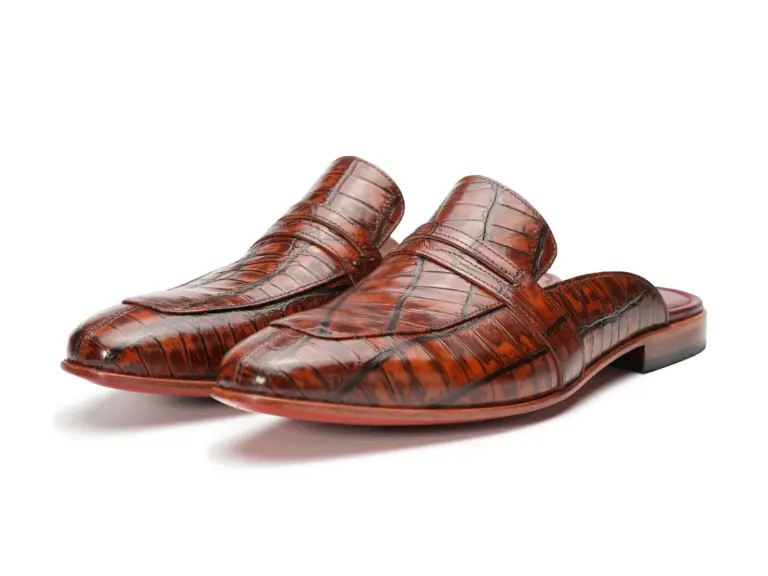
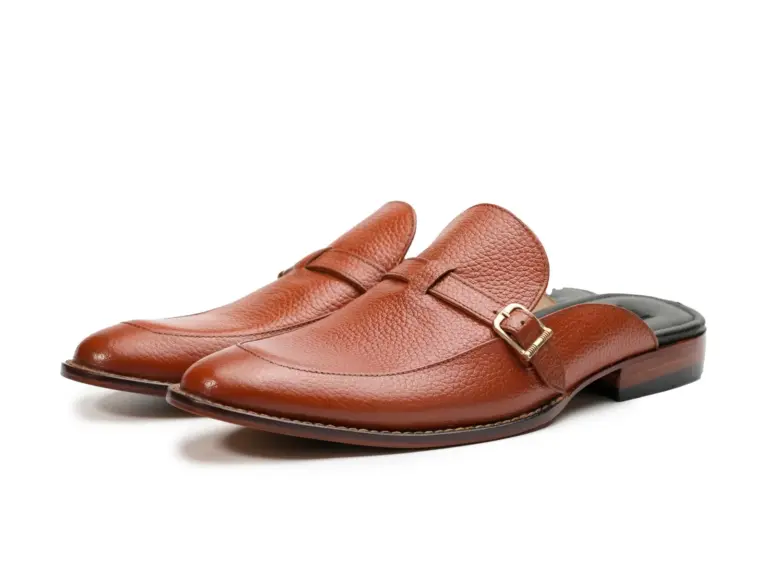
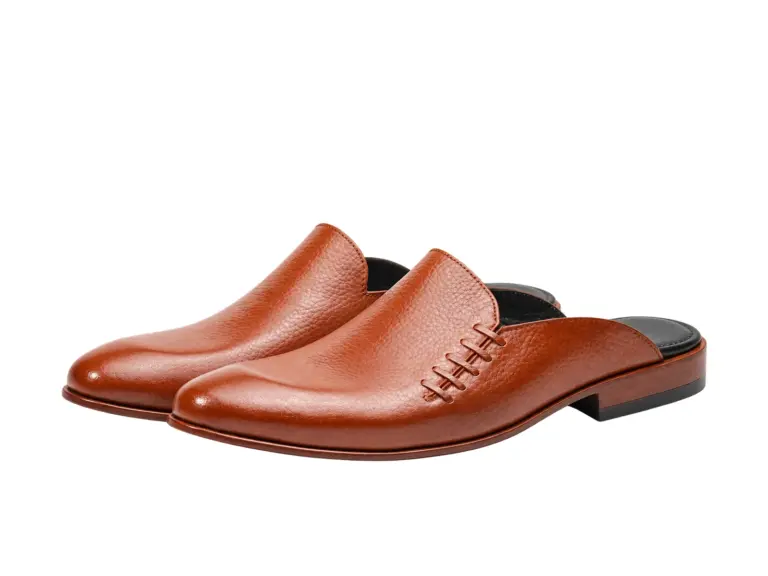
Still unsure about fit? Compare our five lasts → or use the Foot Shape & Last Guide
Men's leather mules leave the heel open, so you step straight in. A backless loafer is the loafer-style mule: a loafer front with an open heel, which makes men's mule loafers easy for warm weather, travel and relaxed days. The front sets the style; the leather and colour decide how dressy each pair looks.
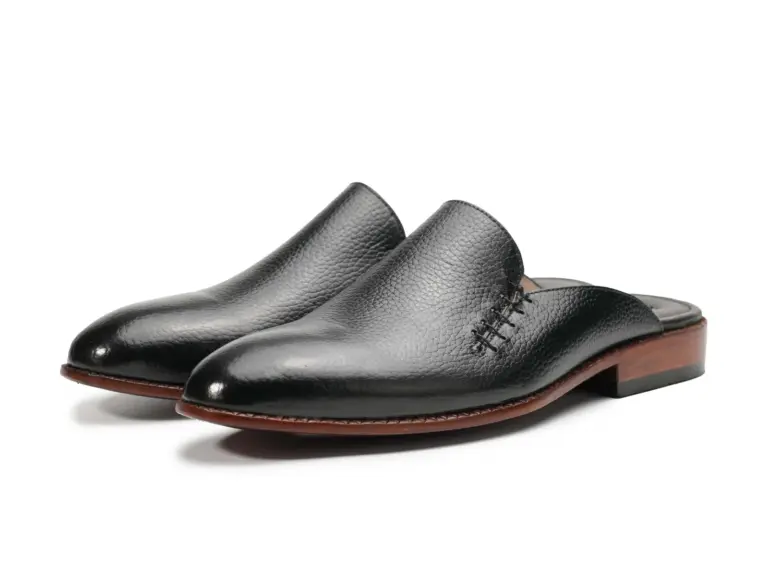
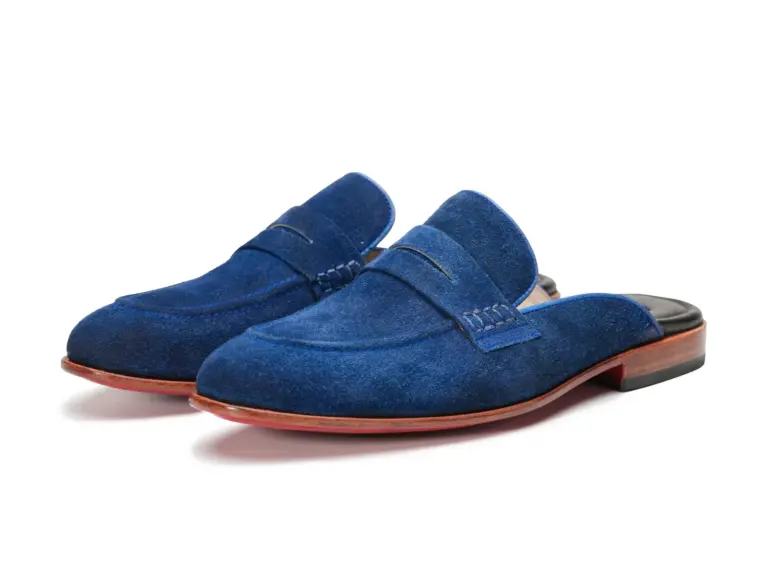
Plain mules let the leather do the work, like the black plain mule. Penny mules keep the saddle strap of a penny loafer and are the easiest backless style to wear with chinos: see the black backless penny loafer.
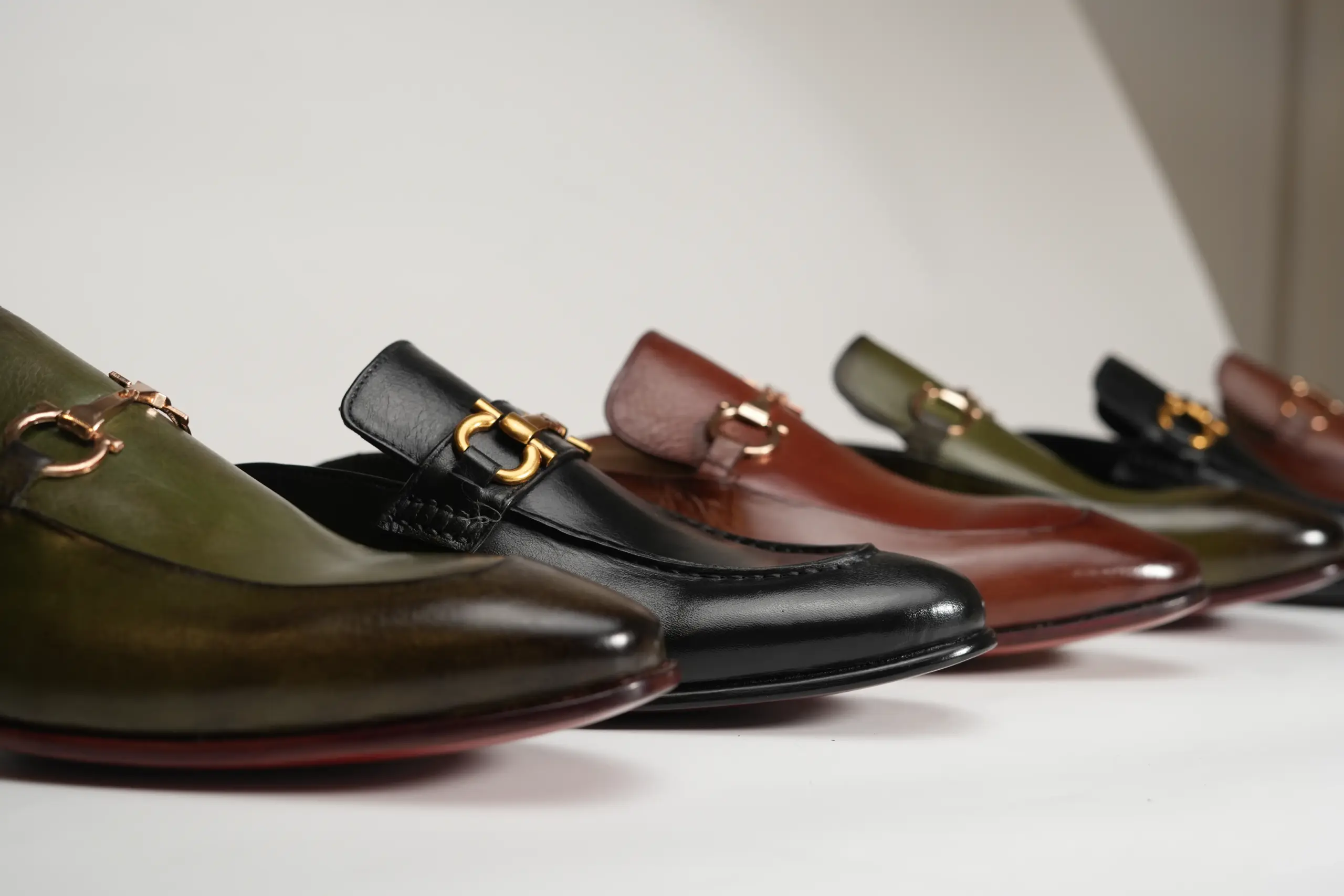
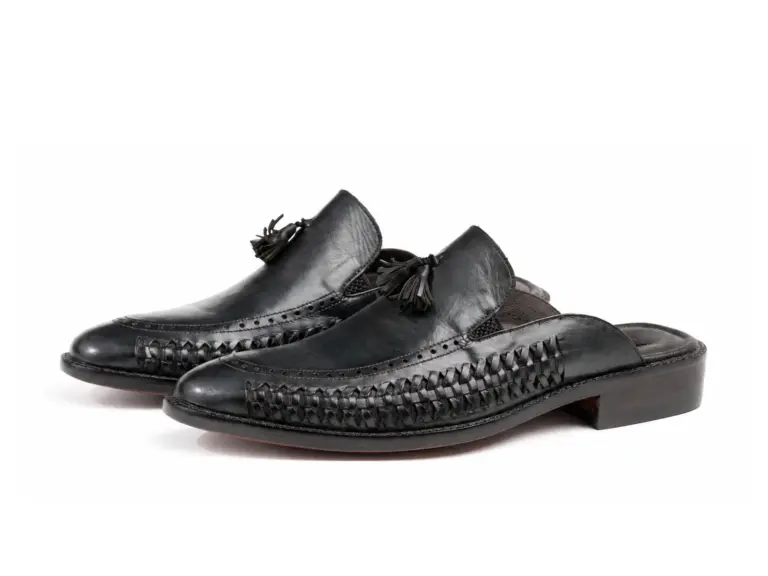
Horsebit mules carry a metal bit across the vamp; in black or dark leather they sit well with tailored trousers, as on the black horsebit mule. Tassel mules add movement and texture, like the royal blue tassel mule with handwoven side panels.
Double monk mules close the vamp with two buckled straps, the most structured front in the collection: see the navy blue double monk mule. Looking for another colour or leather? Ask about Custom Made.
Choose men's dress mules for tailored outfits, or casual leather mules for linen, chinos and relaxed days.
For tailored trousers or a summer suit, choose a strap or hardware on smooth or embossed leather, such as the cognac croc-embossed penny mule.
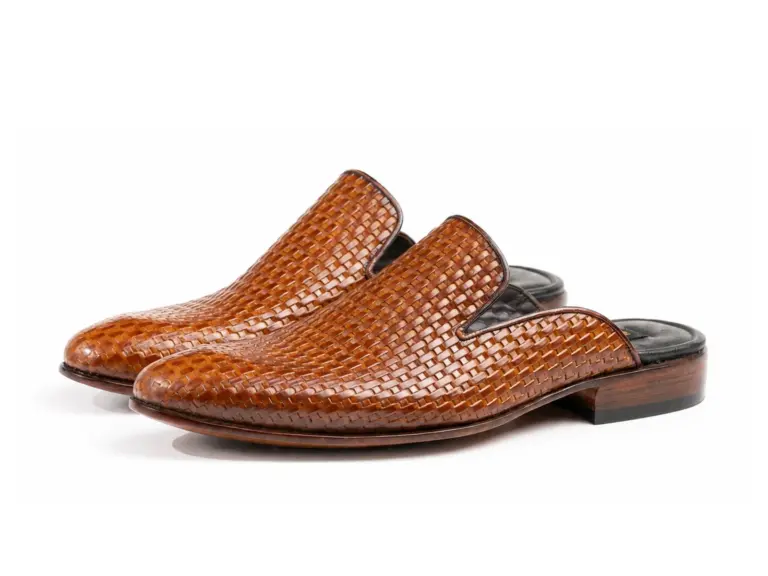
For chinos, linen and shorts, texture looks right: try the cognac handwoven tassel mule.
For travel and everyday wear, the teal patina buckle mule sits on a ridged Vibram sole, a sturdier base than leather. For formal events, choose a closed-heel loafer or an Oxford.
No heel counter, so your instep holds the shoe on.
A mule should sit snug across the top of your foot, so you walk without gripping with your toes. Your heel should rest on the back of the footbed, not hang over it. If the mule slaps against your heel as you walk, the instep is too loose. Toe shape varies by pair, from the almond-toe black horsebit mule to the square-toe black backless penny loafer; check the product's shape and fit notes alongside your measurements.
Choose from your measurements rather than your usual size: measure your feet for length and width, and read foot volume vs shoe width if your instep is high or low. If you're between widths, contact us with your measurements before you order. Every design is offered in US 6 to 15, including half sizes, in D, E, EE or EEE.
The finish changes the look, the care and how the pair ages.
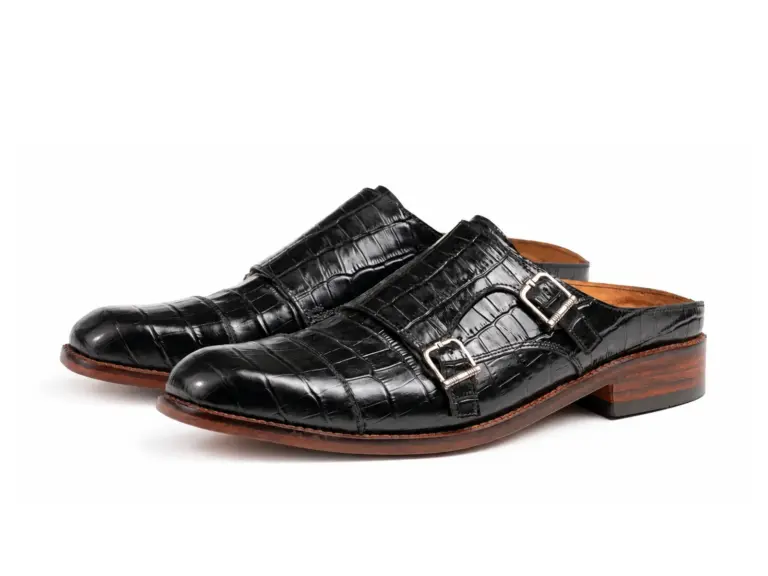
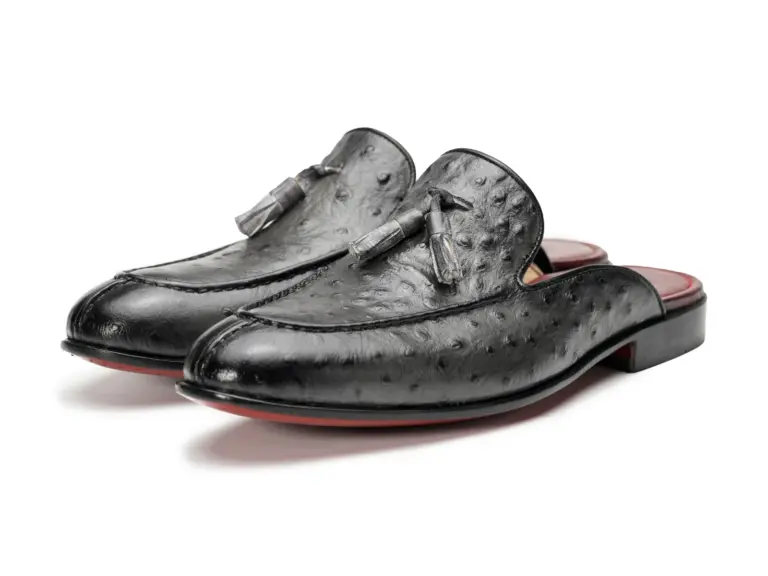
Smooth leather and patent look the most polished; patent needs only a wipe with a soft cloth. Pebble-grain hides small scuffs, and croc-embossed and ostrich-pattern leathers add texture without exotic skin.
For a relaxed look, suede has a soft nap, as on the blue suede penny mule: brush it after wear and protect it before wet weather. Waxed crazy horse leather, on the olive green horsebit mule, lightens where it is scuffed, and most marks rub back with a cloth.
Handwoven leather needs dust brushed out of the weave, and hand-painted patina takes a neutral cream. See how different leathers age.
A mule is a shoe with no back around the heel, so you slide your foot straight in. Men’s mules range from backless loafers with a penny, horsebit or tassel front to plain and buckle mules.
Smart leather mules in black or dark brown, with a horsebit or penny front, work in relaxed and business casual offices with tailored trousers, where the dress code allows open-back shoes. For formal dress codes, choose a closed-heel loafer or an Oxford.
The vamp holds them: a mule should sit snug across the top of your foot, so you walk without gripping with your toes. That makes instep fit and width matter more than on a closed shoe, so choose from your measurements. See the complete guide to backless loafers.