When Should Leather Shoes Be Resoled? Signs Your Soles Need Repair
A worn sole does not always mean a worn-out shoe. Learn how to inspect leather and rubber outsoles, heel wear, stitching and welt condition—and when to see a cobbler before damage spreads.
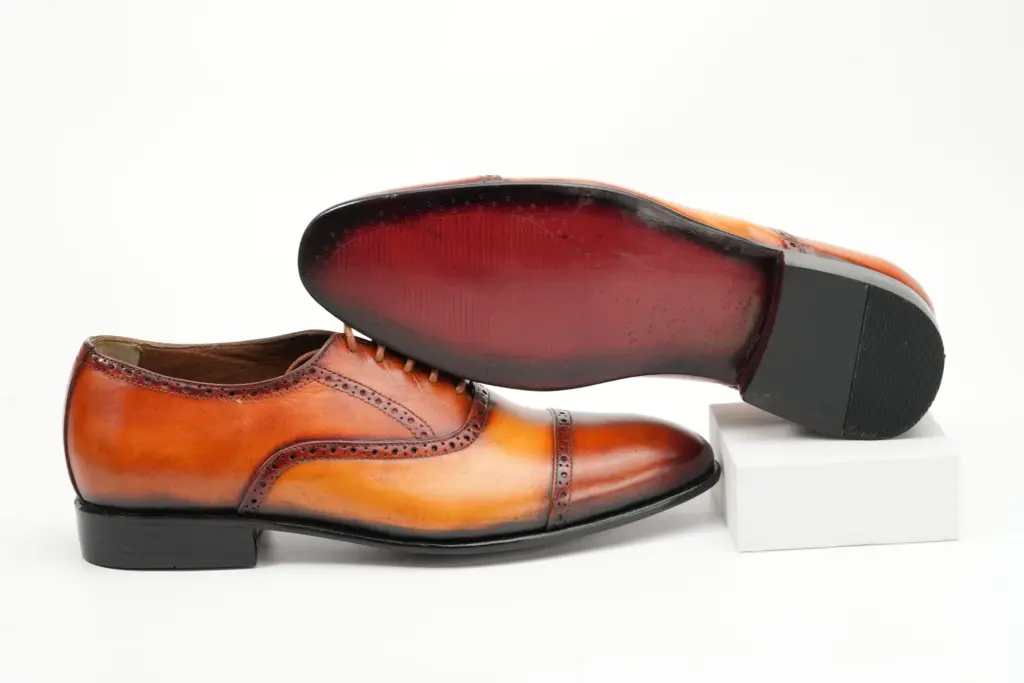
Repair the wear part before it damages the part you want to keep.
A worn sole does not automatically mean a worn-out shoe.
In fact, on a repairable pair, the outsole is one of the components expected to take wear so that more important parts of the shoe do not have to.
The mistake is waiting until that expendable layer has worn so far that the damage moves into the structure above it.
So the useful question is not:
“Does the bottom look used?”
Of course it does. You walk on it.
The question is:
“Has the outsole reached the point where continued wear risks damaging the shoe I am trying to preserve?”
That is when a cobbler becomes much cheaper than waiting.
For the wider longevity system, read How Long Do Quality Leather Shoes Last?.
What resoling actually replaces
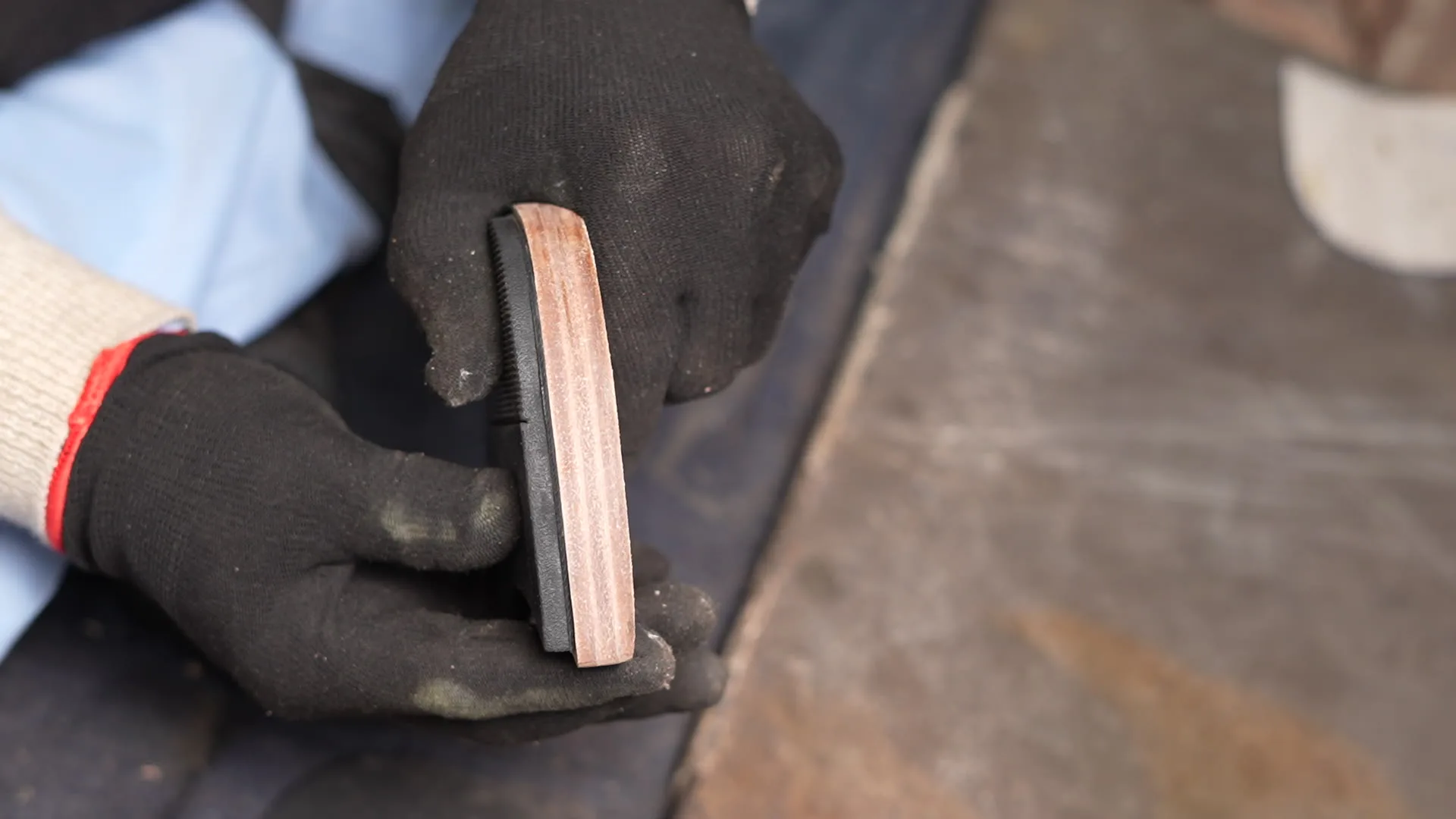
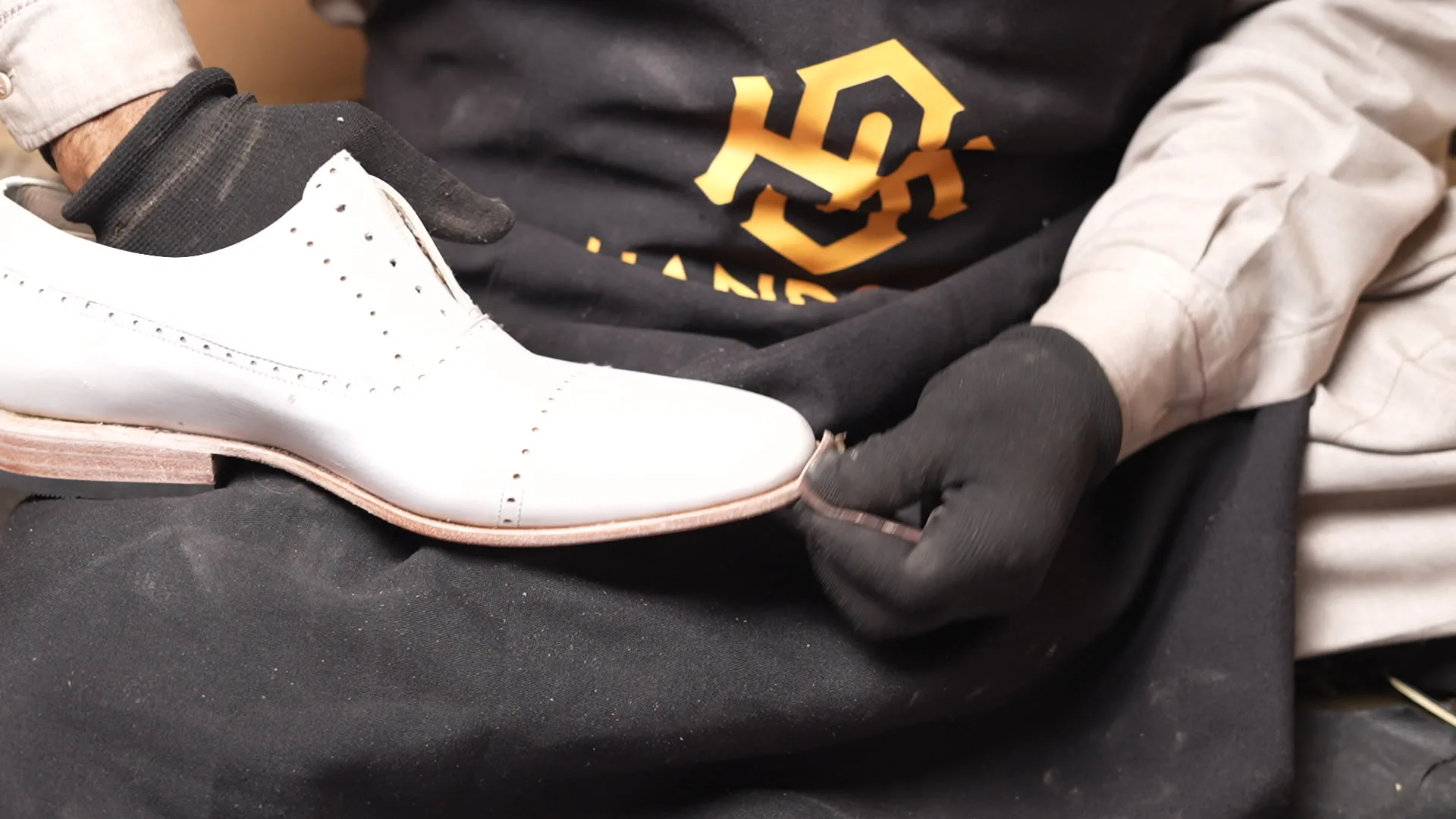
Resoling generally means removing a worn outsole and replacing it while preserving as much of the healthy shoe above it as the construction allows.
That sounds simple, but the actual repair depends on how the shoe was originally built.
A welted shoe, a Blake-stitched shoe and a directly bonded shoe do not present the cobbler with the same repair architecture.
That is why you should understand the construction before assuming what can be replaced.
Shoe Construction Explained breaks down the relationship between the insole, welt, outsole and heel and why construction affects repairability.
The important principle is simpler:
The outsole is the sacrificial layer.
When possible, repair it before wear reaches the components you did not intend to sacrifice.
Do not judge a leather sole by scratches
A new leather outsole can look dramatically different after only a small number of outdoor wears.
The polished surface becomes scratched.
Color disappears from high-contact areas.
The heel begins to show a wear pattern.
That is normal.
Visible abrasion tells you that the shoe has contacted the ground.
It does not by itself tell you the sole needs replacement.
SATRA evaluates outsole durability through measurable abrasion and material-loss testing, which reflects the difference between a sole looking used and a sole actually losing critical thickness.
So instead of asking whether the sole still looks new, inspect how much usable material remains.
Five signs it may be time to resole
There is no universal number of miles or months.
Your gait, walking surface, sole material and frequency of use all change the rate of wear.
But several physical signs deserve attention.
1. The center of a leather outsole feels unusually thin or soft
Run your fingers across the forepart of the leather sole.
A healthy section normally has noticeable firmness.
As the outsole becomes heavily worn, the remaining leather can become much thinner and may feel softer when pressed.
This is particularly important around the ball of the foot, where flexing and ground contact often concentrate.
Do not deliberately push hard enough to damage an already-thin sole.
You are looking for an obvious difference between the worn area and the healthier leather around it.
2. A hole has appeared
Once you can see an actual hole through the outsole, you are no longer looking at ordinary surface wear.
The outsole has been worn through.
At that point, continued use can expose the layers above it to ground abrasion, moisture and debris.
A hole means:
stop wearing the pair and have it assessed.
It is much better to repair the outsole than to continue until a relatively straightforward resole becomes a larger reconstruction.
The Shoe Service Institute of America provides consumer education around shoe repair and resoling and is a useful reference for understanding when professional assessment is appropriate.
3. Outsole stitches are becoming exposed or damaged
On stitched constructions, inspect the perimeter and high-wear regions.
As outsole material disappears, stitching that was once protected can become increasingly exposed.
Do not assume that one visible worn stitch means the entire shoe is about to fall apart.
Stitching and construction vary.
But significant outsole wear around the stitching is a reason to have the pair inspected rather than continuing until wear reaches the welt or surrounding structure.
4. The heel has worn far beyond the replaceable top lift
Look at the heel from behind and underneath.
Some uneven wear is completely normal.
People do not all walk with perfectly symmetrical pressure.
What matters is how far the wear has progressed.
Many traditional heels include a lower wear component or top lift designed to take direct ground contact.
If that layer becomes heavily worn, repairing it relatively early can preserve the larger heel structure.
If you continue wearing through the replaceable layer and into the heel stack above it, the repair may become more involved.
5. The sole is separating or structurally changing
Wear is not the only reason an outsole may need attention.
Inspect for:
- significant separation
- unusual looseness
- severe cracking
- distortion
- damaged edge areas
- changes that appear structural rather than cosmetic
A separated sole is not the same problem as an outsole gradually worn thin through walking.
The repair approach may therefore be different.
SATRA treats abrasion, sole adhesion and whole-shoe performance as distinct footwear properties rather than assuming every sole failure has the same cause.
Leather and rubber show wear differently
The inspection principles are similar, but the materials do not necessarily give you the same visual clues.
Leather soles
Leather tends to make abrasion obvious.
The originally finished surface quickly loses its pristine appearance.
Later, the high-wear areas can become visibly thinner and eventually softer.
Do not confuse the first stage with the last stage.
A scratched leather sole is normal.
A paper-thin leather sole is not.
Rubber soles
Rubber often shows wear through loss of tread, localized smoothing and material thickness.
If a tread pattern was originally deep and one area has become almost flat, that gives you useful evidence about where the sole is wearing most heavily.
Different rubber compounds also have different abrasion behavior.
That is why rubber does not equal permanent and leather does not equal fragile.
For the material comparison, read Leather Sole vs Rubber Sole.
The welt is not the outsole
This distinction matters enormously.
On a welted shoe, the welt forms part of the structural connection between the shoe and the replaceable outsole.
You generally want to preserve it.
If you continue walking after the outsole has worn through and begin grinding away the welt itself, the repair becomes more complicated.
This is one reason “wear it until there is a hole” is poor maintenance advice.
A repairable shoe gives you the opportunity to replace the sacrificial component.
It does not give you permission to destroy the surrounding structure before visiting the cobbler.
If the difference between the welt and outsole is unclear, use the Handsole construction guide.
You may not need a full resole
Not every worn bottom needs every component replaced.
A competent cobbler may determine that the problem is localized.
Depending on the construction and condition of the shoe, possible interventions can include:
- heel replacement
- partial sole work
- protective sole installation
- localized repair
- full outsole replacement
- more extensive bottom rebuilding
The correct repair depends on what is actually worn.
This is another reason to seek assessment before the shoe reaches catastrophic failure.
Earlier usually gives the repairer more options.
What about rubber sole protectors?
Some owners add a thin rubber protective layer over part of a leather outsole.
This can protect the leather forepart and provide a different contact surface without immediately replacing the entire leather outsole.
It can make sense for someone who likes the structure and appearance of a leather-bottomed shoe but wants additional protection or traction at the forepart.
But it changes the shoe slightly.
It can affect:
- sole thickness
- edge appearance
- ground feel
- future repair approach
So a protector should be a deliberate choice, preferably installed properly, rather than treated as mandatory equipment for every leather sole.
Can every shoe be resoled?
No.
And even a theoretically repairable shoe may reach a point where another resole no longer makes practical sense.
The cobbler has to examine more than the outsole.
The upper
Is the leather still structurally healthy?
The insole
Has the internal structure remained sound?
The welt
On a welted shoe, is there enough healthy structure to work with?
The lining
Is ordinary wear manageable, or has deterioration become extensive?
The heel structure
Is the problem limited to the replaceable wear component, or has damage progressed farther?
Overall shape
Has the shoe maintained a usable structure?
This is why resoleable does not mean immortal.
The construction gives the shoe a repair pathway.
The condition of the entire pair determines whether that pathway is still worth using.
How many times can shoes be resoled?
There is no honest universal number.
You may see claims such as:
“This construction can be resoled five times.”
That number cannot be guaranteed without knowing what happened during each wear cycle and repair.
A careful resole of a healthy shoe is different from rebuilding a pair that has been worn far beyond its outsole.
The condition of the welt, insole, upper and surrounding structure changes each time.
How skillfully previous repairs were performed matters too.
So rather than buying a shoe because someone promises a specific number of resoles, ask whether the construction supports repair and then maintain the shoe well enough that future repair remains possible.
Your walking pattern tells a story
Turn both shoes over and compare them.
You may notice one area wearing more quickly.
Common locations include:
- outside edge of the heel
- central heel
- ball of the foot
- toe
- one shoe more heavily than the other
The pattern itself does not automatically diagnose a medical or gait problem.
We should not turn shoe wear into a health diagnosis.
But it does tell you where the physical material is disappearing fastest.
That is useful for maintenance.
If the outside rear heel consistently wears first, inspect that area more often.
If your forefoot wears rapidly, monitor sole thickness there.
Check soles when you care for the uppers
You do not need a special inspection calendar.
Build the habit into something you already do.
When you brush or condition your shoes:
Turn them over.
Look at the heels.
Look at the high-wear forepart.
Look around the edges.
Feel the leather sole if applicable.
Look for separation.
Compare left and right.
The inspection takes seconds.
And it can catch a small repair before it becomes a larger one.
Should you resole before the original sole is completely worn?
Sometimes, yes.
The goal is not to squeeze the absolute final step out of the old outsole.
The goal is to replace it at a point where you have received useful wear from it without unnecessarily sacrificing the surrounding shoe.
That threshold will vary.
A cobbler examining the physical pair can make a much better call than an article attempting to prescribe one millimeter measurement for every shoe.
This is especially true because outsole thickness, construction and wear pattern differ between designs.
When should you see a cobbler?
You do not need to wait until you are certain the shoe requires a complete resole.
Bring the pair in when you notice something you are unsure about.
Particularly useful triggers include:
- noticeably thin or soft leather outsole
- a hole
- exposed or heavily abraded outsole stitching
- heel wear approaching the structure above the top lift
- significant sole separation
- unusual distortion
- rapid localized wear
- uncertainty about whether continued use will damage the welt or other structure
A good repairer would generally rather see a shoe while there are still options.
How Handsole thinks about resoling
Handsole should not make one blanket claim that every shoe can be repaired in exactly the same way.
The catalog can contain different:
- outsoles
- construction methods
- heel structures
- materials
The individual product’s Materials & Construction specification therefore remains the authority for that particular pair.
The Journal’s job is to explain what those specifications mean.
If your Handsole pair eventually needs repair, knowing its actual construction gives the cobbler a better starting point than saying only:
“These are handmade leather shoes.”
“Handmade” does not identify the sole attachment.
“Leather” does not identify the construction.
And “expensive” does not identify the repair method.
Specific information is more useful than prestige language.
Common questions
Do I need to resole as soon as a leather sole gets scratched?
No. Surface abrasion begins almost immediately during normal outdoor wear.
Should I wait for a hole?
No. A visible hole means the outsole has already worn through.
Can rubber-soled shoes be resoled?
Some can. Repairability depends on the construction and condition of the shoe rather than the material name alone.
Can Blake-stitched shoes be resoled?
Many can, although the repair method differs from welted construction and requires appropriate equipment and skill.
Can Goodyear-welted shoes be resoled?
Often, yes, when the welt and surrounding structure remain healthy.
Can hand-welted shoes be resoled?
Yes, welted architecture is designed to support outsole replacement, but actual repairability still depends on the condition of the individual pair.
Does replacing the outsole make the shoe new again?
No. Resoling replaces a worn component. The upper, lining, insole, welt and other parts retain their existing age and condition.
Repair the wear part before it damages the keep part
That is the entire idea behind timely resoling.
The outsole exists between the shoe and the ground.
It is supposed to take abuse.
The heel’s wear layer is supposed to take abuse.
Those parts can often be repaired or replaced.
What you want to avoid is allowing ordinary wear to travel beyond them into the welt, heel structure, insole or upper.
So do not judge your shoes by whether their soles still look beautiful.
Look at whether the material designed to wear still has enough life to keep doing its job.
When it does not, repair it.
Use the outsole. Preserve the shoe.