Leather Insole vs Removable Insert — What’s Actually Under Your Foot?
Understand structural leather insoles, sockliners and removable footbeds. Learn what an insert changes in dress-shoe fit and what to check before ordering.
Terminology matters because the layer you can lift out is not always the structural insole.
A leather insole and a removable insert are not necessarily competing choices. “Leather” describes a material; “removable” describes whether a component can be lifted out. A dress shoe may contain a permanent structural insole, a thin leather sockliner and a removable footbed above them. Ask which component the seller means before comparing comfort or planning an insert.
In traditional welted footwear, removing the structural insole is not like replacing a sneaker cushion. It may be part of the shoe’s attachment system. By contrast, a footbed designed to be removable can be taken out according to the maker’s instructions. The distinction matters for fit, cleaning, repairs and accommodation of a prescribed device.
This guide explains the layers, gives you a practical buying checklist and shows how to assess an added insert without assuming it will solve every fit problem. For the complete bottom assembly, read insole, midsole and outsole explained.
1. Identify the component beneath your foot
The structural insole
The structural insole is a foundation within the shoe. In some constructions, other components attach to it during lasting or welt sewing. It remains part of the shoe when the wearer changes socks, adds a cushion or replaces a removable footbed.
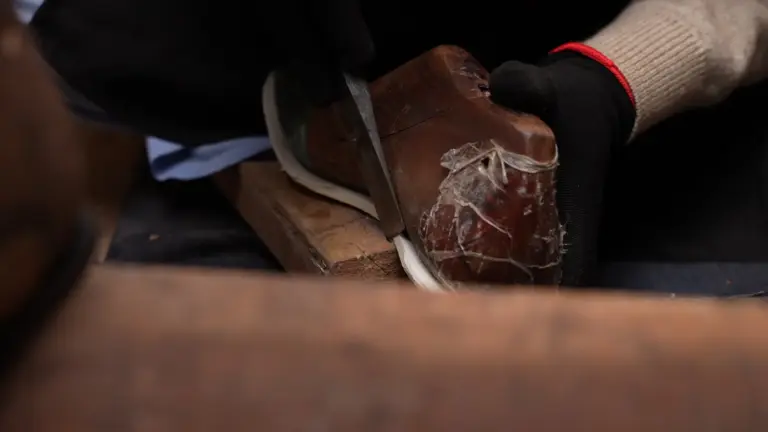
Crockett & Jones’s preparation process shows leather insoles being prepared with material ribbing before later construction stages. That example illustrates why an insole can have a structural job rather than merely cushioning the foot. It does not establish the specification of every dress shoe.
If an interior layer resists a gentle lift, do not pull harder to discover whether it comes out. It could be glued down, connected to another component or simply not designed for consumer removal. Ask the maker or let a repairer identify it.
The sockliner or interior covering
A sockliner covers some or all of the surface under the foot. It may be thin leather, another material or a layered assembly. Sometimes a shoe has only a partial covering at the heel. A logo printed on it does not tell you what lies underneath.
Its job and attachment are model-specific. A thin covering may smooth the contact surface or conceal construction details without providing a thick cushion. A padded covering can feel quite different. Neither should be confused automatically with the structural insole.
When a listing says “leather insole,” request clarification: is the visible covering leather, is the structural foundation leather, or are both leather? That question produces more useful information than assuming every visible leather surface has the same thickness and function.
The removable footbed or insert
A removable footbed is intended to come out of the shoe. It can have a fabric, leather or synthetic top surface, with cushioning or shaped material below. A replacement must still suit the shoe’s internal dimensions; removability alone does not mean every insert fits.
An aftermarket insert is an added component. It might replace the original footbed or sit above another layer, depending on the shoe and instructions. Those two arrangements use different amounts of space. Confirm the intended arrangement rather than automatically stacking both.
| Component | Main distinction | Consumer replacement? | Question to ask |
|---|---|---|---|
| Structural insole | Part of the shoe’s foundation and possibly its attachment system | Requires assessment as a shoe repair | What is it made from, and how does it participate in construction? |
| Sockliner | Interior contact covering, sometimes partial | Depends on attachment and maker’s guidance | Is it fixed, padded and full-length? |
| Removable footbed | A separate component intended to lift out | Usually, with a compatible replacement | What dimensions and thickness should the replacement have? |
2. Leather, cushioning and comfort are separate decisions
A leather surface is not a complete comfort specification
A shoe can have a leather contact surface over cushioning, or a relatively firm leather surface without a thick foam layer. The words “leather insole” do not identify which arrangement you will receive. Photographs help, but a clear specification is better.
Ask about the material directly under the foot, the removable component if present, and the bottom construction. Consider the lining and fit too. A soft pad cannot compensate reliably for an upper that presses on your instep or a toe box that does not accommodate your foot.
For shopping, compare the complete pair under similar conditions. Wear your intended socks, fasten the shoe normally and walk indoors on an appropriate surface. A quick press with your thumb measures neither long-term comfort nor the fit of your foot inside it.
Firmness does not automatically mean a defect
A traditional dress shoe may feel different from a sneaker with a thick cushioned platform. That difference should be understood before ordering, especially if you expect the same underfoot sensation. “Premium” does not promise a particular level of softness.
Separate firmness from pressure. A generally firm platform is a different observation from a localized painful spot, a lump or a loose interior layer. Describe where the sensation occurs and when it appears. A maker or repairer can use that detail more effectively than the statement that the shoe feels hard.
Do not rely on a promised break-in period to excuse a poor fit. Read breaking in leather shoes for that separate process. A leather foundation is not a medical device and should not be sold as one.
Choose for the actual day you will wear the shoes
A pair intended for occasional dinners has a different workload from one used for a standing job or lengthy commute. Tell the seller what you expect to do, including whether you already depend on a particular insert. That information should come before sizing advice.
For an important event, test the complete arrangement in advance. Use the same socks and insert rather than adding an unfamiliar cushion immediately before leaving. If the arrangement changes, reassess fit; comfort observed without the insert does not establish comfort with it.
Keep a note of which configuration you tested. If you compare two pairs, record whether the original footbed was present. Otherwise you may accidentally compare one shoe with extra padding against another without it and attribute the difference to leather alone.
3. Adding an insert changes the fit of the whole shoe
Extra thickness uses internal space
An insert placed above existing layers raises the foot within the upper. It can reduce space over the instep and toes and change the relationship between the heel and the topline. The result depends on the insert’s thickness and shape, not only its stated shoe size.
A heel-only pad and a full-length insert change different regions. A contoured device can also occupy space unevenly. There is no universal millimeter allowance that makes every dress shoe compatible. The actual combination must be checked.
If a new insert makes a previously comfortable shoe tight, do not assume that a longer size is the only answer. You may need a different volume, model or arrangement. The Handsole sizing and fit guide provides the starting measurements, but a device requirement should be discussed explicitly.
Check more than whether the insert fits on the bottom
A footbed lying flat inside the shoe is only the first check. Put the shoe on, fasten it and assess toe room, instep pressure, heel security and the position of the shoe opening. Check both feet because the same arrangement can feel different on each.
Walk normally on a clean indoor surface while the pair remains returnable. Notice whether your heel is lifting unusually or the upper presses in a new place. Avoid modifying or trimming a prescribed device as a retail fit experiment; discuss changes with its provider.
For a non-prescribed trim-to-fit insert, follow its own instructions and confirm the intended size before cutting. Do not use the structural insole as a cutting template or try to remove it to create space. Modification can make an unsuitable purchase harder to return.
An insert is not a universal solution to loose shoes
A small volume adjustment may help in some combinations, but looseness can come from several mismatches. A shoe can be too long, too broad at the heel or incorrectly shaped over the instep. Filling space under the foot may leave the original issue unresolved.
Describe where movement occurs before adding layers. If the front already feels crowded, extra underfoot thickness may make it worse even while the rear feels less loose. Read what to do when leather shoes are too big and heel slip in dress shoes before treating padding as the default fix.
Keep the comparison simple: evaluate the original fit, make one approved change and evaluate again. Several pads installed together make it difficult to identify what helped and what introduced a new pressure point.
4. Prescribed devices, cleaning and repair
Plan orthotic accommodation before buying
If you use a prescribed foot orthosis, choose footwear with your orthotist or clinician’s requirements in mind. Dorset County Hospital’s patient guidance emphasizes adequate depth, secure fastening and a removable original insole where appropriate. It also advises that the orthotist can help identify suitable shoes.
Bring the actual device when trying footwear. A size number or a statement that you need arch support does not describe its full shape. Ask the clinician whether a proposed shoe and arrangement suit the device rather than assuming every removable-footbed shoe is compatible.
A real customer question about orthotic-friendly dress shoes and loafers shows why the terminology matters. The useful shopping answer identifies removable volume and the actual device requirements; forum recommendations are not a clinical fit assessment.
For Handsole, confirm the particular model’s interior arrangement before ordering. Do not assume the whole collection has removable footbeds or that an unspecified customization can accommodate any device. Medical suitability and device adjustments belong with the professional managing your prescription.
Clean the component according to its instructions
A removable footbed can sometimes be aired or cleaned separately, but its materials and adhesives still matter. Read the maker’s instructions before soaking, machine washing or using heat. A leather top surface and foam underside may have different cleaning limitations.
A fixed interior layer requires a different approach because liquid can enter the assembled shoe. Avoid treating it as a washable accessory. Remove loose debris gently and ask the maker for appropriate interior cleaning guidance if there is a stain or persistent odor.
Allow footwear to dry naturally before enclosed storage. If a removable component is designed to be taken out for airing, use that feature as instructed. A damp shoe should not be forced dry against a radiator simply because its visible interior looks sturdy.
Replacement is easy only when the design allows it
For a worn removable footbed, ask whether the original replacement is available. Compare its outline, heel shape and thickness with the intended substitute. “Fits size ten” is not a promise that it matches the volume of your particular shoe.
A lifting sockliner may be repairable without rebuilding the whole bottom. A damaged structural insole is a different job. Let a repairer identify the affected component before authorizing work, and ask whether the repair is economical relative to the shoe’s condition.
For the role of the insole in welted construction, see hand welting versus Goodyear welting. The distinction explains why cutting out a foundation to gain space can interfere with more than the surface under your foot.
5. Buying questions that prevent the wrong comparison
A useful message to the seller
Ask: “Does this model have a removable full-length footbed, a fixed sockliner or an exposed structural insole? Which components are leather? I intend to wear this insert; can you confirm the interior arrangement and what fit information you need?”
Include photographs and dimensions of a non-medical insert if relevant, or the footwear requirements supplied by your clinician for a prescribed device. Explain whether you intend to replace the original footbed or add material above it. This removes ambiguity from the discussion.
Also confirm return conditions before testing or altering anything. A removable component does not automatically make a shoe returnable after wear, trimming or gluing. Keep packaging and avoid permanent changes until you know the combination works.
Can a removable insert be leather?
Yes. Removability and material are separate descriptions. Ask about the whole component rather than its top surface alone. A leather-covered removable footbed and a thick leather structural insole can both be described casually as leather insoles while serving different purposes.
Can I replace the fixed foundation with foam?
That is not an ordinary consumer swap. The foundation may participate in assembly and support other components. A repairer would need to assess the construction and damage. If removable cushioning is important, choose a shoe designed to provide it rather than rebuilding an unsuitable pair.
Which arrangement is better?
Choose the arrangement that suits your fit requirements, intended use and maintenance expectations. A traditional fixed leather foundation can be an intentional construction choice; a removable footbed can be an intentional accommodation and replacement feature. Neither label guarantees comfort.
Identify the layer first, confirm the materials second and test the complete fit third. That sequence makes “leather insole versus removable insert” a practical buying decision rather than a misleading comparison between a material and a feature.