Made-to-Order vs Custom vs Bespoke Shoes — What’s the Difference?
Made-to-order, custom and bespoke are often used as if they mean the same thing. They do not. Here is what changes in the shoe, how the fitting process differs and which route makes sense for your needs.
The label matters less than what is actually changed for the customer.
Made-to-order, custom and bespoke are often used as if they describe the same kind of shoe. They do not.
All three can involve a pair being made after you order it. You may be able to choose leather, color, size, width or other details. The finished shoe may also involve considerable handwork.
The real difference is how much of the shoe already exists as a defined design and how much is changed specifically for you.
Understanding that difference makes it easier to choose the service you actually need instead of paying attention to whichever label sounds most exclusive.
The service name should tell you what is being selected or changed. Ask about the last, pattern, fitting process and offered options rather than treating a marketing label as a complete specification.
| Service | What generally stays established | What to confirm |
|---|---|---|
| Made-to-order | The product’s design and normal last system | Which listed options are offered for this model |
| Custom Made | A base design may remain, with reviewed changes | The exact modification, feasibility, price and timing |
| Made-to-measure | The maker’s defined adaptation process | What is adjusted and how the fitting is evaluated |
| Bespoke | The individual maker’s process must be explained | Personal last/pattern work, fittings and what is included |
Choosing an offered color and width on a standard design is a different decision from asking to reshape an upper or solve an unusual asymmetry. The first can remain standard MTO; the second needs review of the requested change. Read ready-to-wear versus MTO when availability is the question, and when Custom Made is worth it when normal options leave a specific requirement unresolved.
What made-to-order actually means
A made-to-order shoe normally begins with an existing design.
The shoemaker already has the pattern, last, construction method and basic specification. Your pair enters production after the order is confirmed rather than being taken from finished inventory.
Depending on the maker, you may choose from predefined options such as size, width, leather, color, sole or finish.
The important point is that you are still working inside an established shoe system.
Choosing brown instead of black does not create an entirely new shoe. Selecting EE instead of D width does not mean a personal last has been developed around your foot.
At Handsole, the normal product page performs this job. You select the choices offered for that particular design, including its available color, US size and width. The product page also identifies the relevant fit, material and construction information for that shoe.
If the exact pair is not already finished, a new pair is made for the order.
That is made to order.
If you are unsure how the underlying shape affects fit, read What Is a Shoe Last? before choosing a configuration.
When Custom Made starts
Custom Made becomes useful when what you need falls outside the normal choices on the product page.
Perhaps you like an existing design but need something different from the standard specification. You may have meaningfully different left and right measurements, want to ask about another material or finish, need a design change, or have another fit requirement that should be reviewed before production.
The important difference is that the request can no longer be handled simply by selecting an existing option and checking out.
It needs individual assessment.
That does not automatically mean a completely new last and pattern must be created.
Sometimes an existing last, width or design already solves the problem. Sometimes a modification is practical. Sometimes the requested change would compromise the design or construction and should not be made.
Useful custom work is not about saying yes to everything. It is about understanding what actually needs to change.
If that is your situation, use Handsole Custom Made before production rather than guessing with a standard configuration.
What makes bespoke different
Traditional bespoke shoemaking goes considerably further.
Instead of beginning only with a standard size and an established last, the shoemaker develops the commission around the individual customer.
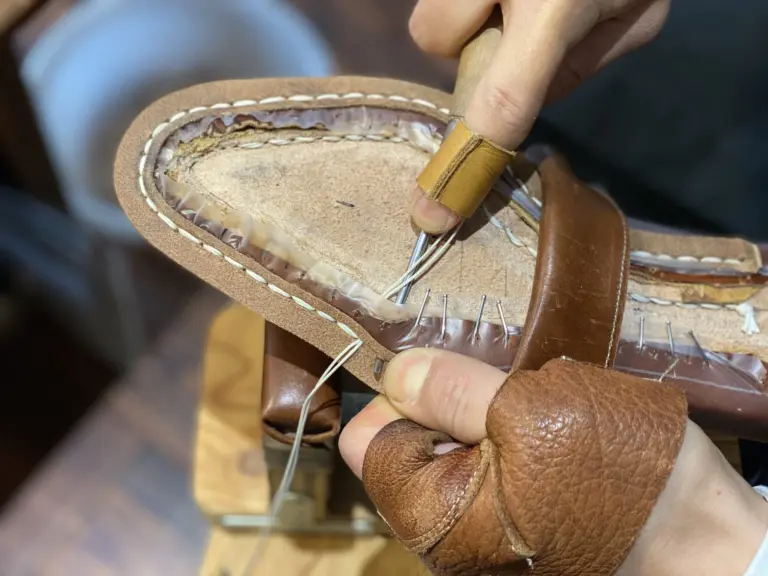
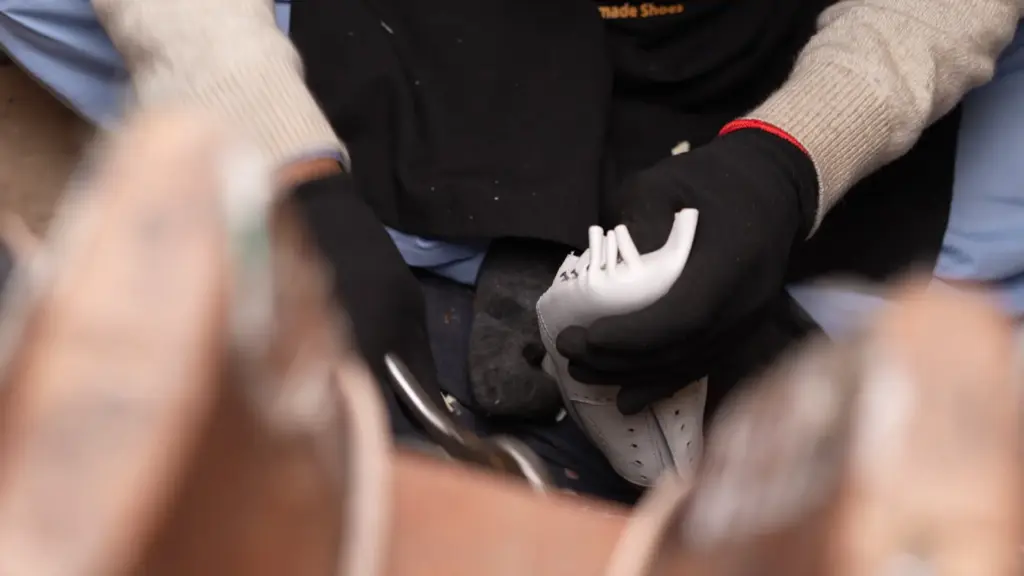
That process can include detailed measurements of both feet, assessment of asymmetry and volume, development or substantial modification of a personal last, pattern work, fittings and further adjustments before the final pair is completed.
The Victoria and Albert Museum’s documentation of the art of bespoke shoe making follows this progression through measuring, last development, pattern work, construction and finishing.
The last is one of the biggest distinctions.
A made-to-order shoe may be offered in several sizes and widths, but those configurations still belong to an established last system.
A traditional bespoke process can instead change the three-dimensional foundation of the shoe around the individual wearer.
Terminology varies between makers, which is why the word bespoke by itself is not enough. The useful question is:
What is actually being made specifically for me?
Made to Order: choose an existing Handsole design using the options offered on that product page, such as color, US size and width, or send your foot measurements and we make the pair to them at no extra cost.
Custom Made: use this when your request goes beyond the normal product configuration and needs review before we confirm what can be changed.
Bespoke: a substantially more individualized process that may involve personal last development, fittings and pattern work rather than simply selecting options on an existing design.
Where made-to-measure fits
You may also see the term made to measure.
It often describes a process somewhere between standard made to order and traditional bespoke.
A maker may begin with an established last but modify it using the customer’s measurements or fit requirements rather than developing an entirely new personal last.
Because makers use the term differently, ask what the service actually includes.
Is the standard last being adjusted? Are both feet assessed separately? Is there a fitting? Can the last or pattern be changed after that fitting?
Those answers tell you much more than the label.
Handmade and bespoke are not the same thing
A shoe can involve extensive handwork without being bespoke.
Likewise, choosing a leather, color or sole does not by itself make a shoe bespoke.
These describe different things.
Construction describes how the shoe is built.
Bespoke describes how individually the shoe is developed for its wearer.
A made-to-order shoe may use a highly involved construction method while still being produced on an established last.
A bespoke shoe may involve more individual fitting and development regardless of which construction method is ultimately chosen.
If you want to understand the making process separately from the service model, see Our Craft and Shoe Construction Explained.
Fit depends on more than the service name
Bespoke offers greater potential for individualization, but that does not mean every customer needs it.
If your foot works well with an existing last in the correct size and width, a standard made-to-order configuration may already provide what you need.
This is why the first question should not be:
Which service sounds most premium?
It should be:
What problem am I trying to solve?
If standard shoes usually feel too narrow, the correct width on an appropriate last may solve the problem.
If the issue is meaningful left-to-right asymmetry, unusual volume or another requirement the normal configuration cannot address, individual review makes more sense.
And if the shoe itself needs to be developed substantially around your feet, the process begins to move toward traditional bespoke work.
Use the Sizing & Fit Guide to compare US size, width and last before assuming you need a more complex service.
Which Handsole route should you use?
The normal product options already work
If you like an existing design and the product page offers the size, width and other choices you need, use the normal ordering process.
That is what the made-to-order system is there for.
You do not need to turn a standard order into a Custom Made inquiry.
You need something outside the product options
Use Custom Made.
Explain what needs to change before production begins. The request can then be reviewed to determine whether the modification is practical or whether an existing configuration would solve the problem more simply.
You need a substantially individualized shoe
Describe the actual fit or design requirement rather than relying on the word bespoke.
If the request requires a much deeper level of measurement, last or pattern development, that should be established before the commission is accepted.
Questions worth asking before ordering
Whether a maker calls a service made to order, custom, made to measure or bespoke, a few practical questions reveal what you are really buying:
- Is the shoe built on an existing last?
- Is that last modified specifically for me?
- Are both feet considered independently?
- Can the pattern itself change?
- Are fittings included?
- Which materials and construction will actually be used?
- Which choices are standard and which require individual review?
- What happens when my requirements fall outside the normal sizing system?
The clearer those answers are, the less important the marketing label becomes.
If fit is the deciding issue, measure both feet correctly before contacting the maker.
Common questions
Are made-to-order shoes the same as bespoke shoes?
No. Made-to-order footwear normally begins with an established design and last and is produced after the customer orders it. Traditional bespoke footwear involves a much more individualized development and fitting process.
Is choosing my own color considered custom?
It can be a configurable choice without being a custom-built shoe. If a color is already offered on the product page, choosing it remains part of the normal configuration.
Does choosing a different leather make a shoe bespoke?
No. Changing a material can personalize a shoe, but bespoke refers to a much deeper level of individual development.
Do wide feet require bespoke shoes?
Not necessarily. The appropriate combination of last, US size and width may already provide the required room. Start with the Handsole width and fit system before assuming an entirely individual last is necessary.
What if I do not know which option I need?
Start with the design you want and examine its size, width and fit information. If what you need is not available there, describe the requirement through Custom Made before production.
The practical difference
Ignore the prestige hierarchy and look at what is actually happening to the shoe.
A finished pair already exists: In Stock.
An established design is being made after you order it: Made to Order.
An established product needs something outside its normal specification: Custom Made.
The shoe needs a substantially individualized last, fitting or pattern-development process: Bespoke territory.
The best option is not the one with the most impressive name.
It is the one that changes exactly as much of the shoe as your actual requirement demands.
Choose the next buying guide
Next, compare ready-to-wear and made-to-order availability, judge whether MTO adds value, or decide whether a custom change is needed. These are separate buying questions, even when they concern the same shoe.