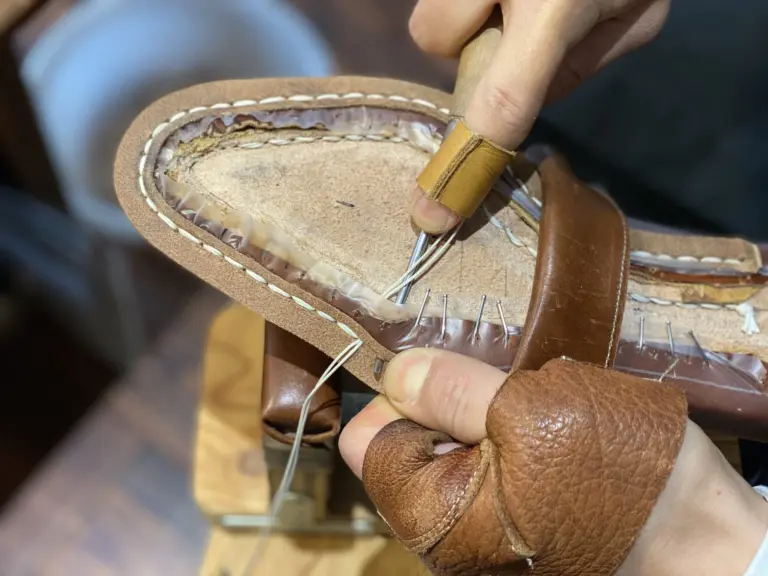
Brogue Shoes Explained — Full Brogue, Semi-Brogue, Quarter Brogue & Longwing
Brogue does not describe one shoe shape. It describes decorative perforation and patterning that can appear on Oxfords, Derbies and boots. Learn the difference between quarter, semi, full and longwing brogues.
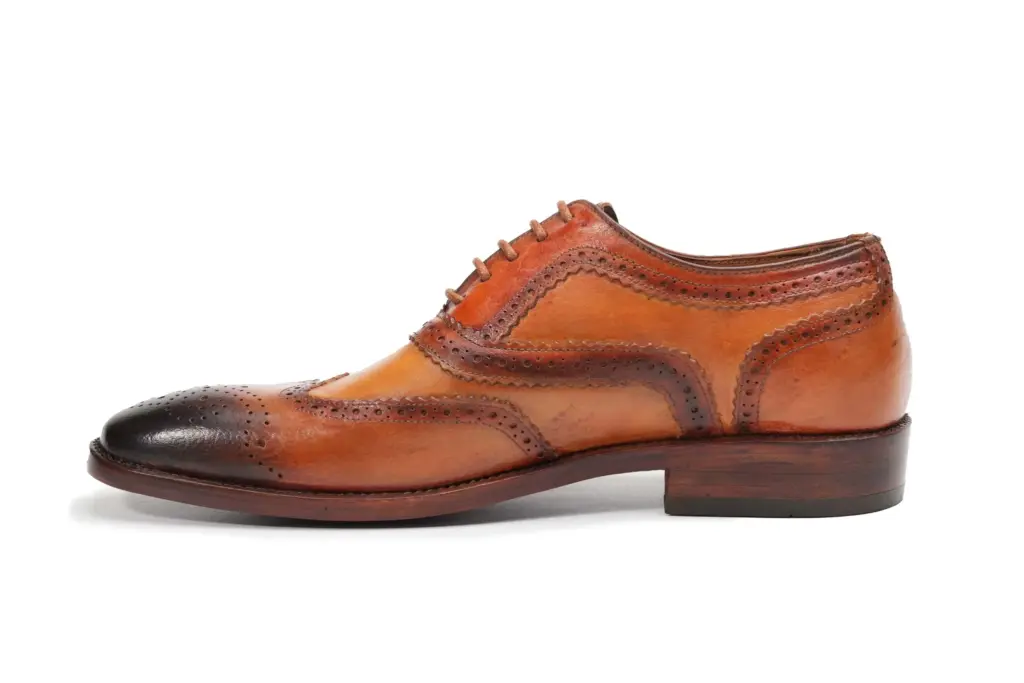
Brogue describes decoration—not the whole shoe.
One thing makes this subject much easier:
Brogue is not the opposite of Oxford or Derby.
Oxford and Derby describe how the shoe closes.
Brogue describes decorative perforation and patterning applied to the upper.
That means you can have:
an Oxford brogue
a Derby brogue
a brogued boot
and several different amounts of broguing within each family.
Crockett & Jones’ shoe style guide lists full, semi and quarter brogues as variations of Oxford shoes and longwing/brogue variations within Derby footwear.
Understanding that distinction makes the entire subject much easier.
What is broguing?
Broguing is the use of decorative perforations and shaped leather edges on the upper of a shoe.
The small punched holes may follow seams, decorate a toe cap or form more elaborate patterns across the toe.
Broguing can include several visual elements:
- perforations
- serrated or pinked edges
- decorative toe medallions
- shaped toe caps
- perforated seam lines
The amount and position of those details determines whether the shoe is usually described as:
- quarter brogue
- semi-brogue
- full brogue
- longwing brogue
The Victoria and Albert Museum’s shoemaking documentation uses a brogue to show how pattern, upper construction and craft come together in a finished shoe.
But broguing itself does not tell you:
- whether the shoe is Oxford or Derby
- what construction is underneath it
- which leather is used
- whether the sole is leather or rubber
- which last it is built on
Those remain separate decisions.
Brogue vs Oxford: they are not competing terms
People often ask:
“Should I buy Oxfords or brogues?”
But the categories overlap.
An Oxford is defined by closed lacing.
A brogue is defined by decorative upper detailing.
So a shoe can be both.
The same logic applies to Derby shoes.
A Derby uses open lacing, but it can still carry extensive broguing.
This is why the closure architecture and the decoration should be understood separately.
What is a quarter brogue?
A quarter brogue is the most restrained of the main brogue families.
It normally uses a straight toe cap with perforations along the cap seam, but avoids the more extensive decorative punching associated with semi and full brogues.
The result is relatively subtle.
From a distance, the shoe can still read almost like a plain cap-toe.
Move closer and the perforated seam adds detail.
Why quarter brogues feel dressier
There is simply less decoration competing with the underlying shoe.
That means the formal architecture remains more visible.
A black or dark-brown quarter-brogue Oxford on a refined last can remain very business-oriented.
The broguing adds interest without becoming the main visual event.
What is a semi-brogue?
A semi-brogue adds more decoration.
Typically, you still have a straight toe cap, but the shoe now introduces additional broguing along more seams and commonly a decorative medallion on the toe.
The medallion is a punched pattern rather than a separate structural piece.
That distinction matters.
It changes the appearance of the leather.
It does not create another layer of construction beneath the shoe.
Semi-brogue sits in the middle
It sits visually between:
quarter brogue → restrained
and
full brogue → highly patterned
A semi-brogue can work very well when a plain cap-toe feels too quiet but a wingtip feels too decorative.
Depending on color, leather and last, it can still work easily with tailoring.
What is a full brogue?
A full brogue is usually what people picture when they hear the word wingtip.
Instead of a straight toe cap, the front pattern extends backward in a W-shaped or wing-like form.
Those wings travel along the sides of the shoe.
The pattern usually carries more extensive perforation and often a toe medallion.
This creates much more visual movement than a quarter or semi-brogue.
The Metropolitan Museum of Art has historic full-brogue Oxford examples, showing how strongly the brogue treatment can define the visual character while still remaining within Oxford architecture.
Full brogue and wingtip are closely related
In modern menswear, wingtip generally refers to that characteristic wing-shaped toe pattern.
A full brogue normally combines the wingtip with substantial decorative perforation.
It helps to understand what each word emphasizes:
Wingtip → shape of the toe pattern.
Full brogue → degree and style of broguing.
The safest approach is to describe what the shoe actually shows rather than assuming every decorative toe follows one rigid terminology rule.
What is a longwing brogue?
The longwing takes the wingtip idea farther.
On a conventional full brogue, the wing shape travels backward from the toe and usually terminates along the sides of the shoe.
On a longwing, the wing continues farther back—traditionally running all the way toward or around the heel.
This creates one long visual line through the shoe.
Longwings are especially associated with Derby/blucher-style footwear, where the more substantial open-lacing architecture suits the long decorative sweep.
Why longwings often look less formal
The long pattern adds visual weight.
Combine that with open lacing, a substantial welt, broader last and heavier sole and the result can become strongly country or smart-casual.
But the exact shoe matters.
A longwing in dark calf on a refined last does not become a work boot just because the pattern is large.
Quarter brogue: restrained perforation around the toe-cap seam, usually without a decorative toe medallion.
Semi-brogue: adds more perforation and typically a toe medallion while keeping a straight cap-toe layout.
Full brogue: uses a wing-shaped toe pattern with more extensive perforation and pinking; this is the classic wingtip form.
Longwing: extends the wing pattern along the sides toward the heel. Broguing describes the decorative pattern—not whether the shoe is an Oxford, Derby or another closure type.
Broguing began as practical detail—but modern broguing is decorative
Many modern accounts repeat a simple story:
The holes were designed to drain water from shoes worn in wet fields.
There is a historical connection between brogued country footwear and practical outdoor use.
But a modern dress brogue should not be treated as a drainage system.
The perforations on contemporary brogue uppers are primarily decorative.
If you step into water in a modern brogued dress shoe, the answer is not:
“Good—the holes will drain it.”
The modern shoe contains lining, stitching and other layers that make that simplistic historical explanation irrelevant as a performance claim.
So the history is useful.
Turning it into modern waterproofing advice is not.
Does more broguing mean lower formality?
Generally, yes—but only as one part of the shoe.
A useful broad progression is:
plain toe / plain cap
↓
quarter brogue
↓
semi-brogue
↓
full brogue / wingtip
↓
heavy country brogue / longwing
As decoration increases, the shoe usually moves away from maximum formal restraint.
But color, last and closure can change the result dramatically.
Consider:
Black semi-brogue Oxford
Dark color. Closed lacing. Fine last. Moderate decoration.
Still relatively dressy.
Tan full-brogue Derby
Lighter color. Open lacing. Wingtip. More visible decoration.
Much more casual.
So it would be wrong to decide formality from perforations alone.
Oxford brogue vs Derby brogue
This is where two systems meet.
Oxford brogue
Closed lacing keeps the upper visually controlled.
That generally allows the shoe to remain somewhat dressier even when broguing is added.
Derby brogue
Open lacing introduces more visual structure and adjustment around the instep.
Add a full wingtip or longwing and the result generally moves toward country, smart-casual or relaxed tailoring.
The closure tells you one thing.
The brogue treatment tells you another.
Broguing does not determine construction
A full-brogue Oxford can potentially be:
- Goodyear welted
- hand welted
- Blake stitched
- another legitimate construction
The brogue pattern tells you about the upper.
It does not tell you how the outsole is attached.
That distinction is covered in Shoe Construction Explained and Blake vs Goodyear vs Hand Welt.
The principle remains:
upper design ≠ bottom construction
Broguing does not determine the leather either
A brogue can be made from smooth calf, suede, textured leather or another appropriate upper material.
Changing the material changes the character.
Smooth dark calf
Makes the broguing crisp and controlled.
Tan or patinated leather
Makes every punched detail more visible.
Suede
Softens the contrast and moves the style toward casual wear.
The individual product page should identify the actual leather. The Leather Knowledge Hub explains the material terms.
What is a toe medallion?
A medallion is the decorative punched pattern often placed on the toe.
It can range from a very restrained arrangement of holes to something much more elaborate.
The medallion is especially common on semi-brogues, full brogues, spectators and other decorated dress shoes.
But it does not change the fundamental structure of the toe.
It is a decorative surface treatment.
What are pinked edges?
You may notice that the leather edges around brogued panels are not always cut completely straight.
They may have a small serrated or zigzag profile.
This is commonly called pinking.
It works visually with the perforations and helps emphasize the panel boundaries.
A brogued edge can contain:
pinking
perforation
stitching
all in the same small area.
Each is doing a different job.
Is broguing punched by hand?
It can be done in different ways depending on the workshop and production method.
Traditional bespoke work can involve substantial manual pattern preparation, punching and upper-making.
But Handsole should not use a general article to claim that every perforation on every product was individually hand punched unless that is actually true for the specific product.
Describe what was actually done.
Do not use craft vocabulary more broadly than the evidence supports.
Does broguing weaken the leather?
The perforations remove small amounts of material.
But properly designed broguing has been used on footwear for generations.
The useful issue is not simply that holes exist.
It is whether:
- the pattern is placed appropriately
- edges are clean
- leather is suitable
- holes are not tearing
- stitching and panel design are well executed
Look at the actual workmanship.
Are brogues good for business wear?
Yes, depending on which brogue.
Strongest business options
- black quarter-brogue Oxford
- dark-brown quarter-brogue Oxford
- restrained semi-brogue Oxford
More relaxed business options
- brown semi-brogue Derby
- dark full-brogue Oxford
- restrained full-brogue Derby
Smart-casual direction
- tan wingtip
- suede full brogue
- longwing Derby
- heavy country brogue
There is no universal office dress code, but the amount of broguing gives you a useful starting point.
Can you wear brogues with a suit?
Yes.
But the type matters.
A dark quarter or semi-brogue Oxford can work naturally with many suits.
A heavy tan longwing on a broad country last is a much more deliberate choice.
Think about three variables together:
closure
decoration
color/material
The more of those variables move toward casual, the less naturally the shoe works with formal tailoring.
Can you wear brogues with jeans?
Absolutely.
Full brogues and longwings work especially naturally with denim, chinos, cords, tweed and casual wool trousers.
A highly polished black quarter-brogue Oxford may feel overly formal with casual denim.
But a brown wingtip Derby can be an excellent match.
Again, “brogue” covers too many variations for one styling rule.
Are brogues good for wide feet?
Broguing does not determine width.
The upper pattern may change panel placement, but the fit is still driven primarily by:
- last
- US size
- width
- instep relationship
- closure
That means a narrow full brogue is still narrow.
A wide-friendly quarter brogue can still offer substantial room.
If fit is the concern, use Shoe Widths Explained and How to Measure Your Feet.
How Handsole should classify brogues
Handsole should not create “Brogue” as if it replaces Oxford, Derby, Monk or Boot.
Instead, treat broguing as an upper-detail attribute layered onto the main shoe family.
For example:
Oxford
→ Semi-Brogue Oxford
Derby
→ Full-Brogue Derby
Boot
→ Brogued Balmoral Boot
That model keeps shoe family, last, materials and construction separate.
The category page can rank for the family.
The Journal explains the detail.
The product page combines the two accurately.
Common questions
What is a brogue shoe?
A shoe with decorative perforations and related upper detailing. Broguing can appear on several shoe families.
Is a brogue the same as an Oxford?
No. Oxford describes closed lacing. Brogue describes decorative perforation and patterning. A shoe can be both.
Is a brogue the same as a Derby?
No. Derby describes open lacing. A Derby can be plain or brogued.
The four main brogue patterns
What is a quarter brogue?
Usually a cap-toe shoe with restrained perforation along the toe-cap seam and relatively little additional decoration.
What is a semi-brogue?
A straight-cap shoe with more extensive perforation and typically a decorative toe medallion.
What is a full brogue?
A heavily brogued shoe typically featuring a wing-shaped toe pattern and extensive perforation.
What is a longwing?
A brogue in which the wing pattern extends farther back toward or around the heel rather than terminating earlier along the sides.
Which brogue is most formal?
Generally the quarter brogue, particularly on a dark closed-lacing Oxford.
Are brogues always handmade or welted?
No. Upper decoration does not determine the production method or bottom construction.
Brogue describes the detail—not the whole shoe
This is the easiest way to remember the subject.
Oxford / Derby / Monk / Boot
tells you the basic footwear family or closure architecture.
Quarter / Semi / Full / Longwing Brogue
tells you how decorative perforation and panel patterning have been applied.
Then you still need to ask:
What last?
What width?
What leather?
What sole?
What construction?
That is why a black quarter-brogue Oxford and a tan longwing Derby can both be called brogues while feeling like completely different shoes.
The word does not tell you which one is better.
It tells you where to look.