Leather Sole vs Rubber Sole — Which Should You Choose?
Leather and rubber soles behave differently in grip, wear, weather and appearance. Learn where each works best, what affects comfort and repairability, and how to choose the right outsole for the way you wear your shoes.
Leather and rubber solve different outsole problems; neither is universally better.
Leather soles and rubber soles can both belong on a well-made shoe.
The better choice depends on where you wear the shoe, the weather you expect, the appearance you want and how you want the shoe to behave underfoot.
That is more useful than asking which material is “higher quality.”
A slim leather outsole may make perfect sense on a refined dress shoe. A rubber outsole may make more sense when wet pavement and frequent outdoor wear are part of the job.
And neither sole should be judged in isolation.
The outsole is only one part of the system described in Shoe Construction Explained. The last, upper, insole, heel and construction method still influence how the finished shoe fits, flexes, wears and can eventually be repaired.
What a leather sole actually gives you
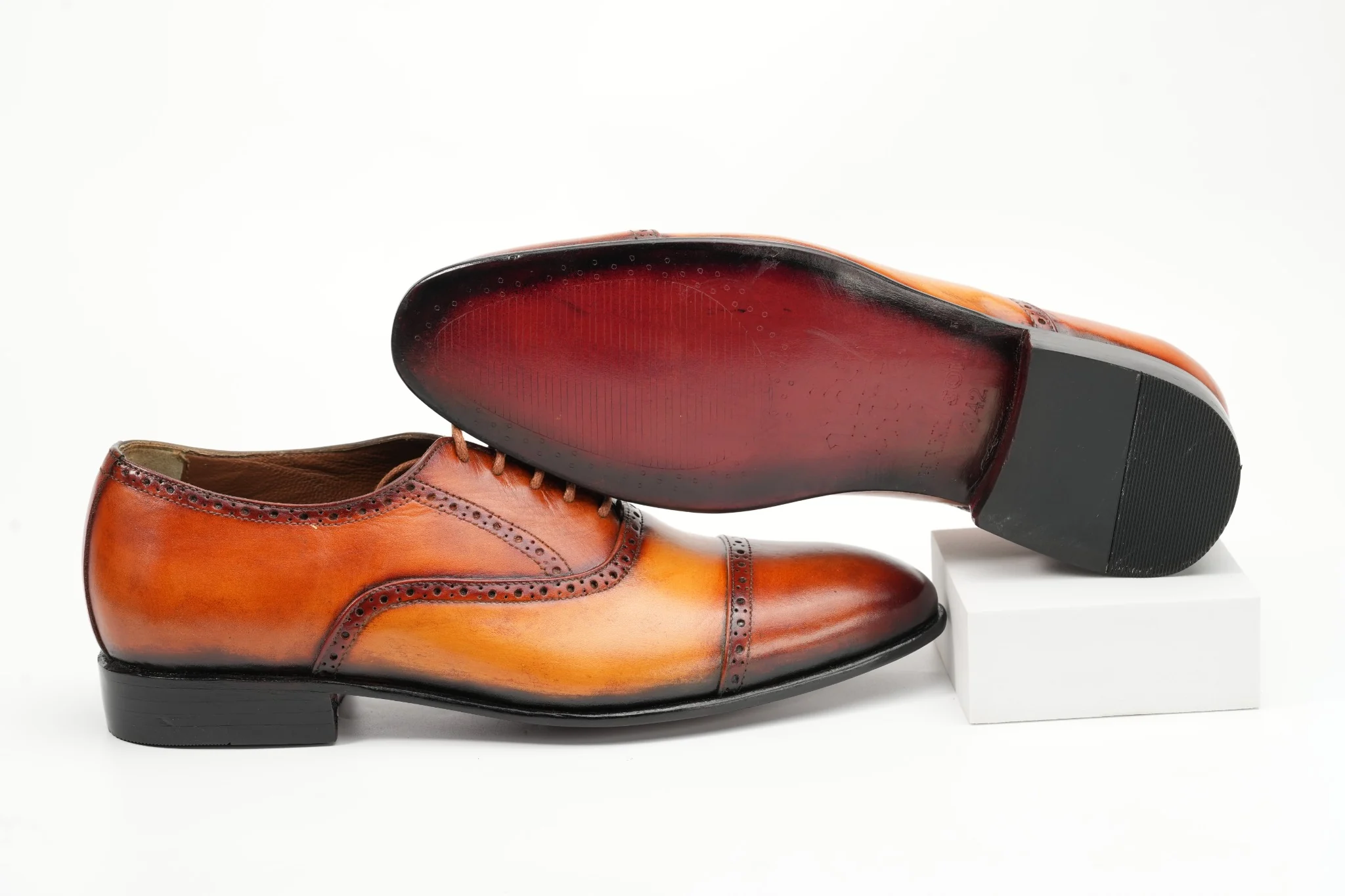
A leather outsole is the traditional ground-contact material on many dress shoes and classic loafers.
Its biggest advantage is not that leather is automatically “better.”
It is the combination of profile, feel and appearance that leather can give the shoe.
A cleaner, more refined profile
Leather can be shaped and finished into a relatively slim sole edge.
That works particularly well when the design calls for a clean dress-shoe silhouette rather than a visibly rugged bottom.
The outsole becomes part of the visual architecture of the shoe instead of merely something hidden underneath it.
This is why leather soles appear naturally on many Oxfords, loafers, dress boots and other traditional designs.
The individual Handsole product page remains the authority for the outsole used on that pair. One product using leather does not make leather the default for the entire catalog.
Leather develops with wear
A new leather outsole does not remain pristine.
The ground scratches it almost immediately.
That is normal.
The smooth finished surface gradually becomes marked and abraded where the shoe contacts the ground. The sole begins to tell the story of how the wearer walks and where the pressure falls.
That visible wear should not automatically be confused with structural failure.
A surface that no longer looks new is not necessarily a sole that needs replacing.
Leather soles can become more flexible
The way a leather sole feels when completely new is not necessarily how it will feel after repeated wear.
Flexing, movement and use can change its feel.
But the outsole alone does not determine whether a shoe feels flexible or stiff.
Thickness, insole structure, construction, upper materials and the rest of the bottom build matter too.
That is why “leather sole” is not enough information to predict the complete wearing experience.
Where leather soles are less forgiving
Leather has trade-offs.
The most obvious is traction.
A new, relatively smooth leather outsole may feel slippery on polished floors or wet, smooth surfaces.
Normal wear roughens the contact area, which can improve traction compared with the untouched new surface, but that does not turn a leather dress sole into a wet-weather rubber outsole.
Wet pavement deserves respect
A leather-soled shoe can certainly encounter ordinary outdoor conditions.
That does not make it the ideal choice for every wet day.
If your daily route regularly includes rain, wet concrete, slick tile or long outdoor walks, outsole grip becomes a much bigger part of the buying decision.
There is another distinction worth keeping clear:
A leather outsole is not the same thing as a waterproof shoe.
And a rubber outsole does not automatically make the rest of the shoe waterproof either.
Water can interact with the upper, seams, welt, edge and other parts of the construction. The outsole is only one part of that system.
What a rubber sole changes
“Rubber sole” is also a very broad description.
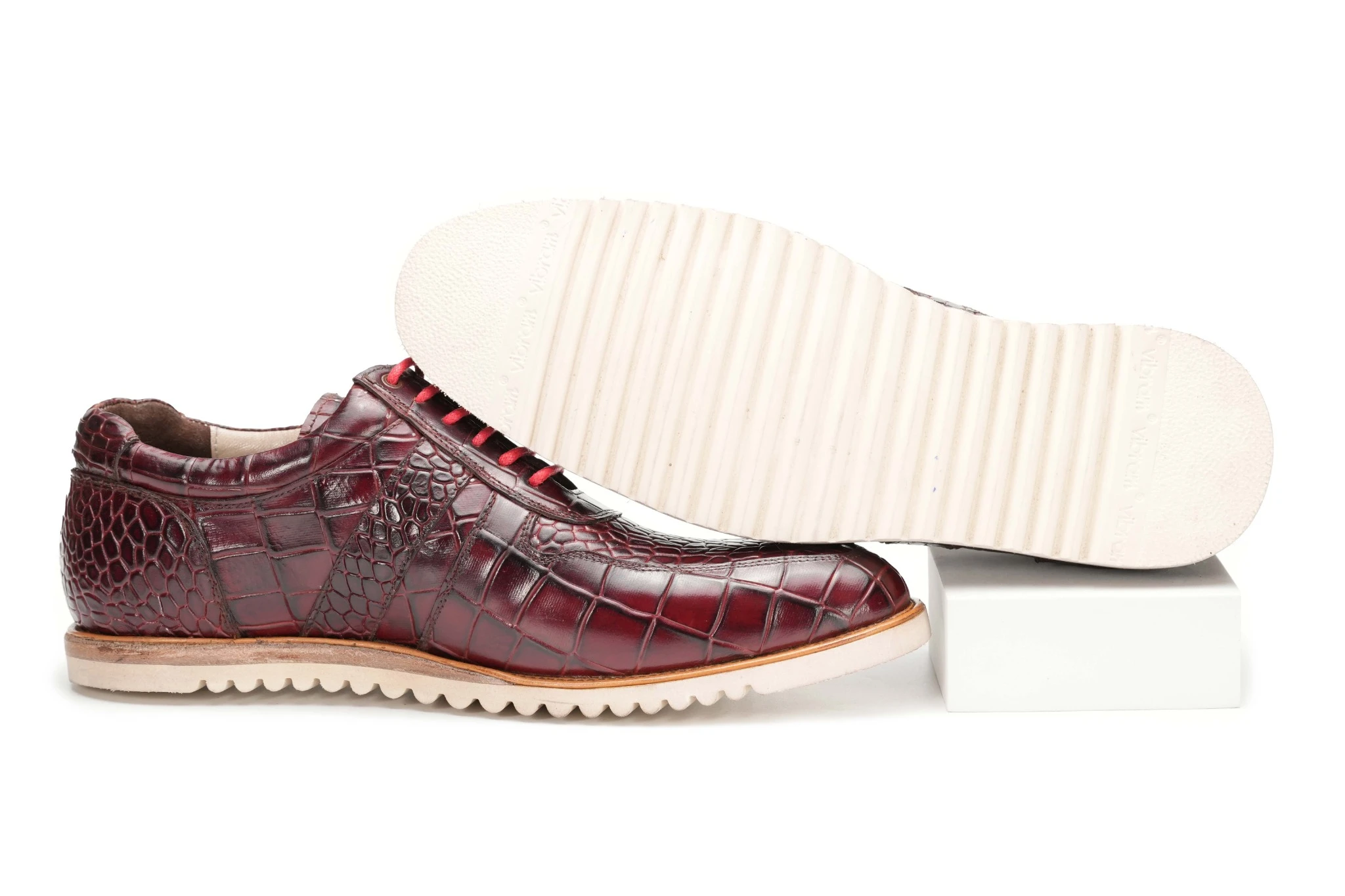
Rubber outsoles can vary dramatically in compound, thickness, tread pattern, hardness and intended use.
A thin rubber dress sole is not the same thing as a deep-lug boot sole.
Footwear-testing organization SATRA explains that rubber compounds are formulated for different footwear uses, which is why the word rubber alone is not a performance specification.
Grip is usually the main reason to consider rubber
Rubber can provide useful traction, particularly when the outsole has a tread or surface designed for grip.
That makes it attractive for shoes that will spend more time outdoors or encounter unpredictable surfaces.
But rubber should not be treated as magic.
A completely smooth rubber outsole and a deeply patterned rubber outsole will not behave identically.
Surface conditions matter too.
SATRA’s work on footwear slip resistance evaluates the relationship between the sole, tread, walking surface and contaminants because grip changes with the conditions.
No outsole material makes every surface slip-proof.
Rubber can suit frequent outdoor wear
If a pair will regularly encounter pavement, commuting, damp conditions or harder outdoor use, rubber may be a practical choice.
Depending on the compound and construction, it can offer useful resistance to ground abrasion and isolate the leather components above it from some direct contact with the pavement.
But once again, the specific sole matters.
A thin dress-rubber sole, a rubber forepart, a studded sole and a lugged boot sole are different solutions.
The word rubber alone is not a performance specification.
Which sole is more comfortable?
Neither material wins automatically.
Comfort comes from the whole shoe, not one layer touching the ground.
The last determines the shoe’s geometry around your foot.
The insole and bottom structure sit directly beneath it.
The upper controls how the foot is held.
The heel changes stance.
The outsole then contributes its own thickness, flexibility and ground feel.
This is why changing from leather to rubber does not automatically repair a shoe that is the wrong length, width or shape.
A correctly fitted leather-soled shoe may be far more comfortable than a rubber-soled shoe built on unsuitable geometry.
If fit is the problem, start with the relationship between your measurements, width and shoe shape. Use What Is a Shoe Last? and the Sizing & Fit Guide rather than judging comfort from outsole material alone.
Which sole lasts longer?
There is no useful universal answer such as:
Rubber lasts twice as long.
or
Leather lasts longer because it is premium.
Wear depends on the material itself, thickness, compound, construction, walking surface, gait, frequency of use and how the owner rotates and maintains the shoe.
A person walking several miles over rough pavement every day creates very different outsole wear from someone wearing the same type of shoe mostly indoors.
Look at where the wear is happening
The heel and forepart usually tell you more than the marketing material.
If one area is wearing dramatically faster, letting that wear continue too far can eventually affect more expensive parts of the shoe.
This matters particularly with repairable footwear.
The goal is not to wear every last millimeter of material away before visiting a cobbler.
It is to repair the expendable component before avoidable damage moves into the structure you want to keep.
For the inspection signs, read When Should Leather Shoes Be Resoled?.
Can both leather and rubber soles be resoled?
Potentially, yes.
Outsole material alone does not decide whether a shoe is resoleable.
The construction method and the condition of the existing shoe matter.
A welted shoe may provide a practical route to outsole replacement because the worn outsole can be separated from the structure above it while retaining the upper when the rest of the shoe remains serviceable.
Other constructions use different repair methods and may offer different options.
The important thing is not to conclude:
Leather sole = resoleable
and
Rubber sole = disposable.
Those equations are too simple.
A cobbler needs to assess the actual pair, including the welt or sole connection, insole, upper and heel.
Can you put rubber over a leather sole?
Yes, a cobbler can sometimes add a thin rubber protective sole over part of an existing leather outsole.
You may hear this called a rubber half sole or protective sole.
It can be useful when someone wants to retain much of the leather-bottom construction while adding additional grip and protecting the high-wear forepart.
But there is a trade-off.
Adding another material changes the bottom slightly.
It can affect appearance, thickness, ground feel and the way future repair is approached.
That does not make it wrong.
It simply means it should be a deliberate choice rather than an automatic modification to every leather-soled shoe.
Which looks more formal?
Leather generally integrates naturally with classic dress-shoe construction because it can produce a clean, relatively thin edge and can be shaped and finished as part of the bottom work.
That makes it visually appropriate for many formal shoes.
Rubber often becomes more visible as the tread becomes deeper or the sole becomes thicker.
But the distinction is not simply:
leather = formal
rubber = casual
A thin, discreet rubber dress sole can still sit under a refined upper.
And a substantial leather sole can create a more robust visual character.
The shoe’s last, welt, edge finishing, upper design and heel all contribute to how formal the finished pair appears.
The outsole participates in that design.
It does not determine it alone.
Which should you choose?
Start with how you will actually wear the shoes.
Mostly office, events and dressier indoor use
A leather outsole can make good sense when you value a traditional profile and most of the shoe’s life will happen in relatively controlled conditions.
Frequent walking and unpredictable weather
A rubber outsole may be the more practical choice when traction and outdoor use are higher priorities.
You want leather but worry about traction
A leather sole with a professionally applied rubber protector may be worth considering.
You rotate several pairs
You have more freedom.
A leather-soled dress pair does not have to solve every footwear problem if another pair handles bad weather and heavier walking.
You need one pair for everything
Be realistic about your environment.
If that one shoe will commute through rain, cross wet pavement, spend hours outdoors and still needs to work in an office, practical outsole performance may deserve more weight than strict traditionalism.
The right sole is the one that matches the actual job.
How Handsole treats sole material
Handsole does not use one universal outsole claim across the entire catalog.
The sole is part of the individual shoe specification.
If a product uses a leather outsole, its Materials & Construction information should identify that.
If a different design uses rubber, that should be stated on that product instead.
The same rule applies to upper leather, lining and construction.
The Journal explains how to understand the materials.
The product page tells you what is actually on the pair you are considering.
Common questions
Are leather soles slippery?
A new smooth leather outsole can offer less traction on some polished or wet surfaces. Wear roughens the contact area, but leather should not be treated like a dedicated wet-weather rubber sole.
Are rubber soles always more durable?
Not necessarily.
Rubber compounds, tread, thickness and use vary considerably. Actual longevity also depends on the wearer’s gait, walking surface and frequency of use.
Do leather soles wear out quickly?
That depends on the sole, the wearer and the environment.
Visible scratching happens quickly because the outsole touches the ground. Scratching is not the same thing as the sole being worn through.
Are leather soles waterproof?
No.
Do not treat a leather outsole—or welted construction—as a blanket waterproof claim.
Does a rubber sole make a shoe waterproof?
No.
The outsole may handle direct ground contact differently, but the upper, seams and overall construction still matter.
Are leather soles more comfortable?
Not automatically.
Comfort comes from fit, last, insole, construction, upper and outsole working together.
Can leather-soled shoes be worn outside?
Of course.
The relevant question is which outside conditions you expect them to handle regularly.
Can a rubber sole be replaced?
Often, depending on how the shoe is constructed and its condition.
The repairability decision belongs to the complete shoe rather than the outsole material alone.
The outsole should match the job
Leather and rubber do not belong in a quality hierarchy.
They solve somewhat different problems.
Leather can give a shoe a clean traditional profile and characteristic ground feel.
Rubber can provide useful grip and practical performance for more demanding outdoor conditions.
Neither one fixes a poor last.
Neither one makes weak construction good.
Neither one guarantees comfort.
And neither material should be used to make a universal quality claim about a shoe.
Look at the entire build, then look at your own life.
Where will you walk?
How often?
In what weather?
How formal does the shoe need to look?
How important is traction?
And how will the shoe eventually be maintained or repaired?
Once those questions are answered, choosing between leather and rubber becomes much easier.