Monk Strap Shoes Explained — Single vs Double Monk, Fit & How to Wear Them
Monk strap shoes replace laces with one or two buckle closures. Learn how single and double monks differ, where they sit between Oxfords and Derbies, how they fit and when each style works best.
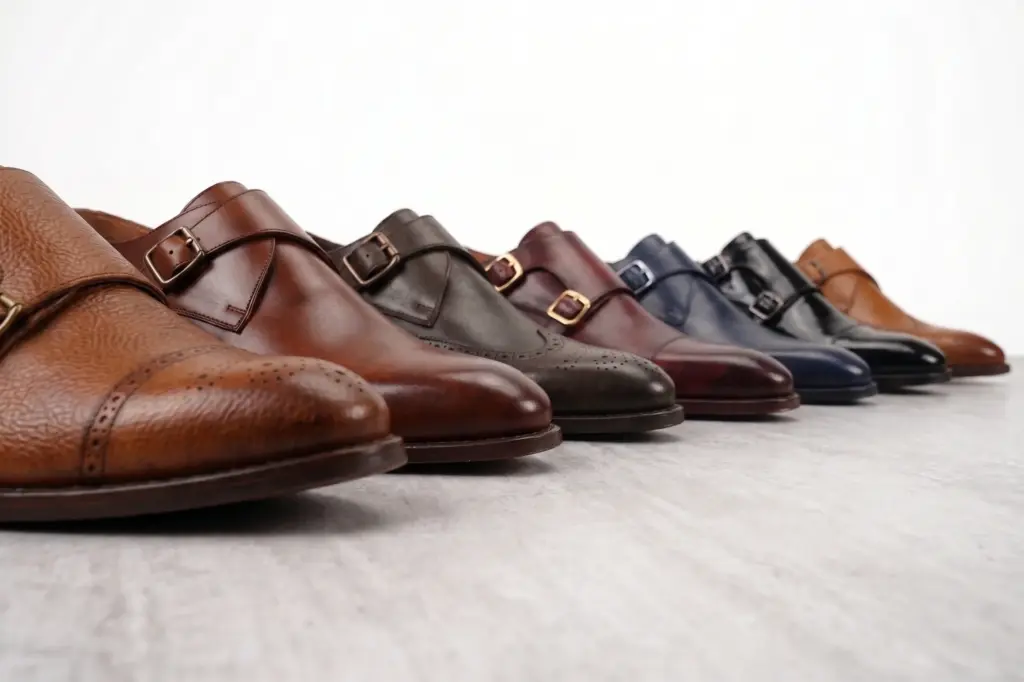
The buckle defines the closure; the last still defines the underlying fit.
A monk strap shoe solves the same basic problem as a lace-up:
it needs to hold the shoe securely around the foot.
It simply does it differently.
Instead of Oxford or Derby laces, a leather strap crosses the instep and fastens with a buckle.
That one change gives the monk strap its identity.
It also places the style in an interesting middle ground. A clean single monk can look restrained enough for tailoring, while a double monk, textured leather or more decorative pattern can make the same basic idea feel noticeably more expressive.
The Handsole Monk Straps collection already treats the buckle as the defining closure while keeping the last, materials and construction product-specific.
What is a monk strap shoe?
A monk strap is a closed shoe that uses one or more straps and buckles instead of conventional laces.
The strap normally crosses the instep and fastens toward the outside of the shoe.
That distinguishes it from the two classic lace-up families:
Oxford — the facing is closed beneath the vamp.
Derby — the facing opens above the vamp.
Monk strap — the closure is provided by a buckle and strap instead.
The shoe can then be combined with many other design decisions:
- plain toe
- cap toe
- broguing
- apron stitching
- smooth leather
- suede
- single buckle
- double buckle
- different last shapes
So “monk strap” tells you the closure type.
It does not tell you everything else about the shoe.
Where did monk straps come from?
The name is generally connected with historical buckled footwear associated with European monks.
Footwear specialist Shoegazing’s history of the monk strap traces forms of buckled monk-style footwear back into medieval Europe and notes that both single- and multiple-strap forms existed long before the modern dress shoe.
That does not mean the modern monk strap is simply a medieval shoe carried forward unchanged.
Like most classic footwear, its proportions, last shapes, construction and styling evolved considerably.
The useful point for today’s buyer is simpler:
the buckle is not a fashion gimmick added to a lace-up shoe. It is the defining closure of an established shoe family.
Single monk vs double monk
The biggest visible decision is the number of straps.
Single monk
A single monk uses one strap and one buckle.
That creates a cleaner visual line across the instep.
Because there is less hardware, the upper can appear quieter and more formal, particularly in dark smooth leather with a restrained toe.
For someone who likes the simplicity of an Oxford but wants something other than laces, a single monk is often the easier transition.
Double monk
A double monk uses two straps and two buckles.
The additional hardware creates more visual activity.
That does not automatically make it casual.
A dark double monk on a refined last can still work with tailoring.
But the second buckle makes the shoe more noticeable, especially when combined with patina, broguing, suede or a stronger toe shape.
The distinction is not:
single = good
double = better
It is:
How much visual presence do you want from the closure?


Are monk straps formal?
They can be.
But formality depends on more than the buckle.
A clean black single monk on a restrained last can sit quite close to traditional business footwear.
A tan double monk with decorative broguing and a bold buckle feels very different.
Several variables change the result:
- leather color
- leather surface
- toe shape
- amount of decoration
- buckle size
- sole thickness
- last shape
- single vs double strap
The useful approach is not to assign every monk strap one fixed formality score.
Instead, judge the whole shoe.
Monk strap vs Oxford and Derby
An Oxford uses a closed lacing system.
The facing closes relatively neatly over the instep, producing the visual restraint associated with classic formal dress shoes.
A monk strap removes the laces entirely.
That creates a cleaner vamp in one sense, but the buckle introduces visible hardware.
So when both shoes are equally dark and restrained, the Oxford usually reads as the more traditional formal choice.
A Derby has an open lacing system.
Its quarters open more freely around the instep, which can make entry and adjustment straightforward.
A monk strap also opens across the instep, but adjustment happens through the strap and buckle rather than shoelaces.
If you are comparing the lace-up families themselves, keep your existing Oxford-vs-Derby guide as the authority and use this article only for the buckle-closure question.
Do monk straps fit differently?
They can.
The buckle does not remove the importance of the last underneath the shoe.
The underlying geometry still controls:
- toe shape
- forefoot room
- instep volume
- waist
- heel relationship
Handsole’s current monk collection makes this point explicitly: the last still determines toe shape and internal volume even though the closure has changed.
That means you should not choose a monk strap simply because the strap looks adjustable.
A buckle can fine-tune how the upper closes over the instep.
It cannot transform an unsuitable last into the right last.
For that decision, use the Sizing & Fit Guide and What Is a Shoe Last?.
How tight should the strap be?
Secure.
Not strained.
The strap should hold the shoe comfortably around the instep without requiring you to pull the buckle aggressively just to keep the shoe on.
If the strap is under excessive tension, that may indicate a volume or fit problem rather than a need to keep tightening.
Likewise, if the buckle has to be used at an extreme loose position and the foot still feels compressed elsewhere, the problem may be the last or width.
A useful monk strap fit should feel like the shoe is being held, not clamped.
Does a double monk adjust better than a single monk?
Not necessarily.
Two buckles can create two fastening points, but that does not automatically create a better fit.
The effectiveness of either system depends on:
- strap placement
- pattern
- instep geometry
- buckle positions
- last
- upper leather
A well-designed single monk can fit beautifully.
A poorly matched double monk can still fit badly.
Again, closure type does not replace last geometry.
Can wide feet wear monk straps?
Yes—if the last and available width suit the foot.
A monk strap should not be categorized as inherently narrow or inherently wide.
The upper pattern and last determine much more.
Handsole uses D, E, EE and EEE width options where offered, and the product page remains the source of truth for which widths are available on a particular design.
If width is the issue, read Shoe Widths Explained and How to Measure Your Feet before simply sizing up.
What leather works best?
There is no one correct monk-strap leather.
Changing the leather changes the character.
Black smooth leather
Usually gives the cleanest and dressiest direction.
It lets the strap and buckle provide the interest without adding much surface variation.
Dark brown leather
Still works easily with tailoring while generally feeling somewhat less severe than black.
Tan or patinated leather
Makes the shoe considerably more visible.
The buckle, color variation and shoe shape all become part of the outfit.
Suede
Softens the visual effect.
A monk in suede can move naturally into smart-casual clothing, depending on the last and sole.
For material terminology, use the Leather Knowledge Hub rather than assuming one leather is universally best.
Single or double monk with a suit?
Both can work, but the details matter.
For conservative tailoring
Choose the quieter combination:
- single monk
- dark leather
- restrained buckle
- clean toe
- slim or moderate sole
For less conservative tailoring
A double monk gives you more room to make the shoe noticeable.
Dark brown is particularly flexible because it can work with many navy, grey and earth-tone combinations without the visual severity of black.
For highly formal occasions
The traditional Oxford remains the safer choice when conventional formality is the priority.
A monk strap is better treated as a sophisticated alternative, not a replacement for every formal shoe.
How to wear monk straps casually
A monk strap does not require a suit.
The shoe works particularly well when the rest of the outfit has enough structure to support it.
Useful combinations include:
- tailored trousers
- chinos
- wool trousers
- dark denim
- relaxed jackets
- knitwear
- smart overshirts
The specific shoe matters.
A highly polished black single monk on a sleek last can look too formal with heavily distressed denim.
A brown or suede monk with a softer last can bridge that gap more naturally.
Should you leave one buckle undone?
This became a recognizable styling gesture during periods when double monks were especially fashionable.
But it is styling rather than a fit rule.
The shoe was designed with a fastening system.
There is no functional reason you must deliberately leave one buckle open.
If doing so compromises fit or lets the strap flap around, it has stopped being an interesting detail and become an inconvenience.
Wear the shoe securely.
Style should not require you to make the shoe function worse.
Can the buckle wear the leather?
Yes.
The strap and buckle are physical components that move against each other.
Some visible wear around the strap can therefore develop over time.
That does not automatically indicate defective leather.
It is an area worth inspecting because it experiences repeated mechanical contact every time the shoe is opened and closed.
Treat the strap with the same care as the rest of the upper rather than yanking it through the buckle.
What about kiltie monk straps?
A kiltie adds a fringed or decorative leather element around the vamp or closure area.
That immediately changes the visual character.
The shoe becomes more expressive than a plain single monk.
Handsole’s current Monk Straps collection includes a kiltie monk example, which demonstrates how multiple design languages can coexist: monk-style buckle closure, kiltie detail and loafer influence in one shoe.
That example is useful because it shows why footwear taxonomy should not pretend every shoe belongs to one simplistic box.
The main family tells you one part of the design.
Additional details tell you the rest.
How Handsole approaches monk straps
Handsole does not need one universal specification for every monk strap.
The category tells you the closure family.
The product page tells you:
- upper leather
- lining
- outsole
- construction
- last
- available US sizes
- available widths
That product-specific approach is more useful than saying:
“All monk straps are built this way.”
They are not.
Common questions
What is a monk strap shoe?
A closed shoe fastened with one or more buckle straps instead of conventional laces.
Which is dressier: single or double monk?
A clean single monk normally looks quieter because it uses less visible hardware.
Can I wear double monks with a suit?
Yes, particularly in dark brown or similarly restrained combinations, provided the specific shoe and suit work together.
Do monk straps fit wide feet?
They can. Fit depends on the last and available width rather than the buckle alone.
Should I size differently for monk straps?
Do not change size solely because the shoe uses a buckle. Use your measurements, width and the product’s last information.
Are monk straps slip-ons?
No. They do not use conventional laces, but the buckle is a functioning closure and should be opened sufficiently when putting the shoe on.
The monk strap earns its place by being different
A monk strap is not an Oxford without laces.
And it is not a Derby with decoration added.
The buckle changes both how the shoe closes and how it looks.
A single monk keeps that idea relatively restrained.
A double monk makes the closure more visible.
Leather, last, toe shape, sole and construction then determine whether the finished shoe moves toward formal, expressive or casual territory.
Choose the monk because you like what the buckle contributes.
Then judge the rest of the shoe exactly as you would any other pair:
Does the last suit your foot?
Is the width appropriate?
What leather is actually being used?
How is the shoe constructed?
Does the overall design suit how you plan to wear it?