Chelsea Boots vs Chukka Boots — What’s the Difference and Which Should You Choose?
Chelsea and chukka boots are both ankle-height styles, but they differ in closure, fit adjustment, formality and visual character. Learn which works better for your wardrobe and foot shape.
Chelsea uses elastic. Chukka uses open lacing. The closure changes the experience.
Chelsea boots and chukka boots are both ankle-height boots.
That is where the similarity ends.
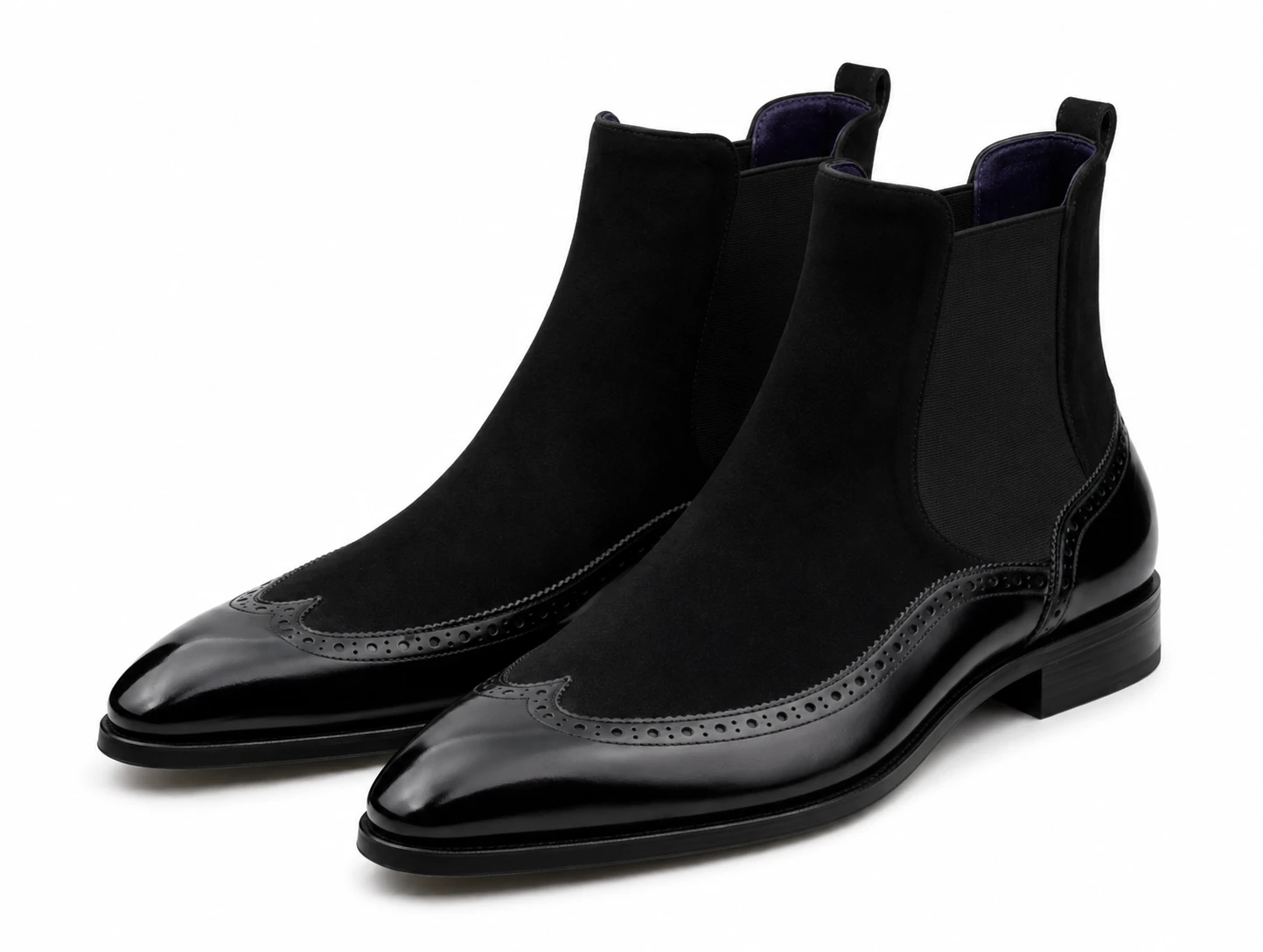
A Chelsea boot is defined primarily by its pull-on construction and elastic side panels.
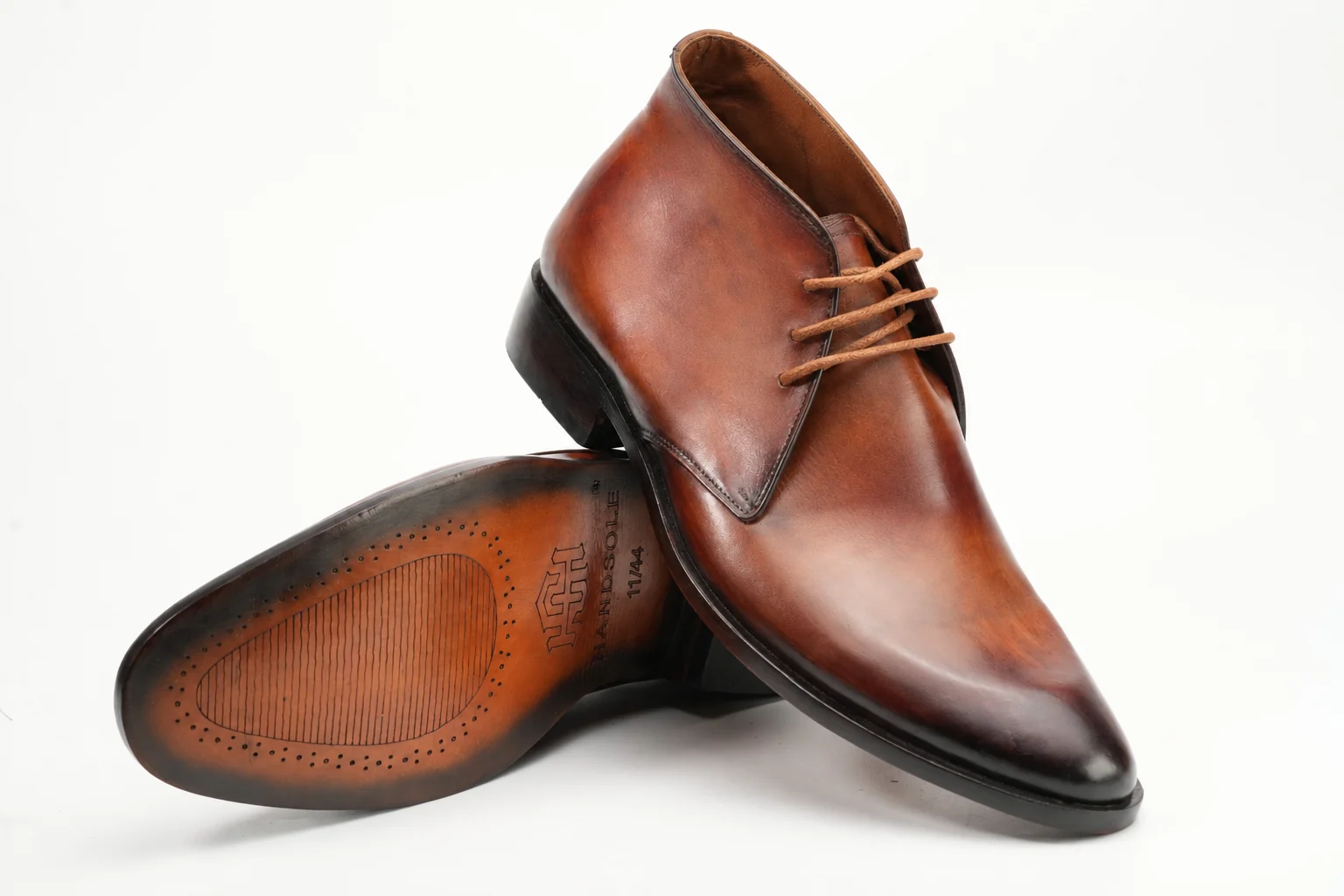
A chukka boot is defined by its open lacing and relatively simple ankle-high upper, traditionally with only a small number of eyelets.
Both can be made in smooth leather or suede.
Both can sit somewhere between dress shoes and heavier boots.
And both can move from tailored clothing into casual wardrobes depending on the last, leather, sole and construction.
But they solve the ankle-boot problem in very different ways.
If you are deciding between the two, the most useful question is not:
Which one is more fashionable?
It is:
Do you want a clean pull-on boot or a lace-up boot with more adjustment over the instep?
Handsole separates Chelsea and Chukka as distinct style families within the Boots collection.
What is a Chelsea boot?
A Chelsea boot is a close-fitting ankle boot with elastic side panels instead of laces.
Most also include a pull tab or another way to help the foot enter the boot.
That elastic panel is the defining feature.
SATRA’s history of elastic-sided and Chelsea boots traces the style to nineteenth-century developments in vulcanised rubber and the elastic boot associated with Queen Victoria’s shoemaker J. Sparkes-Hall.
Modern Chelsea boots can vary enormously in character.
A sleek black calf version on a refined last can look relatively formal.
A round-toe suede Chelsea on a heavier sole can feel much more casual.
So Chelsea tells you the closure architecture.
It does not tell you the entire boot.
What is a chukka boot?
A chukka is also ankle height, but it uses open lacing.
Traditionally, the style has a simple upper and only two or three pairs of eyelets.
Crockett & Jones describes the classic chukka as a low-cut ankle boot with open lacing, usually two or three eyelets and a simple upper, commonly made in leather or suede.
That open lacing makes the chukka structurally closer to a Derby than to a Chelsea.
The wearer can adjust the laces across the instep.
That gives the style a different fit behavior and a different visual rhythm from the uninterrupted side of a Chelsea boot.
The biggest difference is the closure
The easiest way to distinguish them is to ignore the toe and look at the side of the boot.
Chelsea
Elastic side panel.
No conventional lacing.
The boot stretches enough to allow entry and then closes around the ankle through the elastic and pattern.
Chukka
Open lacing.
Usually two or three eyelets.
The quarters open over the instep and are drawn together with laces.
That difference affects much more than appearance.
It changes:
- how you put the boot on
- how much adjustment you have
- how the boot fits over the instep
- how clean or detailed the upper appears
Which is easier to put on?
Chelsea boots usually win for speed.
There are no laces to tie.
You pull the boot on, allow the elastic side panels to stretch during entry, and the upper returns around the ankle.
A chukka takes slightly more time because the laces need to be loosened and tied.
But that extra step also gives you something:
adjustment.
You can loosen or tighten the quarters around the instep.
That trade-off is central to the comparison.
Chelsea offers simplicity.
Chukka offers more direct closure adjustment.
Which is better for a high instep?
This is where fit becomes more important than style.
A Chelsea boot has no laces to create additional opening or adjustment over the instep.
The last, upper pattern and elastic panels therefore have to work well with your foot volume.
A chukka’s open-lacing system generally gives more freedom to adjust the upper over the instep.
That does not automatically make every chukka suitable for a high instep.
The last underneath the boot still determines the fundamental geometry.
Handsole’s Sizing & Fit Guide explains why toe shape, forefoot room, instep, width and last must be considered together.
Which holds the heel better?
Neither style automatically wins.
A Chelsea relies heavily on:
- heel geometry
- ankle opening
- instep relationship
- elastic-panel tension
- overall last
A chukka adds lace adjustment, which can help the upper hold the foot more securely when the underlying geometry is already appropriate.
But laces cannot completely compensate for an unsuitable heel or last.
This is why heel slip should not automatically be solved by sizing down.
The better process is to identify whether the problem comes from length, width, instep volume, heel geometry or last shape.
Which looks more formal?
Usually, a sleek Chelsea can move further toward formal dress than a traditional suede chukka.
But that statement needs context.
A dressier Chelsea usually has:
- smooth dark leather
- refined last
- clean toe
- relatively slim sole
- discreet elastic panels
- minimal decoration
A casual Chelsea may have:
- suede
- rounder toe
- heavier sole
- thicker edge
- more robust proportions
The same principle applies to chukkas.
A dressier chukka may use:
- smooth calf
- dark brown or black
- finer last
- leather sole
- relatively restrained proportions
A more casual chukka may use:
- suede
- lighter color
- crepe or rubber sole
- rounder toe
- softer construction
So the real comparison is not:
Chelsea = formal
Chukka = casual
It is:
Chelsea generally begins with a cleaner pull-on silhouette, while chukka begins with a visible open-lacing structure.
Chukka and desert boot are not exactly the same thing
These terms are often treated as interchangeable.
They are related, but historically they are not identical.
The classic chukka is the broader style family: ankle height, open lacing and a relatively simple upper.
The desert boot is a particular casual interpretation commonly associated with suede and a crepe-rubber sole.
Crockett & Jones makes this distinction in its chukka guide.
So:
Every desert boot is broadly chukka-like.
But not every chukka needs to be a desert boot.
Which works better with a suit?
If the goal is conventional business or dress tailoring, a refined Chelsea usually integrates more easily.
The clean side profile and absence of laces can create a very smooth visual line beneath trousers.
But the exact boot matters.
A bulky Chelsea on a thick lug sole is not suddenly formal because it has elastic panels.
Likewise, a fine dark calf chukka can work with tailoring when the last and sole are restrained.
The safer direction is:
formal tailoring → refined Chelsea first
soft tailoring / smart casual → either Chelsea or chukka depending on material
very casual clothing → chukka often feels especially natural
Which works better with jeans?
Both.
The difference is character.
A Chelsea creates a cleaner, sharper line.
A suede chukka usually looks softer and more relaxed.
That makes it easy with:
- dark denim
- chinos
- cords
- casual wool trousers
- overshirts
- knitwear
If you want texture to become part of the outfit, suede chukkas are particularly effective.
Smooth leather or suede?
Both styles can work in either material.
But the choice changes their character substantially.
Smooth leather Chelsea
Clean, architectural and potentially dressier.
Suede Chelsea
Softens the boot and moves it toward smart-casual wear.
Smooth leather chukka
Can become surprisingly refined, particularly on a fine last.
Suede chukka
The classic casual expression of the style.
For the material itself, use the Leather Knowledge Hub.
What about the sole?
The sole can completely alter either boot.
A slim leather sole supports a lighter, more dress-oriented profile.
A rubber sole can add traction and practical outdoor performance.
A crepe sole pushes a chukka strongly toward classic desert-boot territory.
A heavier lugged sole makes either style more rugged.
The important point is that Chelsea vs chukka does not decide the outsole.
The product specification does.
For a deeper comparison, read Leather Sole vs Rubber Sole.
Which is more comfortable?
Again, neither automatically.
Comfort comes from the complete shoe:
- last
- US size
- width
- upper
- lining
- insole
- sole
- construction
The closure changes how the boot holds the foot.
The last determines the geometry underneath it.
If you are unsure about your measurements, use How to Measure Your Feet and Shoe Widths Explained.
Can Chelsea elastic wear out?
Yes.
Elastic is a functional material.
It repeatedly stretches when the boot is put on and taken off.
Over time, it can lose recovery or become damaged.
Do not pull aggressively on the elastic panel itself when putting the boot on.
Use the pull tab or properly open the boot as intended.
Which should you buy first?
Think about the role the boot needs to play.
Choose Chelsea if:
- you want fast pull-on convenience
- you prefer a clean uninterrupted upper
- you wear tailoring frequently
- you want an ankle boot that can move toward dressier use
- your foot works well with the boot’s fixed instep volume
Choose chukka if:
- you prefer lace adjustment
- you want a more relaxed ankle boot
- you frequently wear chinos, denim or soft tailoring
- suede appeals to you
- you want more control over closure at the instep
Neither list is absolute.
The actual product can move far beyond these general tendencies.
How Handsole approaches boots
Handsole’s Boots collection separates styles including Chelsea, Chukka, Jodhpur, Balmoral, Derby Boot and Service Boot, but keeps fit and construction at the individual product level.
That is the right hierarchy:
Style family tells you the basic design.
Product page tells you the actual last, leather, sole, construction and available widths.
Common questions
What is the main difference between Chelsea and chukka boots?
Chelsea boots use elastic side panels and have no conventional laces. Chukka boots use open lacing, traditionally with a small number of eyelets.
Are Chelsea boots more formal?
Often, especially in smooth dark leather on a refined last. But sole, toe shape and overall construction still matter.
Are chukka boots casual?
They often lean casual, particularly in suede, but smooth-leather chukkas on fine soles can be much dressier.
Are desert boots the same as chukka boots?
Desert boots belong to the broader chukka family but traditionally refer to a softer, more casual interpretation commonly associated with suede and crepe soles.
Are Chelsea boots good for high insteps?
They can be, but fit depends strongly on the boot’s last and instep volume because there are no laces to loosen.
Are chukkas better for high insteps?
Open lacing gives more adjustment, but the underlying last still needs to suit the foot.
Choose the closure first, then judge the whole boot
Chelsea and chukka boots are not competing versions of the same design.
They start from different ideas.
Chelsea: pull-on simplicity, elastic sides, cleaner upper.
Chukka: open lacing, adjustable closure, softer shoe-like structure.
After that, the same questions apply to both:
What last is underneath it?
Which width is available?
What leather is being used?
What sole does it have?
How is it constructed?
Where will you actually wear it?
Choose the closure that suits how you want the boot to behave.
Then judge the rest of the boot on its actual specification.