Style & How to Wear
Tuxedo Shoes Explained — Patent Leather, Oxfords, Wholecuts & Black Tie
A practical guide to tuxedo shoes: patent leather, polished calf, Oxfords, wholecuts, opera pumps, soles, fit and what actually belongs with black tie.
Handsole Journal articles in this collection. The article layout stays consistent; only the editorial content changes.
A practical guide to tuxedo shoes: patent leather, polished calf, Oxfords, wholecuts, opera pumps, soles, fit and what actually belongs with black tie.
Wedding footwear should follow the dress code first, then suit color, season and venue. Here is how to choose without treating every wedding as the same event.
Loafers work with socks in formal, business and casual settings. If you want a sockless look, a no-show sock usually gives the appearance without the drawbacks.
Dress shoes can work with jeans, but not every dress shoe and not every pair of denim belongs together. Match formality, color, shape and proportion.
Choose shoes for charcoal, medium grey and light grey suits. Practical color pairings, four complete outfits and advice on socks, hems, belts and venues.
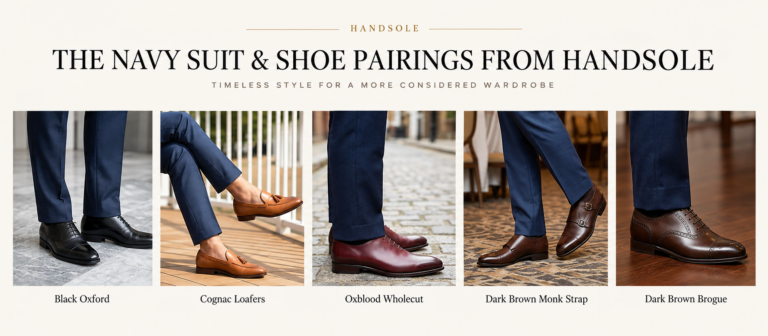
A navy suit can work with black, brown and burgundy shoes. The best pairing depends on how formal the event is and how much contrast you want.
Black and brown dress shoes can both be versatile, but they communicate different levels of formality. Here is how to choose by occasion, suit color and shoe style.
Business casual footwear sits between formal office shoes and weekend casual. Derbies, loafers, monk straps, Chelsea boots and chukkas each solve that balance differently.
Linen is tailored but visibly relaxed, so shoes that are too heavy or severe can fight the fabric.